

An affirmation is a positive or supportive statement that helps you focus on a belief, value, intention, or personal goal. People use affirmations as a form of positive self-talk to encourage themselves, challenge unhelpful thinking patterns, and approach everyday situations with greater awareness.
The affirmation definition is simple, but its meaning goes beyond repeating positive words. A useful affirmation should feel personal, realistic, and connected to something you want to practice in your life. Whether you are new to affirmations or looking for better ways to use them, understanding their purpose can help you choose statements that feel natural and meaningful.
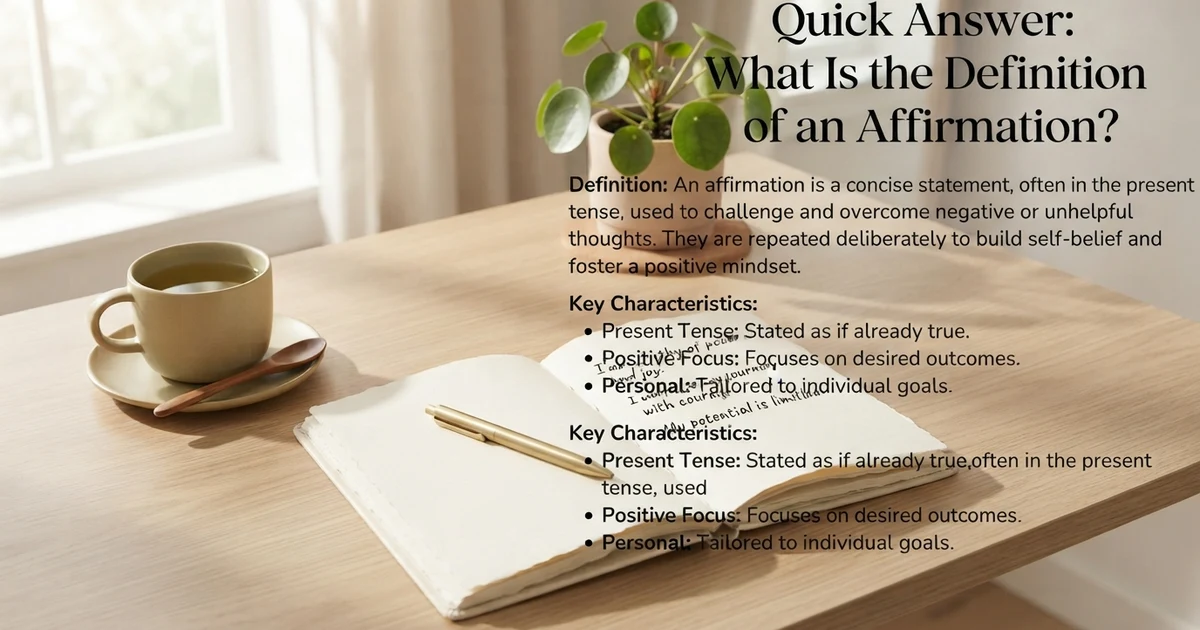
Quick Answer: What Is the Definition of an Affirmation?
An affirmation is a statement that expresses a belief, intention, or encouraging thought. In everyday life, affirmations are often used to support confidence, self-awareness, motivation, and a more constructive mindset.
For example:
- I am learning to trust myself.
- I can take things one step at a time.
- My efforts matter, even when progress feels slow.
- I deserve kindness and respect.
- I can learn from my mistakes.
These statements are affirmations because they reinforce supportive ideas that a person can return to throughout the day.
Affirmation Definition and Meaning
The word affirmation refers to the act of stating or confirming something. In general language, an affirmation can be a statement that expresses agreement, confirmation, or a belief.
In personal development, the term usually refers to a positive or supportive statement that someone repeats or reflects on to encourage a particular mindset.
For example, saying “I can handle challenges one step at a time” is an affirmation because it expresses a supportive belief about your ability to respond to difficulties.
An affirmation does not have to describe something that is already perfect in your life. It can express a quality you are developing, a value you want to remember, or an intention you want to follow.
Simple Definition of an Affirmation
An affirmation is a meaningful statement that reminds you of a positive belief, personal strength, or intention.
In simpler words, an affirmation is something encouraging you say to yourself to support the way you think, feel, or act.
What Does Affirmation Mean in Everyday Life?
In everyday situations, affirmations can serve as reminders of how you want to approach your day.
For example:
- Before a difficult task: “I can begin even if I feel unsure.”
- During a stressful moment: “I can pause and choose my next step.”
- After making a mistake: “I can learn without judging myself.”
- When working toward a goal: “Small steps still count.”
- Before meeting someone new: “I can be myself and stay open.”
The purpose is not to pretend that challenges do not exist. Instead, affirmations can help you respond to those challenges with more balanced and supportive self-talk.
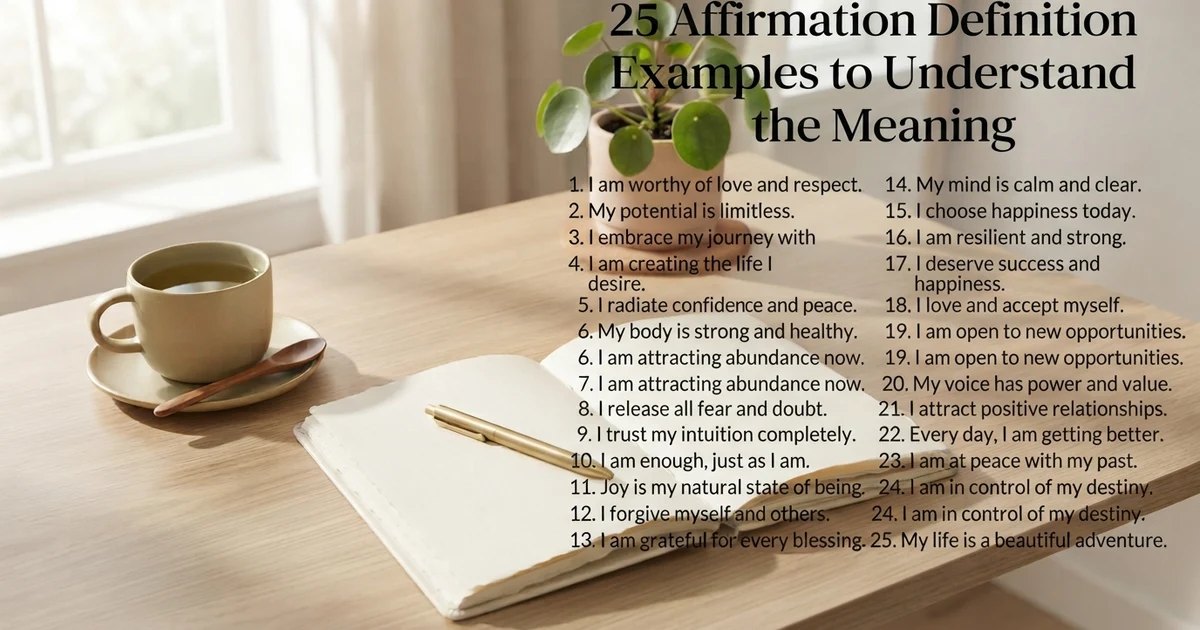
25 Affirmation Definition Examples to Understand the Meaning
The easiest way to understand the affirmation definition is to explore examples. Each statement below expresses a supportive belief, intention, or reminder.
Short Affirmation Definition Examples
- I am worthy of kindness.
- I can learn and grow.
- My voice matters.
- I trust my ability to improve.
- I can begin again.
- I deserve respect.
- I am allowed to take my time.
- My efforts have value.
- I can choose a helpful perspective.
- I am learning every day.
Positive Affirmation Definition Examples
- I welcome opportunities to grow.
- I can approach today with patience.
- I recognize the progress I have made.
- I am capable of taking meaningful steps.
- I can respond to challenges thoughtfully.
- I choose to treat myself with compassion.
- I am open to learning from experience.
- I can build confidence through practice.
- I appreciate the qualities that make me unique.
- I can focus on what is within my control.
Daily Affirmation Definition Examples
- Today, I will give myself room to learn.
- I can make progress without rushing.
- I will focus on one important thing at a time.
- I can be proud of showing up for myself.
- I will approach my day with intention.
Each example communicates a supportive idea. You can adjust the wording to match your personality, circumstances, and goals.
What Are Positive Affirmations?
Positive affirmations are supportive statements designed to encourage constructive thinking, self-respect, or personal intentions.
They are commonly used in personal development, journaling, mindfulness routines, and everyday self-reflection.
A positive affirmation might remind you of a strength you already have or encourage a quality you want to develop.
For example:
- “I am patient with myself as I learn.”
- “I can ask for help when I need it.”
- “I am building habits that support my goals.”
- “I can recognize my achievements without comparing myself to others.”
Positive affirmations are not about forcing yourself to feel happy all the time. They can acknowledge difficult circumstances while reminding you that you have choices in how you respond.
A statement such as “Everything is perfect” may feel disconnected from reality during a difficult period. A more grounded affirmation, such as “I can take one manageable step today,” may feel easier to accept and practice.
Affirmation vs. Positive Thinking vs. Mantra
These terms are related, but they do not mean exactly the same thing. Understanding their differences can help you choose the practice that fits your needs.
| Term | Simple meaning | Example |
|---|---|---|
| Affirmation | A statement expressing a supportive belief or intention | I am learning to trust myself. |
| Positive thinking | A way of looking for constructive or balanced perspectives | This situation is difficult, but I can consider my options. |
| Mantra | A word, phrase, or sound repeated for focus or reflection | I am here, in this moment. |
| Self-talk | The internal words and thoughts you use when speaking to yourself | I need to slow down and think this through. |
| Quote | A memorable statement expressing an idea or perspective | A short quotation about patience or courage. |
Are Affirmations and Mantras the Same?
Affirmations and mantras can overlap because both may involve repeating words or phrases.
However, affirmations generally express a specific belief, intention, or supportive message. Mantras may be used more broadly for concentration, meditation, or reflection.
For example, “I can approach this challenge with patience” is an affirmation, while repeating “peace” as a focus during a quiet moment can function as a mantra.
Are Affirmations the Same as Quotes?
Not necessarily. A quote is usually a statement attributed to a person or source, while an affirmation is often written in the first person and personalized for the person using it.
For example:
- Quote: A statement about the importance of perseverance.
- Affirmation: “I can keep going at a pace that works for me.”
You can turn an inspiring quote into an affirmation by rewriting its message as a personal statement.
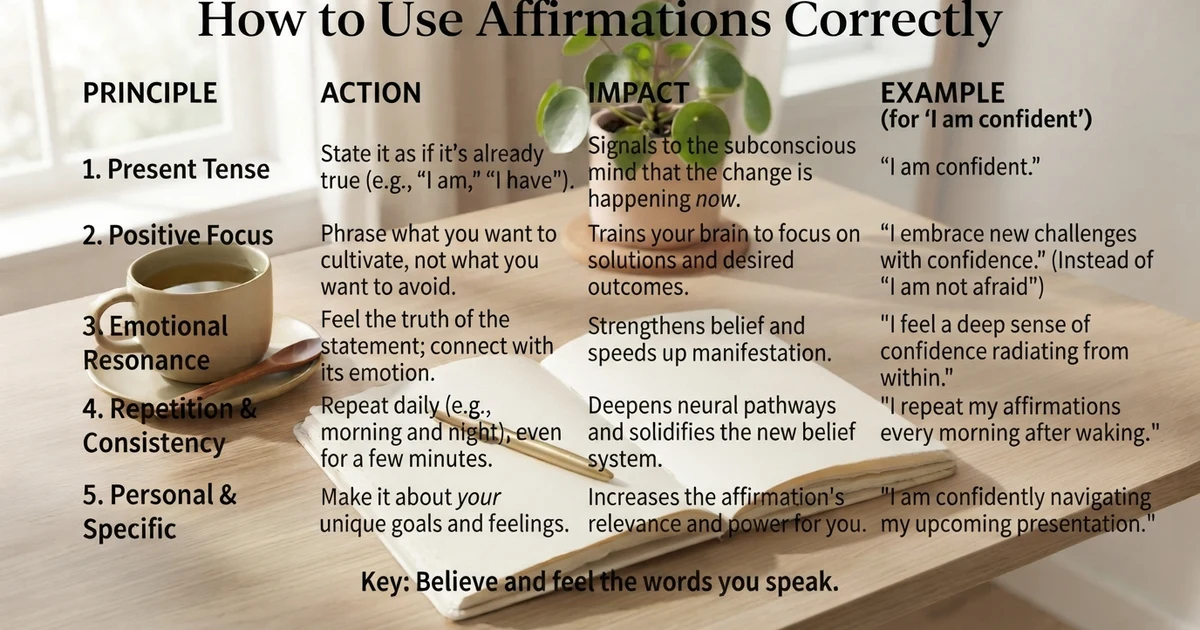
How to Use Affirmations Correctly
Affirmations are simple to practice, but using them thoughtfully can make the experience more meaningful. The goal is to connect the words with your real experiences, values, and actions.
1. Choose a Clear Intention
Start by identifying what you want your affirmation to support.
Your intention might involve:
- Building self-confidence
- Practicing patience
- Developing healthier habits
- Approaching work with focus
- Strengthening self-respect
- Managing everyday challenges
- Becoming more comfortable with learning
A clear intention makes it easier to choose words that are relevant to your life.
2. Use Language That Feels Believable
An affirmation does not need to sound extraordinary to be useful.
If a statement feels too far removed from your current experience, try adjusting it.
For example:
Instead of “I am completely confident in every situation,” try “I am learning to feel more comfortable in new situations.”
The second statement leaves room for growth and may feel more natural to practice.
3. Keep It Short and Specific
Short affirmations are often easier to remember and repeat.
Compare these examples:
- General: “I am a good person who can do many wonderful things in life.”
- Specific: “I can make thoughtful choices today.”
Both express supportive ideas, but the shorter version is easier to recall in a busy moment.
4. Connect Your Affirmation With Action
Affirmations can support your intentions, but words alone do not complete a goal.
If your affirmation is “I am building confidence,” consider pairing it with a small action, such as sharing an idea, practicing a skill, or trying something unfamiliar.
This connection helps turn a statement into a practical reminder.
5. Repeat It at a Convenient Time
There is no single required time to practice affirmations.
You might use them:
- In the morning before starting your day
- While writing in a journal
- Before beginning a challenging task
- During a quiet break
- At bedtime as part of reflection
Choose a routine that fits naturally into your schedule rather than creating pressure to follow a strict system.
6. Adjust Your Words as You Grow
Your needs and goals may change over time. An affirmation that feels relevant today may not be the one you need next month.
Review your statements occasionally and update them to reflect your experiences, priorities, and personal development.
Common Mistakes to Avoid When Using Affirmations
Understanding the affirmation definition also means recognizing what affirmations are not. A supportive statement should not become another source of pressure or unrealistic expectations.
Mistake 1: Choosing Statements That Feel Completely Unrealistic
Repeating a statement you strongly disagree with may feel uncomfortable.
Instead of insisting on an absolute belief, use language that acknowledges progress.
For example, “I am learning to recognize my strengths” can be a more approachable starting point than “I have no doubts about myself.”
Mistake 2: Expecting Immediate Results
Affirmations are not a guaranteed shortcut to confidence, happiness, or personal success.
Some people find them helpful as part of a broader routine, while others may prefer different approaches to reflection and personal growth.
Give yourself permission to explore what works for you without expecting an immediate change.
Mistake 3: Ignoring Difficult Emotions
Positive self-talk does not require denying sadness, frustration, uncertainty, or disappointment.
An affirmation such as “I can acknowledge how I feel and still choose a helpful next step” allows space for genuine emotions.
Mistake 4: Repeating Words Without Understanding Them
An affirmation becomes more personal when you understand why it matters.
Instead of repeating a long list automatically, choose a few statements that connect with your current goals and reflect on their meaning.
Mistake 5: Using Affirmations as a Replacement for Practical Support
Affirmations can be a supportive self-reflection practice, but they are not a substitute for professional help, medical care, or practical solutions when those are needed.
They work best when treated as one possible part of a broader approach to well-being and personal development.
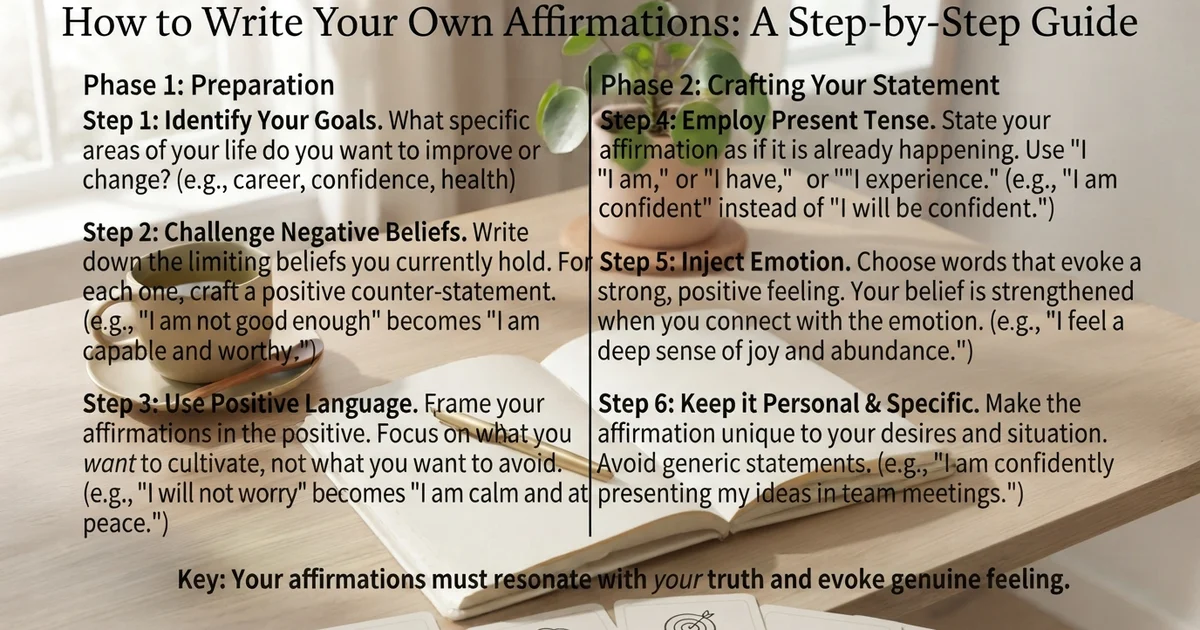
How to Write Your Own Affirmations
Writing your own affirmations can make the practice feel more personal and relevant.
You do not need special writing skills. A simple structure is enough to get started.
Step 1: Identify a thought or intention.
For example, you want to become more patient with yourself.
Step 2: Turn it into a supportive statement.
“I am learning to give myself time and patience.”
Step 3: Make the language natural.
Use words you would genuinely say to yourself rather than complicated or overly formal expressions.
Step 4: Keep the statement focused.
Try to express one main idea in each affirmation.
Step 5: Connect it to a real situation.
Think about when the statement might be useful, such as during a demanding task or while learning something new.
Here are five original affirmations you can use as starting points:
- I can grow without expecting perfection.
- I am allowed to learn at my own pace.
- I can make thoughtful decisions with the information I have.
- I will recognize effort as part of progress.
- I can treat myself with the same kindness I offer others.
Feel free to personalize them so they reflect your own experiences and intentions.
Affirmation Definition for Beginners: A Simple Daily Practice
If you are new to affirmations, you do not need an elaborate routine. A few minutes of reflection can be enough to explore whether the practice feels useful.
Try this simple approach:
- Choose one affirmation that feels relevant to your day.
- Read it slowly and consider what it means to you.
- Repeat it quietly or write it in a journal.
- Identify one small action that reflects the statement.
- Reflect on the experience later without judging yourself.
For example, if your affirmation is “I can approach today with patience,” you might practice pausing before responding to a frustrating situation.
The purpose is not to perform the routine perfectly. It is to create a small opportunity to reflect on your intentions and the way you want to approach everyday life.
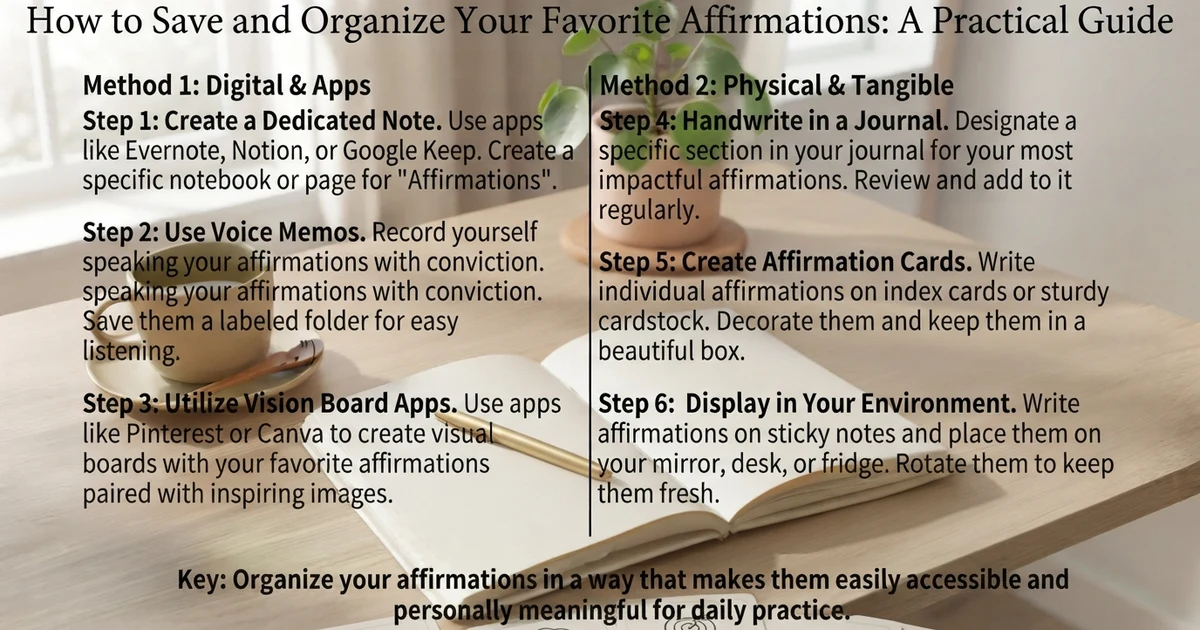
How to Save and Organize Your Favorite Affirmations
Keeping your affirmations organized makes it easier to revisit statements that feel meaningful.
You can create a personal collection using:
- A notebook or journal
- A printable affirmation sheet
- Digital notes on your phone
- A collection of affirmation cards
- A simple document organized by topic
Consider grouping your statements into categories such as confidence, patience, self-respect, motivation, gratitude, and personal growth.
You can also create a short daily list and update it whenever your priorities change.
Save the list: Choose five affirmations from this article that feel natural to you, write them somewhere accessible, and return to them whenever you want a supportive reminder.
Conclusion
The affirmation definition is straightforward: an affirmation is a statement that expresses a belief, intention, or supportive message. In personal development, affirmations are often used to encourage positive self-talk, strengthen self-awareness, and keep meaningful goals in focus.
The most useful affirmations are not necessarily the most powerful-sounding ones. They are the statements that feel relevant, believable, and connected to how you want to live. Start with a few simple examples, personalize the wording, and pair your statements with practical actions. Over time, you can build a collection that reflects your values and supports your everyday routine.
Frequently Asked Questions About Affirmation Definition
1. What is the simple definition of an affirmation?
An affirmation is a statement that expresses a belief, intention, or encouraging thought. It is often used as a reminder to support constructive self-talk and personal growth.
2. What is an example of an affirmation?
“I am learning to trust myself” is a simple affirmation. It expresses a supportive belief and recognizes that confidence can develop through experience.
3. What does affirmation mean in simple words?
In simple words, affirmation means stating or confirming something. In personal development, it commonly refers to a positive or supportive statement that a person repeats or reflects on.
4. What is the difference between an affirmation and a positive affirmation?
An affirmation is a statement that expresses a belief or intention. A positive affirmation specifically emphasizes encouraging, constructive, or supportive ideas.
5. Can affirmations be short?
Yes. Affirmations can be as short as a few words. Examples include “I am capable,” “My voice matters,” and “I can begin again.”
6. Do affirmations have to start with “I am”?
No. Although many affirmations begin with “I am,” they can also start with phrases such as “I can,” “I choose,” “I am learning,” or “Today, I will.”
7. How often should I repeat affirmations?
There is no universally required frequency. You can repeat affirmations whenever they fit naturally into your routine, such as during morning reflection, journaling, or a quiet break.
8. Do affirmations work for everyone?
People have different experiences with affirmations. Some find them useful for reflection and supportive self-talk, while others prefer different practices. Their usefulness can depend on personal preferences, wording, and circumstances.
9. Can I write my own affirmations?
Yes. Personal affirmations can be based on your values, goals, and everyday experiences. Use clear, natural language and choose statements that feel meaningful to you.
10. What is the best way to start using affirmations?
Begin with one or two realistic statements that relate to your current needs. Reflect on their meaning, repeat or write them when convenient, and connect them with small actions in your daily life.