

An affirmation is a positive or intentional statement that you repeat to encourage helpful thoughts, reinforce personal values, or remind yourself of how you want to approach a situation. You may use affirmations to support confidence, practice self-compassion, stay focused on your goals, or develop a more constructive inner voice.
But what is an affirmation really, and how is it different from a simple positive thought or motivational quote? Understanding the meaning behind affirmations makes it easier to choose words that feel natural and useful. Below, you’ll find a clear definition, everyday examples, different types of affirmations, and practical ways to use them without making them feel forced.
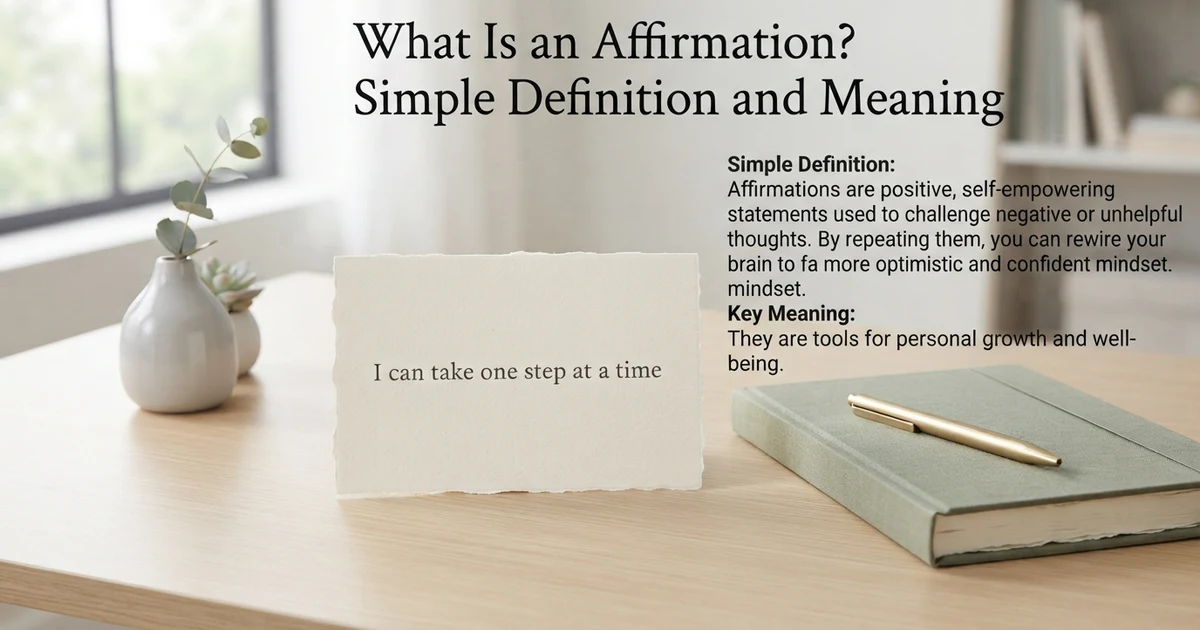
What Is an Affirmation? Simple Definition and Meaning
An affirmation is a short, intentional statement that expresses a belief, value, goal, or mindset you want to reinforce.
In simple terms, an affirmation is something you say to yourself to encourage a particular way of thinking or responding. It can remind you of your abilities, help you focus on what matters, or provide a more supportive perspective during a difficult moment.
For example:
- I can learn from my mistakes.
- I deserve to be treated with respect.
- I am allowed to grow at my own pace.
- I can take one step at a time.
- My past does not define my future.
Affirmations are often written in the present tense, but they can also express intentions or ongoing efforts.
The purpose isn’t to pretend that every situation is perfect. Instead, an affirmation gives you a deliberate statement to return to when you want to approach your thoughts and actions more thoughtfully.
What Is an Affirmation Example? 15 Everyday Examples
The easiest way to understand an affirmation is to see how it sounds in everyday life. These examples cover confidence, self-worth, personal growth, and common challenges.
- I trust myself to make thoughtful decisions.
- I can handle challenges one step at a time.
- My efforts matter, even when progress feels slow.
- I deserve kindness and respect.
- I am learning to speak to myself with compassion.
- I can begin again whenever I need to.
- My mistakes are opportunities to learn.
- I allow myself to rest without guilt.
- I can ask for help when I need it.
- I choose progress over perfection.
- My voice and opinions deserve to be heard.
- I can adapt when plans change.
- I am capable of learning new skills.
- Today, I will focus on what I can control.
- I can be proud of small achievements.
Each statement focuses on a different thought or situation. You don’t need to repeat all 15. Choose the ones that reflect your current needs and feel believable enough to use regularly.
What Is a Positive Affirmation?
A positive affirmation is a statement designed to encourage constructive self-talk, a helpful mindset, or a supportive belief about yourself and your circumstances.
Positive affirmations often focus on personal strengths, possibilities, values, and the actions you can take.
Examples include:
- I can approach today with patience.
- I have the ability to keep learning.
- I welcome opportunities to improve.
- I can respond thoughtfully instead of reacting immediately.
- I am worthy of care and consideration.
- I can make meaningful progress through consistent effort.
- I choose to notice what is going well.
- I can face uncertainty without needing every answer.
A positive affirmation doesn’t have to sound cheerful all the time. Sometimes, the most helpful statement is a calm reminder that you can take a break, ask for support, or try again tomorrow.
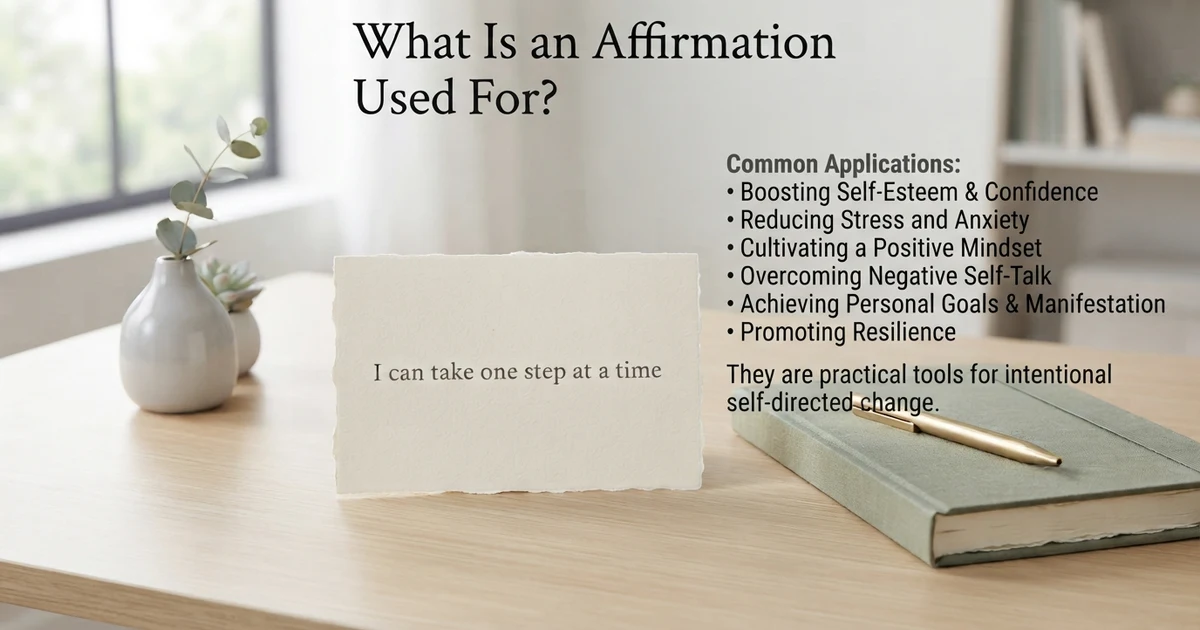
What Is an Affirmation Used For?
People use affirmations for different reasons, depending on their goals, circumstances, and personal preferences.
An affirmation may serve as a reminder of what matters to you or help you approach a situation with greater intention.
Here are some common uses.
1. Building confidence
Affirmations can remind you of your abilities when you’re preparing for a new responsibility or facing an unfamiliar situation.
Example: I can prepare carefully and trust my effort.
2. Encouraging self-worth
Self-worth affirmations focus on treating yourself with respect rather than measuring your value through achievements or other people’s opinions.
Example: My worth is not determined by someone else’s approval.
3. Supporting motivation
Motivational affirmations can help you reconnect with a goal when your enthusiasm changes.
Example: I can take one useful step, even when I don’t feel motivated.
4. Practicing self-compassion
These statements encourage a kinder response to mistakes, disappointment, or difficult emotions.
Example: I can acknowledge my struggles without judging myself.
5. Staying focused
Affirmations can act as brief reminders of your priorities during a busy day.
Example: I will give my attention to the task in front of me.
6. Reinforcing personal values
You can use affirmations to remind yourself how you want to behave in relationships, at work, or in everyday decisions.
Example: I choose honesty, patience, and respect.
Affirmations are a supportive self-talk practice, not a substitute for practical solutions, professional guidance, or appropriate care when those are needed.
What Is the Difference Between an Affirmation, a Positive Thought, and a Quote?
These terms are related, but they serve slightly different purposes. Understanding the distinction can help you choose the right words for your needs.
| Type | Meaning | Example |
|---|---|---|
| Affirmation | An intentional statement you repeat or use as a personal reminder | I can learn from this experience. |
| Positive thought | A constructive thought about a particular situation | This setback may help me understand what to change. |
| Motivational quote | A statement created to inspire or encourage others | A reminder that persistence matters. |
| Mantra | A word, phrase, or statement repeated for focus or reflection | I breathe, pause, and begin again. |
| Intention | A deliberate choice about how you want to act | Today, I will listen with patience. |
An affirmation is usually personal and repeatable. A quote may inspire you, but an affirmation is often written in your own voice and connected to a belief or intention you want to remember.
A mantra can function as an affirmation, too. The terms sometimes overlap, especially in mindfulness and personal development practices.
What Are the Different Types of Affirmations?
Affirmations can be organized by the purpose they serve. Choosing a specific type makes it easier to find statements that match your current situation.
Self-Love Affirmations
These statements encourage acceptance, respect, and a kinder relationship with yourself.
- I deserve the same kindness I offer others.
- I can appreciate myself without being perfect.
- My needs and feelings matter.
- I am learning to accept myself as I am.
- I can treat myself with patience.
Confidence Affirmations
Confidence affirmations focus on self-trust, preparation, and the willingness to try.
- I can handle new experiences.
- My ideas deserve consideration.
- I trust myself to keep learning.
- I can speak up with respect.
- I don’t need to know everything to get started.
Daily Affirmations
Daily affirmations are short statements you can use as reminders throughout your routine.
- I will approach today with intention.
- I can focus on one task at a time.
- I welcome opportunities to learn.
- I can adjust my plans when necessary.
- Today is a chance to make thoughtful choices.
Gratitude Affirmations
Gratitude affirmations direct your attention toward people, experiences, and moments you appreciate.
- I make room to notice the good in my life.
- I appreciate the people who support me.
- Small moments of joy deserve attention.
- I can recognize what I already have.
- I welcome opportunities to express gratitude.
Growth Affirmations
These statements emphasize learning, flexibility, and personal development.
- I am allowed to change my mind as I learn.
- Progress can happen through small steps.
- I can develop skills with practice.
- Every experience can teach me something useful.
- I welcome feedback that helps me improve.
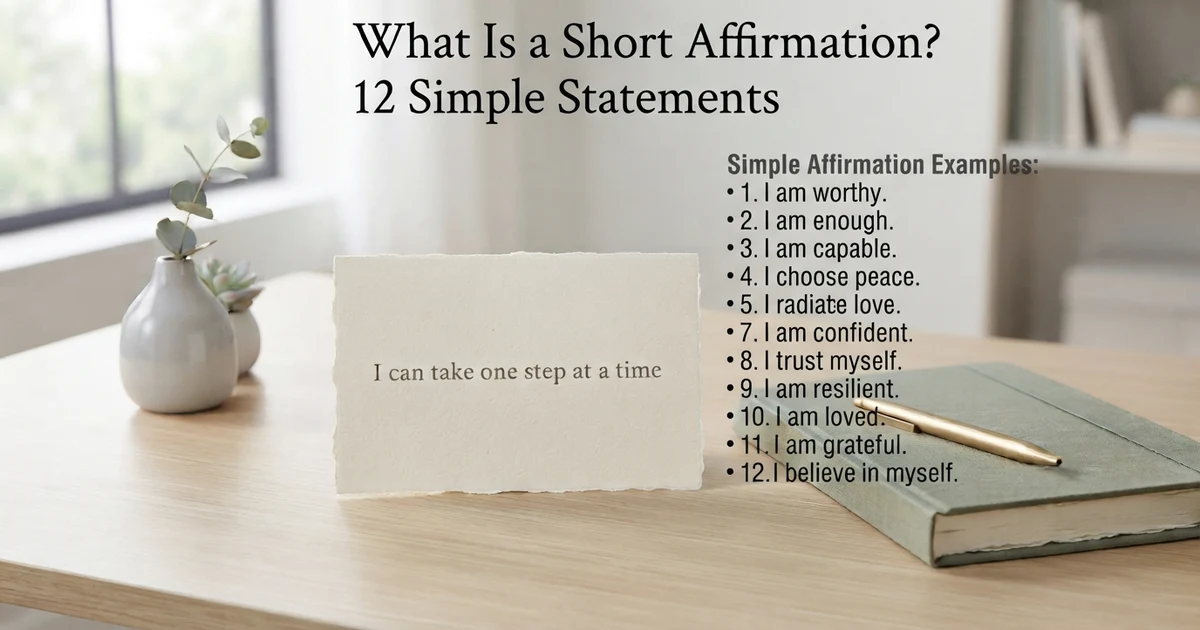
What Is a Short Affirmation? 12 Simple Statements
A short affirmation is a brief statement that is easy to remember and repeat. Short phrases can be especially convenient when you want a quick reminder during a busy day.
Here are 12 simple affirmations you can copy and use:
- I am enough.
- I can begin again.
- My voice matters.
- I choose patience.
- I trust my progress.
- I deserve respect.
- I welcome growth.
- I can learn.
- My effort counts.
- I allow myself to rest.
- I choose kindness.
- One step is enough for now.
You can write these on a sticky note, save them in your phone, add them to a journal, or keep one on your desk.
The most useful short affirmation is not necessarily the most dramatic one. It is the statement that reminds you of something meaningful when you need it.
What Is an Affirmation for Daily Use? 10 Examples
Daily affirmations are statements you can incorporate into ordinary routines without setting aside a large amount of time.
The following examples are suitable for mornings, study sessions, work breaks, or moments when you want to reconnect with your priorities.
- I will give my best effort today.
- I can respond to challenges with patience.
- My priorities deserve my attention.
- I can make time for what matters.
- I welcome useful feedback.
- I can adjust without giving up.
- I am responsible for my choices, not everything around me.
- I can take breaks when I need them.
- I will celebrate meaningful progress.
- I can end today knowing I made an effort.
Try selecting one affirmation for the morning and another for a situation you regularly encounter. This makes the practice more personal than repeating a long list without considering its meaning.
How to Use an Affirmation Correctly
There is no single required method for using affirmations. The goal is to make the statement meaningful and connect it with your everyday thoughts or behavior.
Follow these simple steps:
Step 1: Identify what you need.
Think about the situation you’re facing. Do you need a reminder to be patient, encouragement to start a task, or a more compassionate response to a mistake?
Step 2: Choose a relevant statement.
Select an affirmation that directly relates to that need.
For example, if you feel overwhelmed by a large project, try: I can break this task into manageable steps.
Step 3: Make the wording personal.
Use language that sounds natural to you. You don’t need complicated words or dramatic promises.
Step 4: Repeat or write it intentionally.
Say the affirmation aloud, read it silently, or write it in a journal. Take a moment to consider what it means rather than rushing through the words.
Step 5: Connect it with an action.
If your affirmation is about focus, begin a task. If it is about self-respect, consider a boundary you need to communicate.
Step 6: Review it when necessary.
Your needs may change. An affirmation that was useful last month may no longer reflect your current priorities.
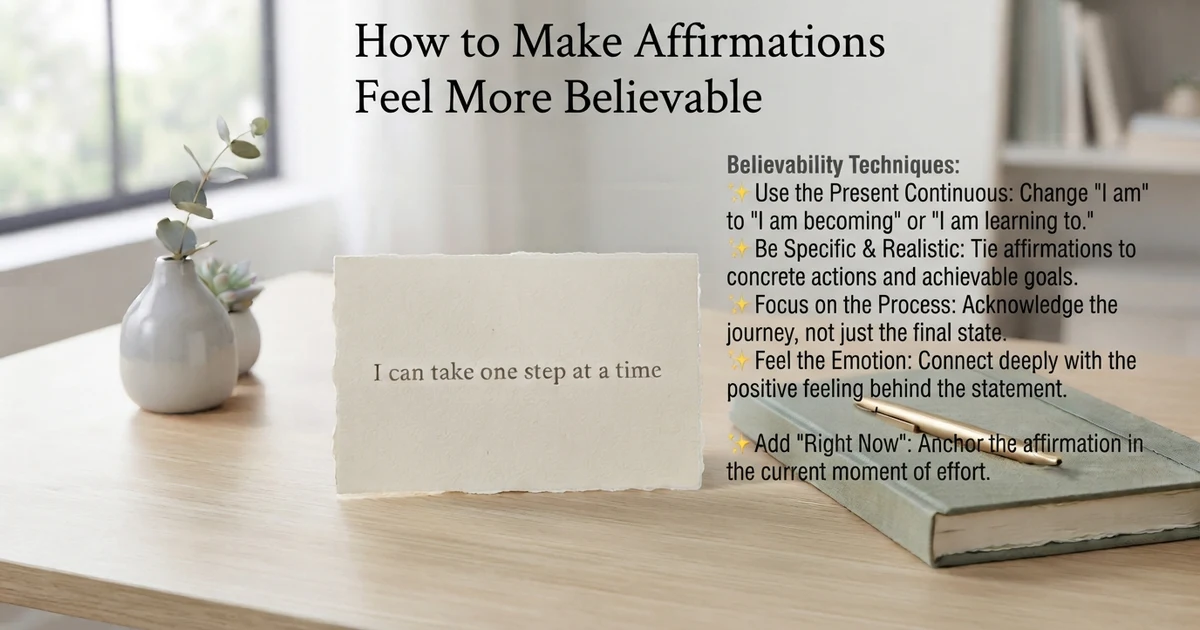
How to Make Affirmations Feel More Believable
One common reason affirmations feel uncomfortable is that the wording is too far removed from what someone currently believes.
For example, if you’re struggling with confidence, repeating an exaggerated statement may feel unnatural rather than encouraging.
A more balanced approach is to use language that acknowledges your present experience while leaving room for growth.
| Less believable wording | More realistic alternative |
|---|---|
| I am perfect at everything. | I can improve through practice. |
| Nothing ever goes wrong for me. | I can respond thoughtfully when plans change. |
| I never feel nervous. | I can take action even when I feel nervous. |
| I am successful at everything I do. | I can learn from each experience. |
| I always make the right decisions. | I can make thoughtful choices and adjust when needed. |
Notice how the realistic alternatives don’t deny challenges. They focus on your ability to respond, learn, and make choices.
If an affirmation feels fake, try changing it from a declaration into an intention.
Instead of saying, I am completely confident, you might say, I am practicing confidence one step at a time.
That small change can make the statement easier to accept and use.
Common Affirmation Mistakes to Avoid
Affirmations are simple, but a few common habits can make the practice feel less useful.
1. Choosing statements you don’t believe at all
Extremely exaggerated wording may create resistance. Start with a statement that feels possible rather than demanding an immediate change in your beliefs.
2. Repeating words without understanding them
An affirmation is more meaningful when you understand why you’re using it. Take a moment to connect the statement with your actual circumstances.
3. Expecting immediate results
Repeating an affirmation does not guarantee a particular outcome. Treat it as a supportive reminder rather than a promise that everything will change.
4. Using affirmations to ignore difficult emotions
You don’t have to pretend to be happy when you’re disappointed, worried, or frustrated. A realistic affirmation can acknowledge the difficulty while reminding you that you have options.
5. Relying on words without taking action
An affirmation about learning becomes more meaningful when you practice a skill. A statement about self-respect can be paired with a thoughtful boundary.
6. Keeping the same affirmation when it no longer fits
Your circumstances and priorities change. Update your statements to reflect what you need now.
How to Create Your Own Affirmation
Creating a personal affirmation is often more useful than copying a statement that sounds good but doesn’t reflect your situation.
Use this simple formula:
Current situation + supportive perspective + realistic intention
For example:
- Situation: You’re nervous about a presentation.
- Supportive perspective: You have prepared and can communicate your ideas.
- Affirmation: I can share my ideas clearly, one point at a time.
Try these additional examples:
| Situation | Personal affirmation |
|---|---|
| Starting a new job | I can learn the responsibilities as I go. |
| Facing a difficult conversation | I can communicate honestly and respectfully. |
| Making a mistake | I can take responsibility and learn from this. |
| Feeling unmotivated | I can start with a small task. |
| Comparing yourself with others | My progress deserves attention on its own terms. |
| Managing a busy schedule | I can choose what needs my attention first. |
Keep your affirmation brief enough to remember and specific enough to feel relevant.
You can also begin with phrases such as:
- I am learning to…
- I can practice…
- I choose to…
- I am willing to…
- I allow myself to…
- Today, I will…
These openings make it easier to create statements that reflect your actual goals instead of relying on generic positive phrases.
How to Build a Simple Affirmation Routine
You don’t need an elaborate routine to use affirmations consistently. A few minutes connected to an existing habit may be enough to make the practice manageable.
Try this simple approach:
- Choose one affirmation. Select a statement that reflects a current priority.
- Connect it with a daily habit. Read it after brushing your teeth, during your morning routine, or before beginning work.
- Pause and reflect. Consider what the statement means in your current situation.
- Take one related action. Turn the reminder into a practical choice.
- Review your experience. At the end of the week, decide whether the affirmation still feels relevant.
You can also save your favorite statements in a digital note or create a small affirmation card collection.
Save the list: Your personal affirmation card
Choose one statement to keep visible throughout your day.

I can take one thoughtful step at a time.
A reminder to focus on progress, not perfection.
You can replace this statement with your own words and save it in a journal, notes app, or printable card.
Conclusion
Understanding what is an affirmation begins with recognizing that it is more than a positive sentence. It is an intentional statement you can use to reinforce helpful thoughts, remember your values, and approach everyday situations with greater awareness.
The most useful affirmations are personal, realistic, and connected to your actual needs. You don’t have to repeat dozens of statements or force yourself to feel positive all the time. Start with one meaningful phrase, use it consistently when appropriate, and pair it with actions that support your intentions. Over time, you can adjust your affirmations as your goals, experiences, and priorities evolve.
Frequently Asked Questions
1. What is an affirmation in simple words?
An affirmation is a positive or intentional statement you repeat to yourself as a reminder of a belief, value, or goal. For example, “I can learn from my mistakes” is an affirmation because it encourages a constructive way of responding to challenges.
2. What is an affirmation example?
A simple affirmation example is “I trust myself to handle today.” Other examples include “I deserve respect,” “I can make progress at my own pace,” and “My efforts matter.” Each statement focuses on a thought or perspective you want to reinforce.
3. What is a positive affirmation?
A positive affirmation is a statement that encourages constructive self-talk or supports a helpful mindset. It may focus on confidence, self-worth, gratitude, patience, or personal growth. A positive affirmation should feel relevant to your life rather than requiring you to ignore genuine difficulties.
4. What is the difference between an affirmation and a quote?
An affirmation is usually a personal statement you repeat or use as a reminder. A quote is generally a statement written or spoken by someone else to communicate an idea. A motivational quote can become an affirmation when you adopt it as a meaningful personal reminder.
5. How many affirmations should I use each day?
There is no required number. Starting with one to three meaningful affirmations can make the practice easier to maintain. Choose statements that address your current priorities instead of repeating a long list without considering its relevance.
6. What is the best time to say affirmations?
You can use affirmations whenever they fit naturally into your day. Some people prefer mornings as a way to set an intention, while others use them before a challenging task or during an evening reflection. The most suitable time is the one that works with your routine.
7. Should I say affirmations aloud or write them down?
Both approaches are options. Speaking an affirmation aloud can make it easier to focus on the words, while writing it down gives you an opportunity to reflect on its meaning. Choose whichever method feels comfortable, or combine both.
8. What should I do if an affirmation feels fake?
Change the wording to make it more realistic. Instead of saying “I am completely confident,” try “I am learning to trust myself.” An affirmation doesn’t need to describe how you feel right now; it can express a reasonable intention or direction for growth.
9. Can affirmations help with confidence and self-esteem?
Affirmations may support confidence and self-respect by providing reminders of your abilities, values, and progress. However, repeating statements alone does not guarantee a change in how you feel. Pair affirmations with practical experiences, supportive relationships, and appropriate professional guidance when needed.
10. Do affirmations work without taking action?
Affirmations can serve as reminders, but they are not substitutes for action. A statement about improving a skill becomes more meaningful when you practice, and an affirmation about reaching a goal can help you remember why consistent effort matters. Words and actions work best when they support the same intention.