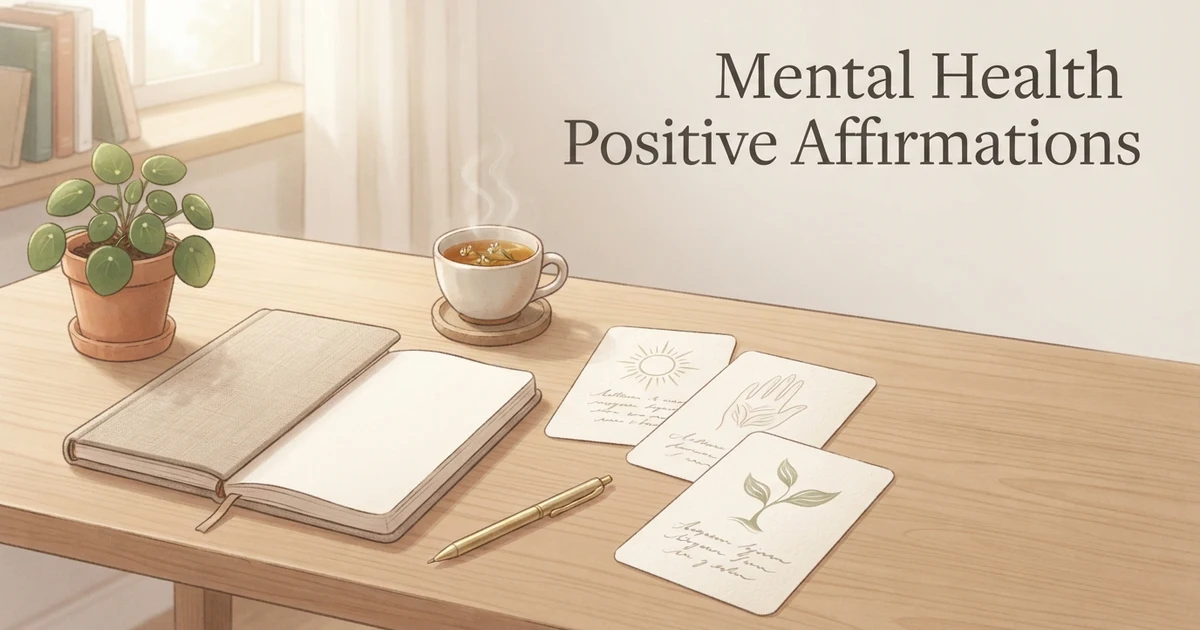
Mental health positive affirmations are short, supportive statements that can help you practice more encouraging self-talk. They can be used during stressful days, moments of self-doubt, or as part of a simple daily reflection routine. The goal is not to force yourself to feel positive all the time. Instead, a good affirmation gives you a kinder and more realistic thought to return to.
Mental Health Positive Affirmations
Here is a simple list of mental health positive affirmations you can read, save, or adapt to your own situation:
- I am allowed to take things one step at a time.
- My feelings deserve patience and understanding.
- I can be kind to myself today.
- I do not have to solve everything at once.
- I am learning how to understand myself better.
- My feelings are real, and I can respond to them with care.
- I can give myself time to rest and reset.
- I am worthy of kindness, including my own.
- I can ask for support when I need it.
- One difficult moment does not define my whole day.
- I can take a breath and begin again.
- I am doing the best I can with what I have today.
- I can make space for both good and difficult feelings.
- I do not need to have everything figured out.
- I can treat myself with patience.
- It is okay to slow down.
- I can focus on what I can manage right now.
- I am more than one mistake or difficult experience.
- I can give myself permission to rest.
- I deserve supportive and respectful relationships.
- I can learn from difficult moments without being defined by them.
- My worth is not measured by how productive I am.
- I can choose gentle words when I speak to myself.
- I am allowed to have hard days.
- I can start again whenever I am ready.
- Small steps still count.
- I can be patient with my progress.
- I deserve time to care for myself.
- I can notice my thoughts without believing every thought.
- I can focus on the present moment.
- Best Mental Health Positive Affirmations by Situation
Different situations may call for different kinds of self-talk. An affirmation can be more useful when it matches what you are actually experiencing.
When You Feel Anxious or Worried
- I can take this moment slowly.
- I can focus on what is happening right now.
- I do not need to predict everything that will happen.
- I can give myself patience while I work through this feeling.
- I can reach out to someone I trust when I need support.
When You Doubt Yourself
- I am still learning, and that is okay.
- One mistake does not decide my worth.
- I can learn without being perfect.
- I am allowed to grow at my own pace.
- I can speak to myself with encouragement instead of criticism.
Short Mental Health Positive Affirmations
Short affirmations are easy to remember and repeat during a busy day.
- I am worthy.
- I can pause.
- I can breathe.
- I am learning.
- I can begin again.
- I deserve kindness.
- I can take my time.
- Small steps count.
- I can ask for help.
- I am allowed to rest.
- I can be patient.
- I can choose kindness.
- I am doing my best.
- I can handle one step.
- My feelings matter.
- I can slow down.
- I am not my mistakes.
- I can keep learning.
- I deserve support.
- I can start again.
Mental Health Positive Affirmations for Daily Use
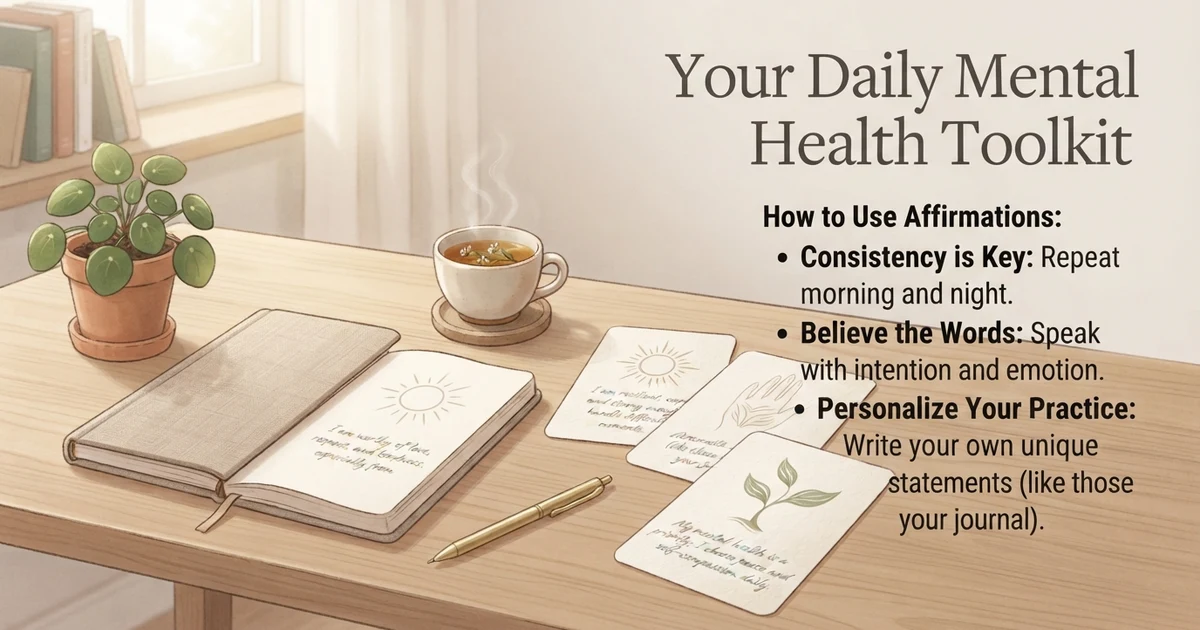
Affirmations can become part of a simple daily routine without requiring a lot of time. You might read one in the morning, write one in a journal, or repeat one when you notice harsh self-talk.
Try these for daily use:
- Today, I will treat myself with patience.
- I can focus on what matters right now.
- I will not expect perfection from myself.
- I can take breaks when I need them.
- I can appreciate one small good thing today.
- I can respond to myself with kindness.
- I can take today one step at a time.
- I am allowed to learn from today’s experiences.
- I can make space for my feelings.
- I can ask someone I trust for support.
- I can notice progress, even when it feels small.
- I can choose realistic and encouraging self-talk.
- I deserve moments of peace and rest.
- I can be patient with myself today.
- I can begin again if today does not go as planned.
Positive Mental Health Positive Affirmations for Beginners
If you are new to affirmations, choose statements that feel believable enough to repeat. You do not have to start with an extremely positive statement that feels disconnected from your current experience.
For example, instead of:
I am happy every moment of every day.
Try:
I can make room for moments of happiness and calm.
Instead of:
Nothing will ever go wrong.
Try:
I can face difficult moments one step at a time.
Instead of:
I never feel worried.
Try:
I can respond to worry with patience and support.
The second type of statement is often easier to connect with because it does not require you to deny difficult emotions.
Mental Health Positive Affirmations Meaning
The meaning of mental health positive affirmations is simple: they are supportive statements used to encourage kinder, more balanced, or more hopeful self-talk.
They are not promises that difficult feelings will disappear. They also do not need to sound extremely cheerful. A useful affirmation can simply remind you that you have permission to rest, ask for support, make mistakes, or take things slowly.
For example, “I can take this one step at a time” is an affirmation because it gives you a supportive thought to return to when something feels difficult.
The most helpful affirmation is often one that feels realistic enough to practice.
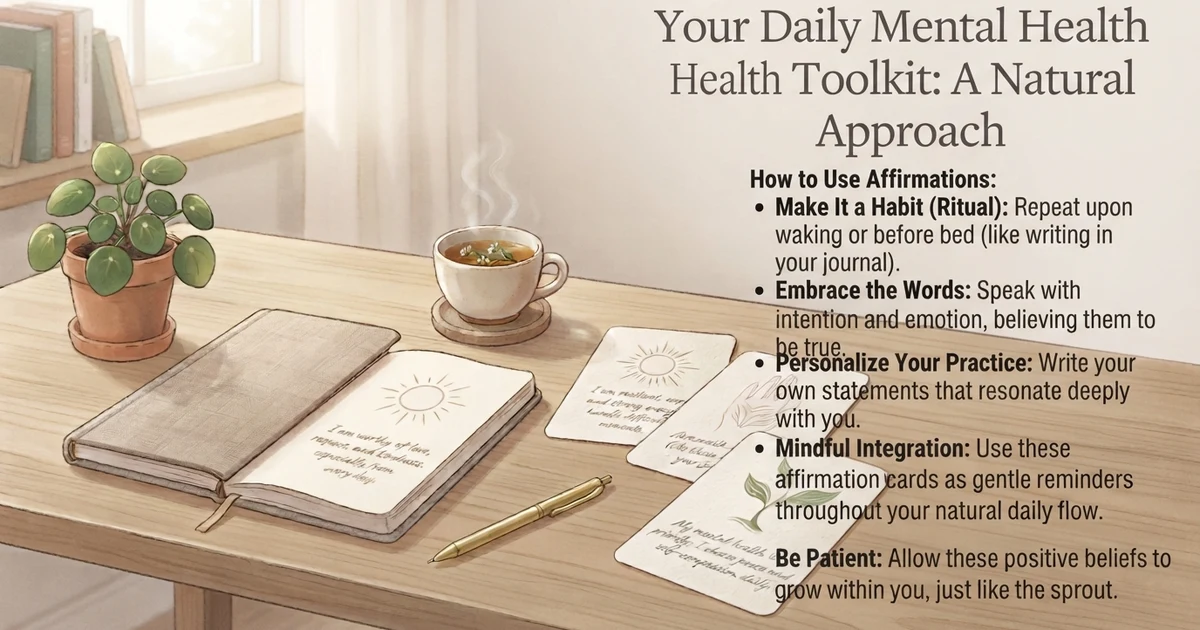
How to Use Mental Health Positive Affirmations Naturally
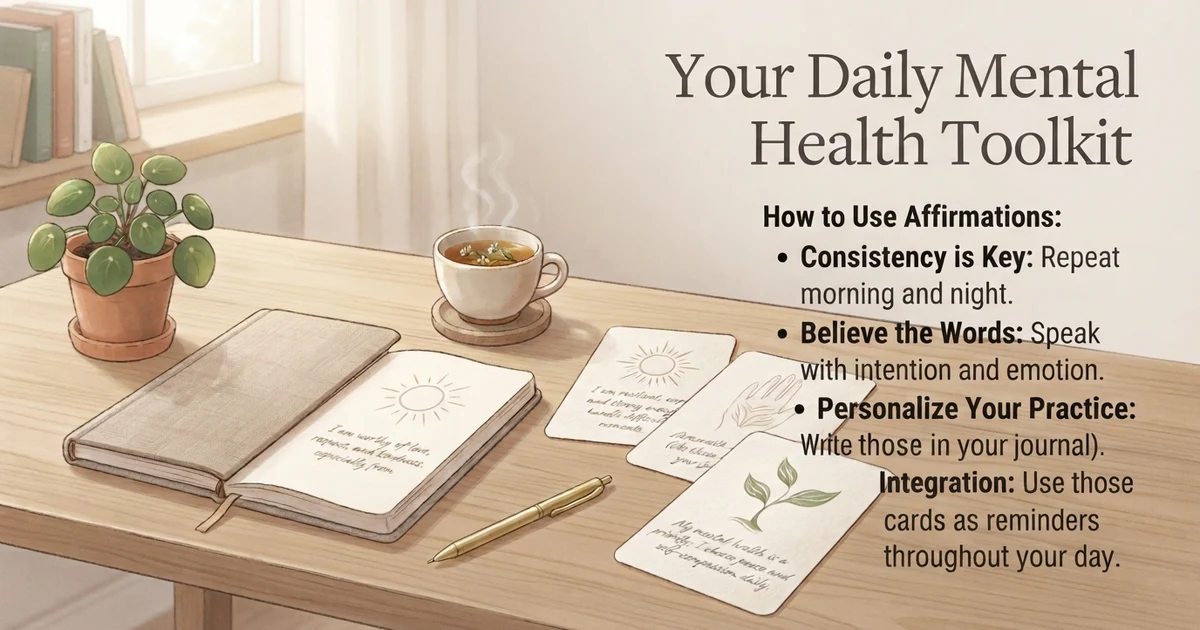
There is no single correct way to use affirmations. Choose a method that feels comfortable and easy to maintain.
1. Read One in the Morning
Choose one affirmation and read it before beginning your day.
2. Write It in a Journal
Write an affirmation once or several times and add a sentence about why it feels meaningful.
3. Use It During a Difficult Moment
When you notice unhelpful self-talk, pause and replace it with a kinder, realistic statement.
4. Save Your Favorites
Keep a small list of affirmations in a notebook or notes app so you can return to them easily.
5. Create a Weekly Theme
You might focus on patience one week, self-kindness the next, and asking for support after that.
6. Say It in Your Own Words
You do not have to use the exact wording from a list. Change an affirmation until it sounds natural to you.
Mental Health Positive Affirmations You Can Copy and Paste
Here are simple copy-and-paste options for notes, journals, or printable lists:
- I can take things one step at a time.
- I deserve kindness from myself.
- I am allowed to rest.
- I can ask for support.
- I do not have to be perfect.
- My feelings deserve patience.
- I can learn from difficult moments.
- I can begin again.
- Small progress still matters.
- I can give myself time.
- I am more than my mistakes.
- I can choose kinder self-talk.
- I am allowed to have difficult days.
- I can focus on what I can manage today.
- I deserve supportive relationships.
- I can make space for hope.
- I can be patient with my growth.
- I can pause before reacting.
- I can take care of myself in simple ways.
- I do not have to figure everything out today.
Gentle Wording Tips for Mental Health Affirmations
The wording of an affirmation matters because you want the statement to feel supportive rather than demanding.
Keep It Realistic
Choose language you can accept. “I can take one small step” may feel more natural than “I can accomplish everything.”
Avoid Emotional Pressure
You do not need to tell yourself that you must always be happy, calm, confident, or positive.
Use Kind Language
Words such as “can,” “allowed,” “learning,” “deserve,” and “one step at a time” can create a gentler tone.
Make It Personal
Change the wording so it reflects your actual situation. A student, parent, athlete, or working adult may each need different reminders.
Allow Difficult Feelings
A good affirmation can acknowledge that something is hard while still offering encouragement.
For example:
This is difficult right now, and I can take the next small step.
That is more supportive than pretending the difficulty does not exist.
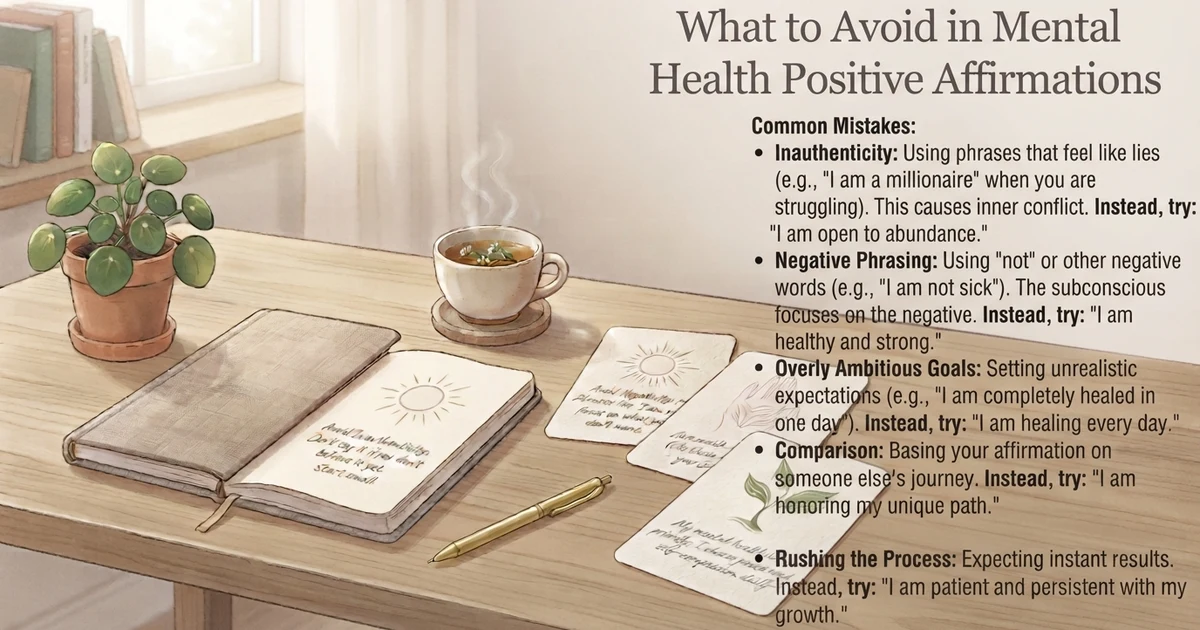
What to Avoid in Mental Health Positive Affirmations
Not every positive-sounding statement makes a good affirmation. Avoid wording that creates unnecessary pressure or unrealistic expectations.
Avoid Absolute Promises
Statements such as “Nothing bad will ever happen” cannot be guaranteed.
Avoid Denying Your Feelings
You do not need to tell yourself “I should not feel sad” simply because you are practicing positive self-talk.
Avoid Blaming Yourself
An affirmation should not suggest that difficult emotions happen because you are not positive enough.
Avoid Comparing Yourself With Others
Your progress does not need to match someone else’s.
Mental Health Positive Affirmations Printable Ideas
A printable affirmation sheet can make these statements easier to use regularly. You can create a simple page with:
- 10 short affirmations
- A “today’s affirmation” section
- A space for writing your own affirmation
- A small daily reflection
- A weekly affirmation tracker
- Cut-out affirmation cards
- A journal prompt beside each affirmation
For a simple printable, choose one theme such as self-kindness, patience, confidence, rest, or encouragement. Keep the design easy to read so the words remain the main focus.
How to Create Your Own Mental Health Positive Affirmations
You can create an affirmation by starting with a situation and turning it into a supportive reminder.
Step 1: Notice the difficult thought.
For example:
“I have to get everything right.”
Step 2: Make the thought more balanced.
“I can make mistakes and still keep learning.”
Step 3: Turn it into a short affirmation.
“I can learn without being perfect.”
Final Thoughts
Mental health positive affirmations can be a simple way to practice kinder and more balanced self-talk. You do not need to feel positive all the time, and you do not need to repeat an affirmation that feels unrealistic. Choose words that acknowledge where you are while reminding you of patience, support, self-respect, and small steps forward. Save your favorite affirmations and return to them whenever a gentle reminder would be useful.
Frequently Asked Questions
What are mental health positive affirmations?
Mental health positive affirmations are short, supportive statements that encourage kinder and more balanced self-talk. They can focus on patience, self-kindness, support, rest, confidence, or taking things one step at a time.
Do mental health positive affirmations work?
Affirmations can be a useful self-talk or reflection practice for some people. Their purpose is not to guarantee a particular emotional outcome, but to provide a supportive thought that you can practice returning to.
What is a good affirmation for mental health?
A good affirmation is realistic, kind, and relevant to your situation. For example, “I can take this one step at a time” is a simple statement that does not require you to pretend everything is perfect.
What are short mental health positive affirmations?
Short examples include “I can pause,” “I deserve kindness,” “Small steps count,” “I can begin again,” and “I am allowed to rest.”
Can I use mental health positive affirmations every day?
Yes. You can include an affirmation in a morning routine, journal entry, reflection practice, or personal notes. There is no requirement to use one at a particular time or frequency.
How do I choose the best mental health affirmation?
Choose a statement that matches what you need and feels believable enough to repeat. If a statement feels too strong, make it gentler by using phrases such as “I can,” “I am learning,” or “I am allowed to.”
Can I write my own mental health affirmations?
Yes. Start with a difficult or overly critical thought and rewrite it into a more balanced and supportive statement. Keep the final version short enough to remember.
Are mental health affirmations a replacement for professional help?
No. Affirmations are a self-talk practice and should not be presented as a replacement for professional mental health care. If you are having ongoing difficulty coping, consider reaching out to a trusted adult or qualified professional for support.
Can I use these affirmations for journaling?
Yes. Choose one affirmation and write it at the top of a journal page. You can then add a few sentences about how the statement relates to your day or what you need right now.
How can I make mental health affirmations more effective?
Use wording that feels realistic, personal, and supportive. Rather than forcing yourself to feel positive, choose statements that encourage patience, self-kindness, realistic thinking, and taking manageable steps.