

Being a teen can bring exciting opportunities, new responsibilities, changing friendships, school pressure, and plenty of moments when self-doubt gets loud. Positive affirmations for teens can offer a simple way to practice kinder, more balanced self-talk. The best affirmations aren’t overly dramatic or difficult to believe. They remind teens of qualities they can build, choices they can make, and challenges they can handle one step at a time. This collection includes short affirmations for confidence, school, motivation, friendships, difficult days, and everyday use, along with simple tips for making them feel natural.
Positive Affirmations for Teens
These affirmations are suitable for everyday moments when a teen wants a quick reminder of confidence, self-respect, patience, or personal growth.
- I trust myself to handle today.
- I can take things one step at a time.
- My voice matters.
- I am learning more about myself every day.
- I can make mistakes and keep growing.
- I deserve to treat myself with respect.
- My feelings are worth paying attention to.
- I can ask for help when I need it.
- I don’t have to have everything figured out.
- I can choose what deserves my attention.
- My progress matters, even when it’s slow.
- I can learn from difficult moments.
- I am allowed to change my mind.
- I can be proud of the effort I make.
- I have strengths that are still growing.
- I can give myself another chance.
- My worth isn’t decided by one mistake.
- I can handle one challenge at a time.
- I am becoming more confident through practice.
- I can make choices that reflect who I want to be.
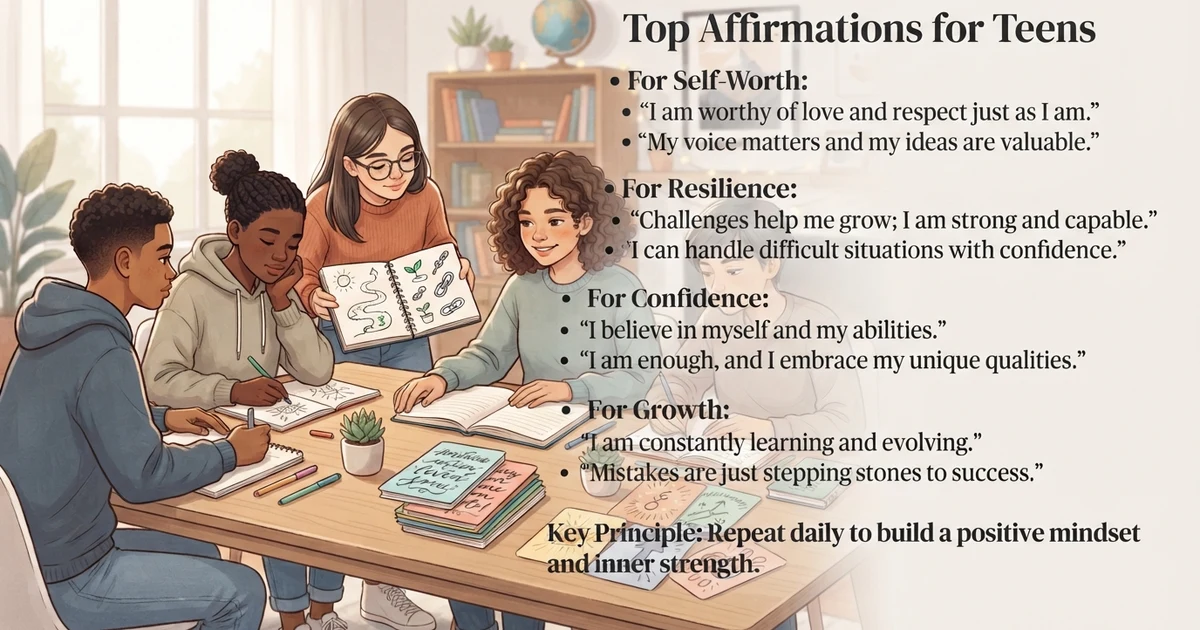
Short Positive Affirmations for Teens
Short affirmations are easy to remember and repeat before school, during a busy day, or whenever a quick confidence boost is helpful.
- I can do hard things.
- I trust myself.
- I am enough.
- I can begin again.
- My voice matters.
- I choose courage.
- I can keep going.
- I deserve respect.
- I am learning.
- I can stay calm.
- I choose progress.
- I can ask for help.
- I have a purpose.
- I can handle this moment.
- I believe in my growth.
- I am worthy of kindness.
- One step is enough.
- I can be myself.
- I can learn from this.
- Today is a new chance.
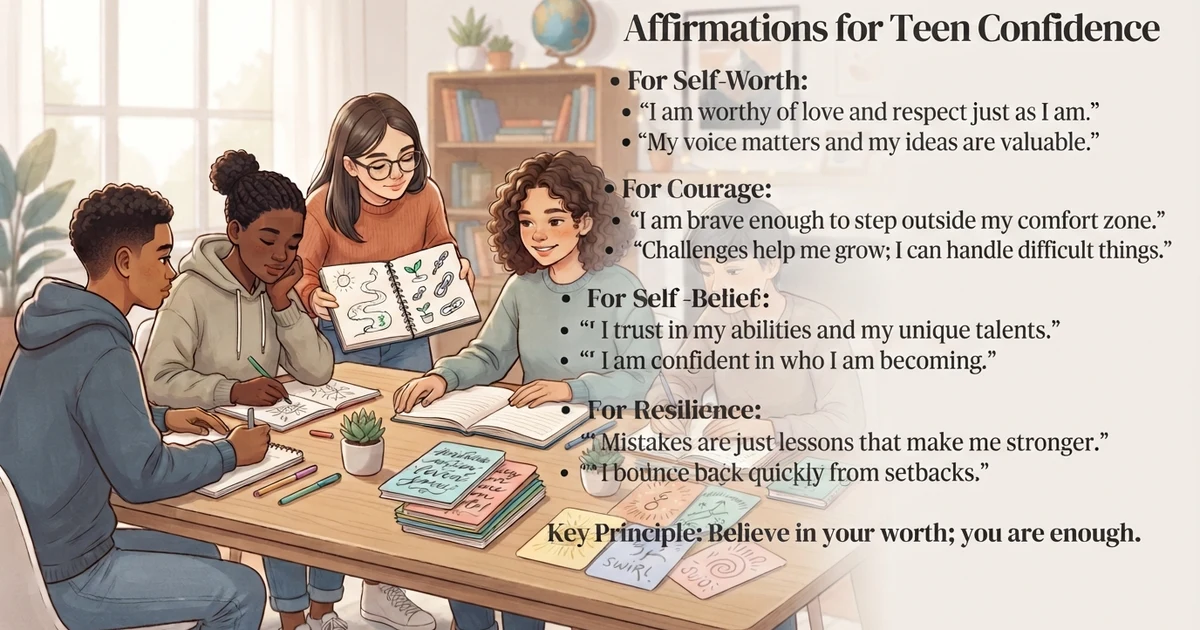
Affirmations for Teen Confidence
Confidence doesn’t mean feeling certain all the time. These affirmations focus on trusting yourself, speaking up, trying new things, and allowing yourself to learn without expecting perfection.
- I can speak even when I feel nervous.
- My ideas deserve to be heard.
- I don’t need everyone’s approval.
- I can try something new without being perfect.
- I trust myself to make thoughtful choices.
- I can stand up for what matters to me.
- My mistakes don’t erase my strengths.
- I can learn skills that feel difficult today.
- I am allowed to take up space in a respectful way.
- I can be confident and still ask questions.
- I don’t need to compare my progress with someone else’s.
- I can handle constructive feedback.
- I can recover after an awkward moment.
- My confidence can grow with practice.
- I am capable of more than I sometimes realize.
- I can let my own values guide my choices.
- I can be proud without being perfect.
Positive Affirmations for Teens for School
School can bring tests, assignments, presentations, deadlines, and social pressure. These affirmations can help create a more balanced mindset around learning and effort.
- I can focus on the next task.
- I don’t need to understand everything immediately.
- I can ask questions when something is unclear.
- My grades are information, not my identity.
- I can learn from a disappointing result.
- I can prepare instead of panicking.
- I am capable of improving with practice.
- I can take breaks and return with a clearer mind.
- I can organize my work one step at a time.
- I don’t have to compare my abilities with my classmates.
- I can make a plan and adjust it when needed.
- I can be proud of honest effort.
- I am allowed to make mistakes while learning.
- I can speak up when I need support.
- One difficult assignment does not define me.
- I can celebrate small improvements.
- I can keep working without demanding perfection from myself.
- I can give myself credit for showing up.
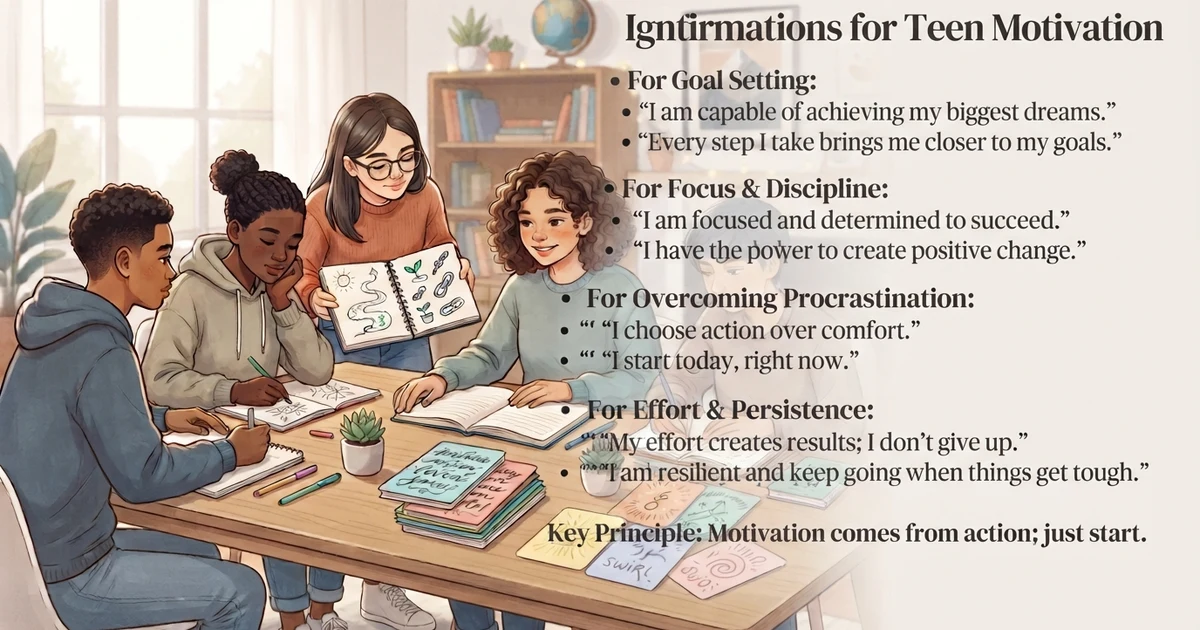
Affirmations for Teen Motivation
Motivation can come and go. Instead of waiting to feel completely ready, these affirmations encourage small steps and realistic effort.
- I can start before I feel completely ready.
- One small step still counts.
- I can focus on what I can control.
- I don’t have to finish everything at once.
- I can make progress today.
- My future self will benefit from the effort I make now.
- I can choose my next useful action.
- I can begin with five focused minutes.
- I can keep going after a slow start.
- I can adjust my plan instead of giving up.
- I can make room for both work and rest.
- I am building habits through repeated choices.
- I can finish what matters most first.
- I can return to a goal after losing momentum.
- My effort today can make tomorrow easier.
Positive Affirmations for Teens Who Feel Stressed
Stress can make ordinary tasks feel harder. These affirmations encourage a pause, self-compassion, and reaching out for support rather than expecting yourself to handle everything alone.
- I can pause before reacting.
- I don’t have to solve everything right now.
- I can take a slow breath and focus on this moment.
- Asking for support is a responsible choice.
- I can take things one step at a time.
- I am allowed to rest.
- I can make a simple plan when everything feels messy.
- I can focus on what is within my control.
- This difficult moment will not define my whole life.
- I can tell someone I trust when I am struggling.
- I don’t have to hide every difficult feeling.
- I can give myself time to reset.
- I can handle today without solving tomorrow.
- I can choose a calmer next step.
- I deserve patience from myself.
- It is okay to need support.
If stress or difficult emotions feel overwhelming or interfere with everyday life, an affirmation shouldn’t be the only form of support. Talking with a trusted adult, school counselor, or qualified professional can be an important next step.
Positive Affirmations for Teen Self-Worth
Self-worth isn’t something that needs to be earned through grades, popularity, achievements, or other people’s opinions. These affirmations focus on dignity, self-respect, and a broader view of personal value.
- My worth is bigger than my achievements.
- I deserve kindness from myself.
- I can respect myself while still working on my weaknesses.
- I don’t need to be perfect to deserve respect.
- My mistakes are part of learning, not my whole identity.
- I can appreciate qualities that aren’t measured by grades.
- I am more than what other people see.
- I can choose friendships that treat me with respect.
- I deserve to be spoken to kindly.
- I can forgive myself for being human.
- My value doesn’t depend on being the best.
- I can notice my strengths without ignoring areas I want to improve.
- I deserve healthy boundaries.
- I can walk away from disrespectful behavior when it’s safe to do so.
- I can learn to speak to myself with more patience.
- I don’t need to earn basic respect.
Positive Affirmations for Friendships and Social Situations
Friendships can change quickly during the teen years. These affirmations can help with communication, boundaries, confidence, and handling moments that don’t go as planned.
- I can be a good friend without losing myself.
- I can listen and share honestly.
- I deserve friendships built on respect.
- I can say no when something doesn’t feel right.
- I don’t have to agree with everyone.
- I can apologize when I’ve made a mistake.
- I can accept that friendships sometimes change.
- I can choose kindness without ignoring my boundaries.
- I can meet new people at my own pace.
- I don’t need to impress everyone.
- I can speak up when something bothers me.
- I can respect other people’s differences.
- I can leave room for misunderstandings to be cleared up.
- I can value quality friendships over popularity.
- I can be myself around people who respect me.
- I can ask a trusted person for advice when a friendship becomes difficult.
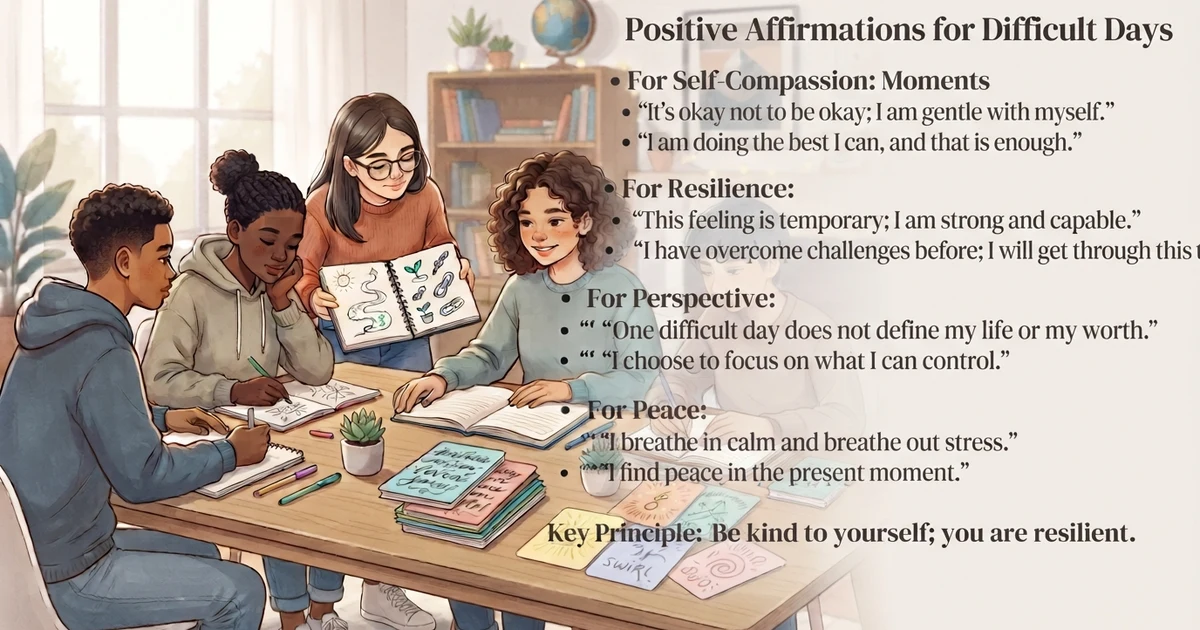
Positive Affirmations for Difficult Days
Some days simply don’t go well. These affirmations aren’t meant to pretend everything is fine. They can provide a small, realistic reminder that one difficult day doesn’t tell the whole story.
- Today is difficult, and I can still be kind to myself.
- I can get through this moment without judging myself.
- I don’t need to pretend I’m okay when I need support.
- One bad day doesn’t define me.
- I can start again tomorrow.
- I can do one useful thing at a time.
- I am allowed to have complicated feelings.
- I can give myself a little patience today.
- I can reach out instead of keeping everything to myself.
- I don’t have to make a perfect decision right now.
- I can rest when I need to recharge.
- I can learn something from today without blaming myself.
- I can focus on what I need most in this moment.
- I can let today be imperfect.
- Tomorrow can bring another opportunity to try again.
Morning Affirmations for Teens
Morning affirmations work best when they’re simple enough to fit into an existing routine. Try choosing two or three while getting ready, eating breakfast, or preparing for school.
- I can give today a fair start.
- I am ready to learn something new.
- I can handle whatever comes first.
- I will focus on what I can control.
- I can be patient with myself today.
- My goal is progress, not perfection.
- I can make thoughtful choices.
- I will treat myself and others with respect.
- I can ask for help if I need it.
- I can make today meaningful in small ways.
- I don’t have to know exactly how the day will go.
- I can respond instead of reacting.
- I can carry confidence into my first step.
- I will give my attention to what matters most.
Positive Affirmations for Teen Personal Growth
Growing up involves changing your opinions, discovering your values, making mistakes, and learning what works for you. These affirmations encourage curiosity without demanding instant self-improvement.
- I am still learning who I am.
- I can change in healthy ways.
- I can learn from people who see things differently.
- I can admit when I don’t know something.
- I can take responsibility without tearing myself down.
- I can turn mistakes into lessons.
- I can practice skills instead of expecting instant talent.
- I can become more patient with myself.
- I can make choices based on my values.
- I can leave old habits behind one step at a time.
- I can learn from feedback without letting it define me.
- I can celebrate growth that other people may not notice.
- I can be a work in progress.
- I can choose what kind of person I want to become.
- I can keep learning even when progress feels slow.
- I don’t have to become someone else to grow.
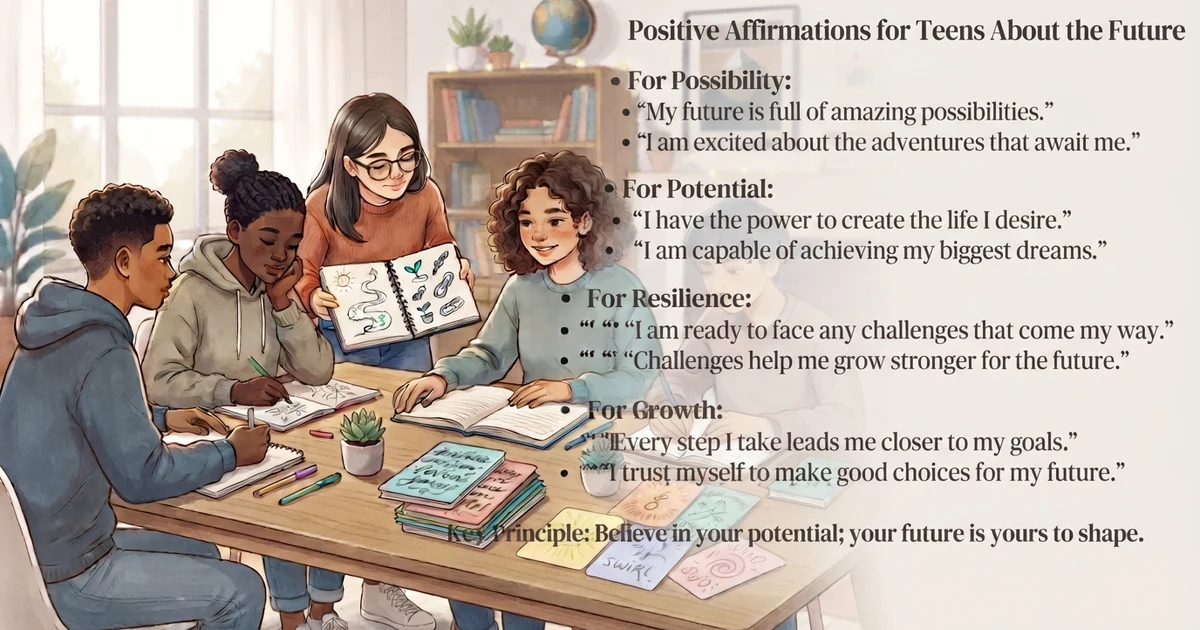
Positive Affirmations for Teens About the Future
The future can feel exciting and uncertain at the same time. These affirmations focus on possibility, preparation, and taking manageable steps instead of expecting a complete life plan.
- I don’t need to know my entire future today.
- I can explore different interests.
- I can change my goals as I learn more.
- I can prepare for opportunities one step at a time.
- My future doesn’t depend on one decision.
- I can ask questions about paths I’m considering.
- I can learn useful skills along the way.
- I can make room for unexpected opportunities.
- I can take my time making important choices.
- I can build a future that reflects my values.
- I can recover if a plan doesn’t work.
- I can learn from people I trust.
- I can stay curious about what comes next.
- I can focus on the next step instead of predicting everything.
- I have time to learn, grow, and make thoughtful choices.
How to Make Positive Affirmations Feel More Believable
An affirmation can feel awkward when it makes a claim that doesn’t match how you currently feel. You don’t have to force yourself to repeat something that sounds completely untrue.
Instead, move the wording one step closer to something you can accept.
For example:
Too far:
“I am the most confident person in every situation.”
More believable:
“I am learning to trust myself in unfamiliar situations.”
A realistic affirmation can still be encouraging. Words such as learning, practicing, choosing, allowing, working toward, and taking one step can make the statement easier to connect with.
How to Personalize Affirmations for Teens
The best affirmation is often the one that matches a real situation. Start with something specific instead of choosing a sentence simply because it sounds impressive.
Try this simple formula:
Current challenge + realistic belief + next step
For example:
- Challenge: nervous about speaking in class
- Belief: “I can share my ideas even when I’m nervous.”
- Next step: raise your hand once or ask a question.
You can also replace general words with language that sounds natural to you. If you would never say “I am unstoppable,” don’t use it. An affirmation should sound like something you can actually imagine saying.
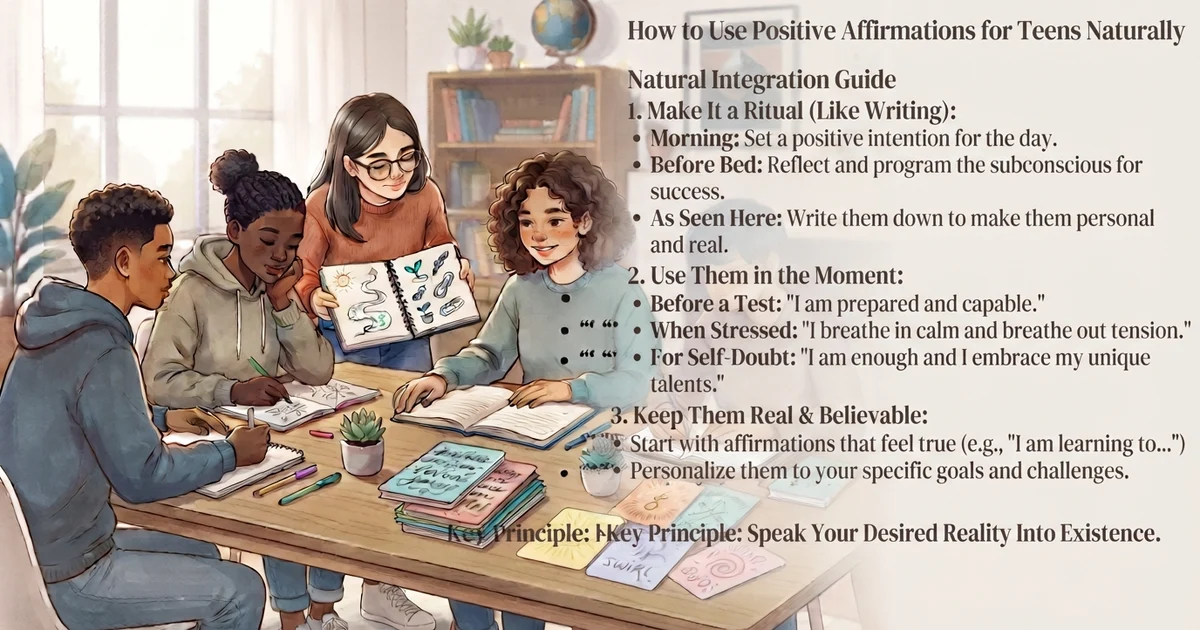
How to Use Positive Affirmations for Teens Naturally
There’s no need to repeat dozens of affirmations every day. Choosing a small group that matches your current needs can make the practice easier to maintain.
Try this simple routine:
- Choose two or three affirmations.
- Read them slowly once or twice.
- Pick one that feels especially relevant that day.
- Connect it with one practical action.
- Repeat the same affirmation for several days if it remains useful.
- Change it when your situation or needs change.
You can write an affirmation in a notebook, add it to a journal page, place it on a study reminder, or quietly repeat it before an activity. Speaking and writing are both options; choose whichever feels more natural.
What to Avoid When Choosing Teen Affirmations
Positive self-talk works better when it doesn’t become another source of pressure. Avoid statements that demand perfection or suggest a teen must feel positive all the time.
Try not to rely on affirmations that:
- Promise that everything will always work out.
- Suggest mistakes are unacceptable.
- Compare one teen’s abilities with another person’s.
- Depend on popularity or approval.
- Put pressure on appearance or body size.
- Tell someone to ignore genuine problems.
- Suggest difficult emotions should simply disappear.
- Replace asking for appropriate support.
- Make success sound guaranteed.
- Require a teen to feel confident before taking action.
A useful affirmation should leave room for real feelings while encouraging a constructive response.
Conclusion
Positive affirmations for teens can be simple reminders to respond to everyday challenges with more balanced and supportive self-talk. The most useful statements aren’t necessarily the biggest or most dramatic ones. They are the ones that sound natural, match a real situation, and encourage a realistic next step. A teen might choose a few affirmations for school, confidence, friendships, difficult days, or personal growth and adjust them as life changes. Consistency matters more than using a huge list. Save the affirmations that feel useful, personalize the wording, and let the practice support real action rather than replace it.
Frequently Asked Questions
What do positive affirmations for teens mean?
Positive affirmations for teens are short statements that encourage balanced, supportive self-talk. They can remind a teen of personal strengths, values, choices, effort, or the ability to handle a challenge. They work best when the wording feels realistic rather than like a promise that everything will always be perfect.
What are the best positive affirmations for teens?
The best affirmations depend on the situation. For general use, statements such as “I can take things one step at a time” or “I don’t have to be perfect to make progress” are flexible choices. A good affirmation should feel relevant, understandable, and believable to the person using it.
How many affirmations should a teen use each day?
There is no required number. Two or three meaningful affirmations may be easier to remember than a long list. A teen can choose statements based on what they need that day, such as confidence before school, patience during a difficult task, or encouragement after a setback.
What is a good short affirmation for a teen?
“I can handle one step at a time” is a useful short option because it doesn’t demand perfection. Other simple choices include “I trust myself,” “My voice matters,” “I can begin again,” and “I choose progress.”
When is the best time for teens to use affirmations?
Affirmations can fit into many routines. A teen might use them in the morning, before a test or presentation, while journaling, after a difficult moment, or before going to sleep. The most useful time is usually one that makes the practice easy to remember.
Should teens say affirmations out loud or write them down?
Either approach can work as a personal self-talk practice. Saying an affirmation quietly or aloud may feel natural for some people, while writing it in a notebook may suit others. There is no need to choose a method that feels uncomfortable or perform the practice for other people.
What if an affirmation feels fake?
Change the wording. Instead of saying, “I am completely confident,” try, “I am learning to feel more comfortable speaking up.” A statement doesn’t need to describe how you feel perfectly right now. It can describe a realistic direction you want to practice.
Can affirmations help with school stress?
Affirmations may provide a supportive reminder during stressful school situations, but they shouldn’t be treated as a solution to serious or ongoing distress. Practical steps such as breaking work into smaller tasks, taking appropriate breaks, and talking with a trusted adult can also be important.
Can teens create their own affirmations?
Yes. Personal wording can make an affirmation feel more natural. Start with a challenge, identify a realistic belief, and turn it into a short statement. For example, someone nervous about a new activity might write, “I can give myself permission to be a beginner.”
Should affirmations be used with practical action?
They can be. An affirmation is often more useful when paired with a small action that matches its message. For example, “I can prepare for this test” could be followed by reviewing one section of notes. The goal isn’t perfection; it’s connecting encouraging self-talk with a realistic next step.