
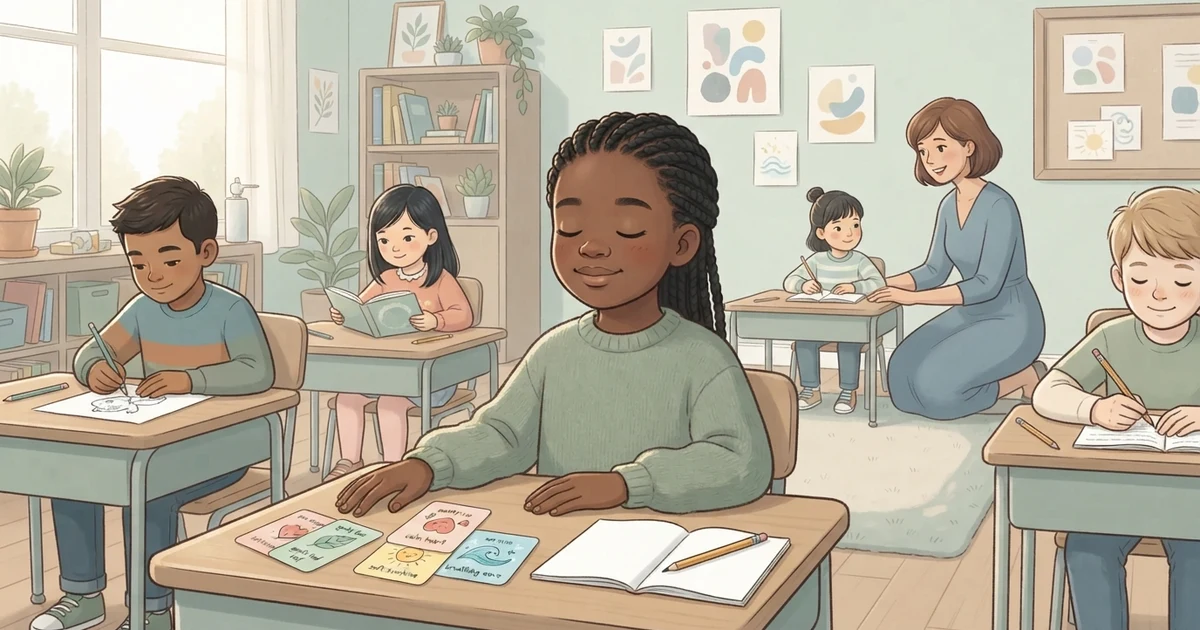
Children can experience nervousness, restlessness, or overwhelming feelings during the school day. A busy classroom, a difficult assignment, a test, or a disagreement with a friend can make it harder to feel settled. Body calm affirmation for kids during school gives children simple, reassuring words they can use to pause, notice their feelings, and take the next small step.
These affirmations are designed for everyday school situations, from morning worries to classroom transitions and test-time nerves. Parents and teachers can read them aloud, write them on cards, or help children choose a phrase that feels natural. The goal is not to force children to feel calm but to remind them that they can ask for help, take a gentle pause, and work through difficult moments one step at a time.
Body Calm Affirmation for Kids During School: Quick List
Here are 15 simple affirmations children can remember and use at school.
- I can take a slow, gentle breath.
- My body can relax one little bit at a time.
- I am safe to ask a trusted adult for help.
- I can take things one step at a time.
- It is okay to feel nervous sometimes.
- I can pause before I try again.
- My feelings are allowed.
- I can give myself a quiet moment.
- I do not have to rush every task.
- I can learn even when something feels hard.
- I can notice my feet on the floor.
- I can ask for a break when I need one.
- I can be kind to myself today.
- I can try again after a difficult moment.
- I am learning how to care for myself.
These short phrases work well on classroom affirmation cards, in a school planner, or as a gentle reminder before a challenging activity.

What Are Body Calm Affirmations for Kids During School?
Body calm affirmations are short, supportive statements that help children respond to uncomfortable feelings with patience and self-kindness. They give children words to use when they feel nervous, frustrated, distracted, or unsure of what to do next.
For example, a child who feels worried before reading aloud might say, “I can take my time, and I can ask for help if I need it.”
The phrase does not promise that the worry will disappear. Instead, it reminds the child that feeling nervous is okay and that there are helpful ways to respond.
These affirmations can support children as they practice:
- Recognizing and naming their feelings.
- Taking a pause during a busy school day.
- Approaching challenging tasks with patience.
- Asking a teacher or trusted adult for support.
- Speaking to themselves with kindness.
Every child responds differently. Some children enjoy repeating affirmations, while others prefer drawing, talking, stretching gently, or simply sitting quietly for a moment.
100+ Body Calm Affirmations for Kids During School
The following list offers simple phrases for different classroom moments. Children can choose the ones they like rather than feeling that they must memorize or repeat every statement.
1. Short Body Calm Affirmations for Kids
These short affirmations are easy to remember, even when a child has little time between activities.
- I can pause for a moment.
- I can take one gentle breath.
- I can slow down when I need to.
- My body deserves kindness.
- I can take my time.
- I can relax a little.
- I can start again.
- I can be patient with myself.
- I can notice how I feel.
- I can take one step at a time.
- I can ask for help.
- I can have a quiet moment.
- I can handle this one step at a time.
- I can be gentle with myself.
- I am learning every day.
2. Positive Affirmations for Classroom Calm
A classroom can be noisy, busy, and full of new experiences. These affirmations encourage children to approach their school day with patience and a sense of capability.
- I can find a quiet moment in a busy day.
- I can focus on one thing at a time.
- I can listen to my body.
- I can take a pause when I feel overwhelmed.
- I can ask my teacher for support.
- I can learn at my own pace.
- I can try even when I feel unsure.
- I can let myself settle before I begin.
- I can take my time answering a question.
- I can return to my work after a short pause.
- I can be patient when the classroom feels busy.
- I can choose a helpful next step.
- I can give myself time to think.
- I can make mistakes and keep learning.
- I can do my best without being perfect.
3. Body Calm Affirmations for School Anxiety and Nervous Feelings
Some children feel uneasy before a test, a presentation, or a new activity. These phrases acknowledge those feelings without suggesting that children should hide them.
- It is okay to feel nervous.
- I can feel worried and still ask for help.
- I do not have to know every answer.
- I can take this moment slowly.
- I can tell a trusted adult how I feel.
- My feelings do not define who I am.
- I can be brave in my own way.
- I can try one small step.
- I can give myself time to feel ready.
- I can face new things with support.
- I can make room for my feelings.
- I can remind myself that I am learning.
- I can take a pause before a difficult task.
- I do not have to pretend that everything is easy.
- I can ask someone to explain things again.
4. Gentle Affirmations for Relaxing the Body
These affirmations help children pay attention to their bodies in a comfortable, nonjudgmental way. They can be used while sitting at a desk, waiting for class to begin, or taking an approved break.
- I can notice my feet resting on the floor.
- I can let my shoulders rest comfortably.
- I can unclench my hands if they feel tight.
- I can breathe gently without rushing.
- I can notice what my body needs.
- I can sit in a way that feels comfortable.
- I can give myself a quiet moment.
- I can soften my forehead if it feels tense.
- I can stretch gently when it is appropriate.
- I can notice the chair supporting me.
- I can take a comfortable breath.
- I can give my body time to settle.
- I can move gently when I need to.
- I can notice the room around me.
- I can care for my body with kindness.
Children do not need to force their breathing, hold a particular posture, or make every part of their body feel relaxed. Comfort and choice matter more than getting the exercise right.
5. Affirmations for Tests, Homework, and Difficult Tasks
Schoolwork can sometimes leave children feeling tense or frustrated. These statements encourage persistence without adding pressure to perform perfectly.
- I can begin with the first question.
- I can read the instructions slowly.
- I can pause when I feel stuck.
- I can ask for clarification.
- I can learn from a mistake.
- I can focus on what I know.
- I can take one question at a time.
- I can try a different approach.
- I do not need to rush to prove myself.
- I can take a short break when it is allowed.
- I can work through challenges with support.
- I can celebrate small steps forward.
- I can keep learning when something is difficult.
- My worth is not measured by one grade.
- I can do my best and learn from the experience.
6. Affirmations for Social Situations and Friendships
Friendship problems, group work, and speaking in front of classmates can bring up strong feelings. These affirmations remind children that they can respect their own needs while treating others kindly.
- I can speak kindly to myself.
- I can ask to join a group politely.
- I can tell someone when I need space.
- I can ask an adult for help with a problem.
- I can be kind without pleasing everyone.
- I can take a moment before responding.
- I can respect other people’s feelings and my own.
- I can make new friends at my own pace.
- I can speak up when something feels wrong.
- I can learn from misunderstandings.
- I deserve to be treated with respect.
- I can listen without forgetting my own needs.
- I can ask for help with a difficult conversation.
- I can take a quiet moment after a busy group activity.
- I can be myself while learning with others.
7. Positive Affirmations for School Mornings and Transitions
Moving from home to school, changing classrooms, or switching between activities can be challenging for some children. These affirmations can offer a reassuring start.
- I can take my morning one step at a time.
- I can get ready with a little patience.
- I can ask questions about today’s plan.
- I can take time to adjust to a new activity.
- I can handle changes with support.
- I can say goodbye and remember that trusted people care about me.
- I can settle into my classroom at my own pace.
- I can prepare for the next activity one step at a time.
- I can ask what happens next.
- I can give myself time to adjust.
- I can take a comfortable pause between activities.
- I can remember that I do not have to do everything at once.
- I can start this school day with kindness toward myself.
- I can ask a trusted adult for reassurance.
- I can try again if my morning feels difficult.

How to Choose the Best Body Calm Affirmation for Kids During School
The best affirmation is one that a child understands and can accept as believable. A phrase does not have to sound impressive or overly positive to be useful.
Consider these simple guidelines when choosing an affirmation.
- Keep it age-appropriate. Younger children may prefer “I can take a little pause” over a longer statement about emotional regulation.
- Use natural language. Choose words the child would actually say.
- Match the moment. A child who feels nervous before a test may benefit more from “I can take one question at a time” than a general statement about having a wonderful day.
- Make room for real feelings. Avoid suggesting that children must always be happy, confident, or calm.
- Let children choose. Offer two or three phrases and allow them to select their favorite.
- Keep the goal realistic. An affirmation can be a reminder, not a promise that a difficult feeling will disappear.
For example, instead of saying, “Nothing can ever make me nervous,” try, “I can feel nervous and ask for support.”
The second phrase allows the child to acknowledge what is happening while remembering that help is available.
How to Use Body Calm Affirmations During the School Day
Affirmations are easiest to use when they fit naturally into a child’s routine. They do not need to become another school assignment or something a child must do perfectly.

1. Before leaving for school
Choose one simple phrase together, such as “I can take today one step at a time.” Keep the conversation relaxed rather than asking the child to repeat the words until they feel better.

2. Before a challenging lesson
A child can quietly remember, “I can start with one small step.” Pair the phrase with a practical action, such as reading the first instruction or asking the teacher a question.

3. When feelings become overwhelming
Offer reassurance without demanding that the child calm down. A teacher or other trusted adult can help the child identify what is wrong and decide whether a quiet space, a short break, or extra support would help.

4. After a difficult moment
Help the child notice what they managed to do. For example, “You asked for help when the work felt hard.” This recognizes a useful action rather than expecting the child to have stayed calm throughout.
A Simple Body Calm Routine for Kids at School
A short routine can help children remember their options when the school day feels busy. Adapt it to the classroom rules and the child’s needs.
Pause
Stop for a moment if it is safe and appropriate to do so.
Notice
Ask, “What am I feeling, and what might I need right now?”
Choose an affirmation
Try “I can take my time” or “I can ask for help.”
Take one helpful step
Return to the task, request support, or follow the classroom’s break routine.
A child may need adult support rather than a self-guided routine, especially when feelings are intense or persistent. That is completely okay.
What Parents and Teachers Should Avoid
Affirmations work best when children feel understood rather than corrected. The way adults introduce these phrases can matter as much as the words themselves.
Avoid these common mistakes:
- Forcing children to repeat affirmations. Offer them as an option, not a rule.
- Dismissing uncomfortable feelings. Saying “There is nothing to worry about” may leave a child feeling unheard. Try “I can see this feels difficult. Let’s work through it together.”
- Expecting instant calm. A supportive phrase may help a child pause, but it will not always change how they feel.
- Using unrealistic statements. “I never make mistakes” creates unnecessary pressure. “I can learn from mistakes” is more believable.
- Ignoring practical problems. If a child is struggling with bullying, confusing schoolwork, sensory discomfort, or ongoing worry, affirmations should not replace appropriate adult support.
- Treating every child the same. Some children prefer spoken phrases, while others respond better to pictures, written reminders, or a quiet conversation.
Children should know that they can express difficult feelings honestly. They do not need to appear calm to deserve understanding and help.
Printable Body Calm Affirmation Cards for Kids
Printable affirmation cards can make these phrases easier to remember throughout the school week. They can be used at home, in a classroom, or in a school counselor’s office with appropriate permission.
Consider creating a small set of six cards:
I can take a gentle pause.
PAUSE CARD
My feelings matter.
FEELINGS CARD
One step at a time.
PROGRESS CARD
I can ask for help.
SUPPORT CARD
I can try again.
TRY AGAIN CARD
I am learning every day.
GROWTH CARD
These six card designs can be recreated on paper or in a printable worksheet using large lettering and child-friendly illustrations.
For a useful printable, keep the design simple:
- Use large, readable text.
- Choose gentle colors and uncluttered illustrations.
- Include one affirmation per card.
- Let children decorate or personalize their favorite cards.
- Keep the cards somewhere accessible, such as a school planner or classroom folder.
A printable is a reminder, not a requirement. Children can choose a different phrase whenever their needs change.
How to Make Body Calm Affirmations More Believable
Children may find broad statements difficult to accept, especially when they are already upset. A practical affirmation connects reassurance with something the child can realistically do.
| Instead of saying | Try saying |
|---|---|
| I am never nervous. | I can feel nervous and ask for help. |
| Everything is always easy. | I can work through difficult things one step at a time. |
| I must calm down now. | I can take a moment and see what helps. |
| I am the best at everything. | I can keep learning and improving. |
| Nothing ever bothers me. | I can talk to someone when something bothers me. |
Children can also personalize their affirmations by replacing general words with a specific situation.
For example, “I can handle school” might become “I can ask my teacher to explain the first math question.”
The more closely an affirmation matches a child’s actual experience, the easier it may be to use naturally.
When a Child May Need More Support
Occasional nervousness or frustration is a normal part of growing up. However, if a child regularly feels overwhelmed at school, avoids activities they previously enjoyed, or struggles to manage everyday classroom routines, it is worth talking with a trusted adult.
Parents can speak with the child’s teacher, school counselor, or pediatric health professional to understand what might be contributing to the difficulty.
Affirmations can be one small part of a supportive approach, alongside listening, practical adjustments, and appropriate professional guidance when needed. Children should never be made to feel that persistent distress is their fault or that they simply need to think more positively.
Conclusion
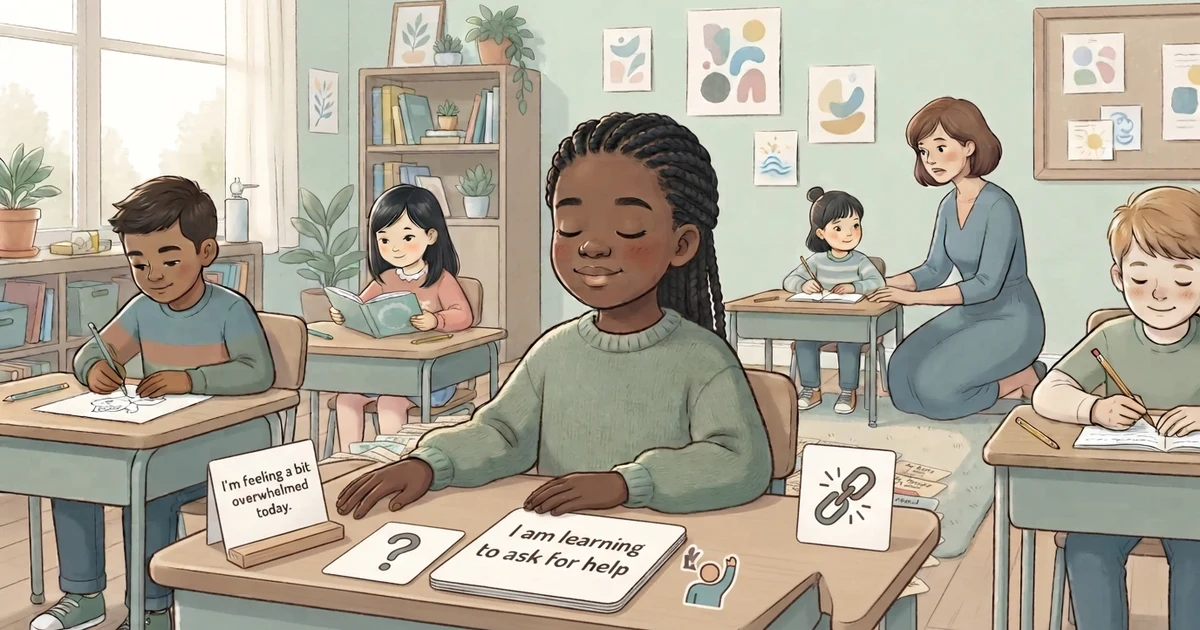
Body calm affirmations for kids during school offer children simple ways to practice self-kindness, recognize their feelings, and approach challenging moments one step at a time. From “I can take a gentle pause” to “I can ask for help,” these phrases can become useful reminders during lessons, tests, transitions, and friendship challenges.
Start with one or two affirmations that feel natural to your child. Write them on a card, keep them in a school planner, or practice them together before a busy day. Most importantly, let children know that every feeling deserves understanding and that asking for help is a strength. The aim is not perfect calm but a supportive way to navigate school with patience and confidence.
Frequently Asked Questions
1. What is a body calm affirmation for kids during school?
A body calm affirmation is a short, encouraging statement that helps children respond to nervousness, frustration, or restlessness with patience and self-kindness. For example, “I can take a gentle pause” gives a child a simple phrase to remember during a challenging school moment.
2. What are the best body calm affirmations for kids?
Useful affirmations are simple, realistic, and easy to remember. Examples include “I can take one step at a time,” “I can ask for help,” and “It is okay to feel nervous.” The best choice depends on the child’s age, preferences, and situation.
3. What are some short body calm affirmations for school?
Short options include “I can pause,” “I can take my time,” “My feelings matter,” “I can try again,” and “I can ask for help.” Children can choose one phrase to remember during their school day.
4. How can affirmations help children feel calmer in class?
Affirmations can give children supportive words to use when they notice uncomfortable feelings. They may help children pause, reflect on what they need, or remember to seek help. They do not guarantee that a child will feel calm.
5. When should children use body calm affirmations at school?
Children can use them before a test, during a classroom transition, before speaking in front of classmates, or after a frustrating activity. They can also use them at the beginning of the school day as a gentle reminder.
6. How do you teach a child to use calm affirmations?
Start by choosing one short phrase together. Explain what it means, demonstrate how to use it in an everyday situation, and allow the child to practice when they feel comfortable. Avoid making repetition compulsory.
7. Can teachers use body calm affirmations in the classroom?
Yes. Teachers can display affirmation cards, offer supportive phrases during transitions, or invite children to choose a phrase before a challenging task. The language should be inclusive, age-appropriate, and respectful of each child’s feelings.
8. Are body calm affirmations suitable for younger children?
Yes, when the wording matches their developmental level. Younger children may understand “I can take a little pause” more easily than a longer statement about managing overwhelming emotions. Pictures and adult modeling can also help.
9. Can parents print body calm affirmations for kids?
Yes. Parents can create simple affirmation cards with large text, gentle colors, and one phrase per card. Children can decorate the cards and select the ones they find most comforting. A printed reminder should remain optional.
10. What should I do if affirmations do not help my child feel calm?
Listen to the child and explore what they need rather than insisting that they repeat the phrase. They may need reassurance, a break, help with schoolwork, or support with a difficult situation. If their distress is persistent or affects daily life, speak with a trusted school professional or healthcare provider.