
Being a teenager can come with school pressure, changing friendships, self-doubt, family expectations, and many new emotions. A simple affirmation can give a teen a helpful moment to pause, refocus, and speak to themselves with more patience and encouragement.
Affirmations for teens are short, positive statements that can support self-belief, confidence, emotional awareness, and a healthier inner voice. They do not need to sound perfect or overly positive. The best affirmations are simple enough to understand, believable enough to repeat, and relevant to what a teen is experiencing.
Whether you want short affirmations for daily use, encouraging words for school, or positive reminders for difficult days, this list gives you practical examples that teens can copy, personalize, and use naturally.
Quick Answer: What Are Affirmations for Teens?
Affirmations for teens are short self-talk statements written around common teenage experiences such as confidence, school, friendships, emotions, mistakes, goals, and personal growth.
For example:
- I am learning to trust myself.
- I can take things one step at a time.
- My mistakes do not define me.
- I am allowed to ask for help.
- I can learn from difficult moments.
- My feelings are worth noticing.
- I do not have to be perfect to make progress.
- I can be kind to myself today.
- I am capable of learning new things.
- I can handle today one step at a time.
An affirmation is not a promise that everything will always be easy. It is a supportive reminder that can help a teen practice more balanced and encouraging self-talk.
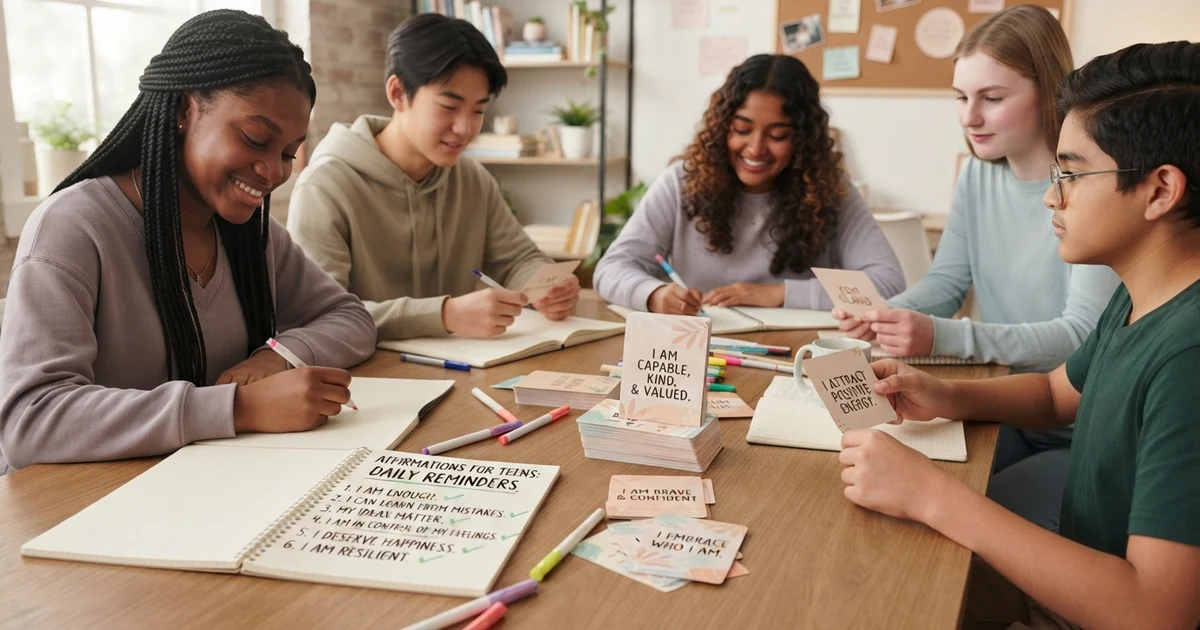
100+ Affirmations for Teens
Here is a practical list of positive affirmations for teens that can be used at school, at home, before studying, during stressful moments, or as part of a daily routine.
Confidence Affirmations for Teens
- I am learning to believe in myself.
- I can trust myself to keep learning.
- I have strengths that are worth recognizing.
- I can speak with confidence and respect.
- I do not need everyone’s approval.
- I am allowed to take up space.
- I can try even when I feel nervous.
- I am becoming more confident with practice.
- My voice matters.
- I can handle new experiences one step at a time.
- I am proud of the progress I am making.
- I can believe in myself without being perfect.
- I have things to offer the people around me.
- I can learn from experiences that challenge me.
- I am becoming more comfortable being myself.
Short Affirmations for Teens
Sometimes the best affirmation is one that takes only a few seconds to remember.
- I can do this.
- I am learning.
- I am enough.
- I matter.
- I can keep going.
- I can try again.
- I trust myself.
- I am growing.
- I can ask for help.
- I choose patience.
- I can handle this moment.
- I am making progress.
- I can be myself.
- I deserve kindness.
- I can take a breath.
- I can start again.
- I am capable.
- I have time to learn.
- I can take it slowly.
- I believe in my ability to grow.
Positive Affirmations for Teens
Positive affirmations can help teens intentionally practice kinder and more supportive self-talk.
- I can focus on what I can control.
- I am learning more about myself every day.
- I can make choices that support my goals.
- I am allowed to change and grow.
- I can be proud of small steps.
- I can treat myself with patience.
- I can learn something from every experience.
- I do not have to compare my journey with someone else’s.
- I can give myself another chance.
- I am more than one difficult day.
- I can notice my progress.
- I can choose words that encourage me.
- I am capable of learning from mistakes.
- I can take care of my responsibilities without expecting perfection.
- I can appreciate the good moments in my day.
School and Study Affirmations for Teens
School can bring exams, homework, deadlines, presentations, and pressure to perform. These affirmations can offer a simple reminder during study time.
- I can focus on one task at a time.
- I do not need to understand everything immediately.
- I can ask questions when I need help.
- I can learn through practice.
- I can prepare without panicking.
- One difficult subject does not define my ability.
- I can improve with consistent effort.
- I am allowed to make mistakes while learning.
- I can take breaks when I need them.
- I can start with the next small step.
- I can stay patient with myself while studying.
- I can learn at my own pace.
- I can prepare for challenges instead of fearing them.
- I can be proud of honest effort.
- One test does not define who I am.
Affirmations for Teenagers Before an Exam
Before an exam, affirmations should feel realistic rather than promising a perfect result.
- I have prepared as much as I can.
- I can take the questions one at a time.
- I can pause and think carefully.
- I can stay focused on the task in front of me.
- I do not need to know everything to do my best.
- I can use what I have learned.
- I can stay patient if a question feels difficult.
- I can take a breath and continue.
- My result is information, not my identity.
- I can learn from this experience.
Friendship Affirmations for Teens
Friendships can change during the teenage years. Supportive affirmations can encourage self-respect without suggesting that every friendship must last forever.
- I deserve friendships built on respect.
- I can be a caring and honest friend.
- I can communicate when something bothers me.
- I do not have to pretend to be someone else to fit in.
- I can respect other people’s boundaries.
- I can have different interests from my friends.
- I can walk away from situations that do not feel respectful.
- I can make new connections over time.
- I can listen without losing my own voice.
- I can be myself around people who value me.
- It is okay when friendships change.
- I can learn from difficult friendship experiences.
Affirmations for Teens Having a Difficult Day
Not every affirmation needs to sound cheerful. On a difficult day, a gentle statement may be more useful.
- I can take today one moment at a time.
- I do not have to solve everything right now.
- It is okay to have a difficult day.
- I can give myself time to process my feelings.
- I can talk to someone I trust.
- I am allowed to rest.
- This moment does not have to define my whole day.
- I can be patient with myself.
- I can ask for support when I need it.
- I can focus on the next small thing I can do.
- I do not have to hide every difficult feeling.
- Tomorrow can be another opportunity to begin again.
Growth Mindset Affirmations for Teens
Growth-focused affirmations emphasize learning rather than perfection.
- I can improve with practice.
- I can learn from feedback.
- A mistake can teach me something useful.
- I do not have to be good at something immediately.
- I can try a different approach.
- I can learn from challenges.
- My skills can develop over time.
- I can keep practicing.
- I can turn setbacks into learning experiences.
- I can be curious instead of expecting perfection.
- I can celebrate progress, not just results.
- I am still learning who I want to become.
Morning Affirmations for Teens
A morning affirmation can be a simple way to begin the day with an intentional thought.
- I can approach today with patience.
- I will focus on what I can control.
- I can make room for both effort and rest.
- I can handle today’s responsibilities one at a time.
- I can choose encouraging self-talk today.
- I am ready to learn something new.
- I can be kind to myself today.
- I do not need to have the entire day figured out.
- I can make one good choice at a time.
- I can give myself a fresh start this morning.
Nighttime Affirmations for Teens
Nighttime affirmations can help create a calmer transition toward rest.
- I can let today be finished.
- I do not need to solve tomorrow tonight.
- I can learn from today without judging myself.
- I am allowed to rest.
- I can appreciate one good thing from today.
- I can release the things I cannot control tonight.
- Tomorrow gives me another chance to try.
- I can be patient with myself.
- I did what I could today.
- I can give my mind time to settle.
Best Affirmations for Teens to Copy and Paste
If you want a short list that is easy to save, screenshot, or copy into a notes app, start with these:
- I am learning to trust myself.
- I can take things one step at a time.
- I do not have to be perfect.
- My mistakes can help me learn.
- I can ask for help when I need it.
- I am allowed to grow and change.
- My voice matters.
- I can be kind to myself.
- I can learn at my own pace.
- I do not need to compare myself with others.
- I can try again.
- I can handle this moment.
- I am capable of learning.
- I can focus on what I can control.
- I can be proud of small progress.
- I deserve respectful friendships.
- I can take a break when I need one.
- I can learn from difficult experiences.
- I am more than one mistake.
- I can give myself another chance.
Save this list so you can return to it whenever you want a quick, encouraging reminder.
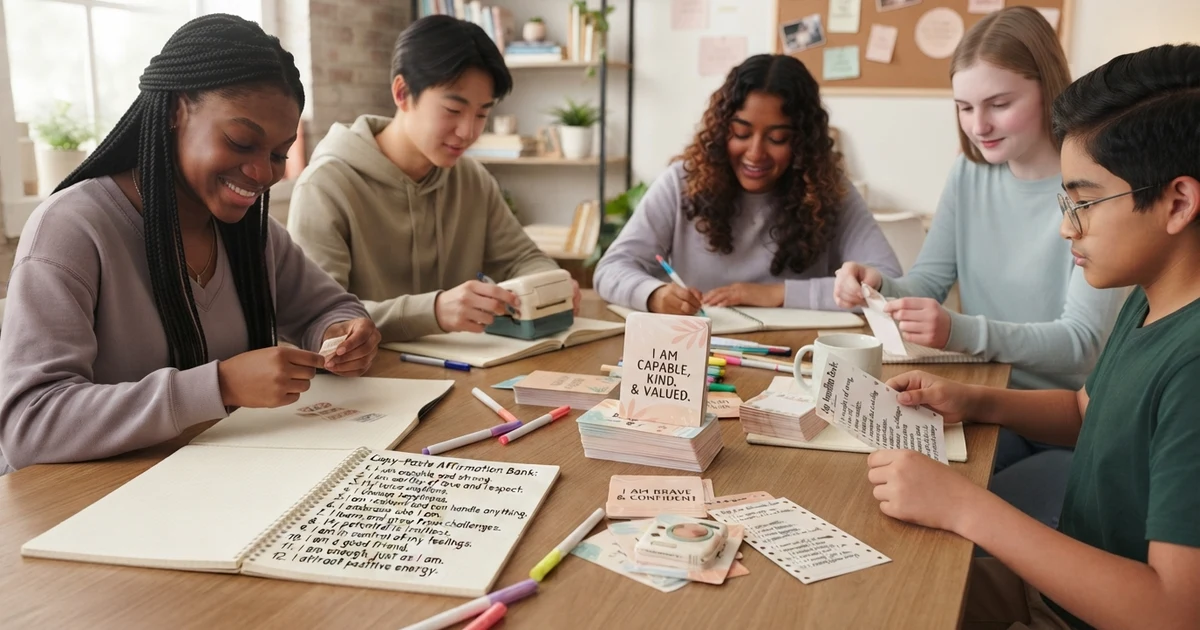
How to Use Affirmations for Teens Naturally
Affirmations do not need to become a complicated routine. A teen can simply choose one statement that feels useful and repeat it at a convenient time.
1. Choose One That Feels Believable
An affirmation does not have to sound dramatic. If “I am the most confident person in the world” feels unrealistic, something like “I am becoming more confident with practice” may feel more natural.
Believable wording can make the statement easier to accept and repeat.
2. Connect It to a Real Situation
Choose an affirmation that matches the moment.
Before studying:
I can focus on one task at a time.
After making a mistake:
I can learn from this and try again.
Before speaking in class:
I can share my thoughts calmly.
On a difficult day:
I can take this one moment at a time.
3. Repeat It in a Comfortable Way
A teen can say an affirmation quietly, write it in a journal, put it in a notes app, or keep it on a card.
There is no single correct way to use affirmations.
4. Pair the Affirmation With an Action
Affirmations can be more practical when they lead into a small action.
For example:
Affirmation: “I can focus on one task at a time.”
Action: Put the phone away and work on one assignment for 15 minutes.
The affirmation becomes a reminder for behavior rather than something a teen feels pressured to repeat perfectly.
How to Write Your Own Affirmations as a Teen
Writing personal affirmations can make them more meaningful.
Start with a real situation. Maybe you are nervous about an exam, struggling with a friendship, or learning something difficult.
Then turn the situation into a supportive statement.
For example:
Situation: “I keep making mistakes in math.”
Affirmation: “I can improve my math skills through practice.”
Or:
Situation: “I am nervous about speaking in class.”
Affirmation: “I can share my thoughts even when I feel nervous.”
A useful formula is:
I + supportive belief + realistic action or growth
Examples:
- I can learn this with practice.
- I am becoming more comfortable speaking up.
- I can handle challenges one step at a time.
- I can ask questions when I need support.
Gentle Wording Tips for Teen Affirmations
Good affirmations for teenagers should sound encouraging without creating pressure.
Keep Them Simple
Use everyday language that is easy to understand and remember.
Instead of:
“I possess limitless confidence in every social environment.”
Try:
“I can feel more comfortable being myself.”
Keep Them Realistic
An affirmation does not need to guarantee a specific outcome.
Instead of:
“Everything will always work out perfectly.”
Try:
“I can handle challenges as they come.”
Focus on Growth
Teenagers are still learning about themselves, their abilities, relationships, and goals. Wording such as “I am learning,” “I can practice,” and “I am becoming” can feel natural.
Avoid Turning Affirmations Into Pressure
An affirmation should not become another task a teen feels they must perform perfectly.
Missing a day does not mean the practice failed. The purpose is simply to encourage more supportive self-talk.

What to Avoid in Affirmations for Teens
Not every positive-sounding statement is helpful.
Avoid affirmations that:
- Demand perfection
- Promise guaranteed success
- Encourage unhealthy comparison
- Suggest that difficult emotions are wrong
- Make a teen feel guilty for struggling
- Ignore genuine problems
- Suggest that repeating words alone will solve serious difficulties
- Focus heavily on appearance or social approval
For example, “I must always be happy” is less helpful than “I can make room for difficult feelings and ask for support.”
Affirmations work best as a small self-reflection or self-talk practice, not as a replacement for trusted support when a teenager is struggling with something serious.
Printable Ideas for Affirmations for Teens
A simple printable can make affirmations easier to use every day.
You could create:
- A 30-day affirmation calendar
- Small affirmation cards
- A school confidence worksheet
- Morning affirmation cards
- Study-time affirmation cards
- A journal page with one affirmation per day
- A “choose your affirmation” page
- A weekly self-reflection sheet
For a printable, keep each statement short and readable. Leave space for a teen to write their own affirmation or a small action they want to take.
Final Thoughts on Affirmations for Teens
The best affirmations for teens are not complicated or overly positive. They are simple reminders that encourage self-trust, patience, learning, and respectful self-talk. A teenager can choose one statement that fits the moment, repeat it in a natural way, and connect it with a small action.
Whether the goal is confidence, studying, friendships, personal growth, or getting through a difficult day, the right affirmation can serve as a gentle reminder: progress does not require perfection.
Save the list and choose a few affirmations that feel natural enough to use regularly.
Frequently Asked Questions About Affirmations for Teens
What are affirmations for teens?
Affirmations for teens are short, encouraging statements designed around common teenage experiences such as confidence, school, friendships, emotions, mistakes, and personal growth. They can be used as a simple form of supportive self-talk.
What is a good affirmation for a teenager?
A good affirmation is simple, realistic, and relevant to the teenager’s situation. Examples include “I can learn from my mistakes,” “I can take things one step at a time,” and “I am learning to trust myself.”
What are some short affirmations for teens?
Some short affirmations include “I can do this,” “I am learning,” “I matter,” “I can try again,” “I am growing,” and “I can be myself.” Short statements are easy to remember and use throughout the day.
How often should teens use affirmations?
There is no required schedule. A teen might repeat an affirmation in the morning, before studying, before a challenging situation, or whenever an encouraging reminder feels useful.
Do affirmations work for teenagers?
Affirmations can be useful as a self-talk and reflection practice, particularly when the wording feels realistic and personally meaningful. They are not a guarantee of a particular result and should not replace appropriate support for serious problems.
How can teens write their own affirmations?
Start with a real challenge and turn it into a supportive, realistic statement. For example, “I am bad at this subject” can become “I can improve this skill through practice and asking questions.”
What are positive affirmations for teens used for?
Positive affirmations may be used to encourage confidence, self-belief, patience, persistence, positive self-talk, and a growth-focused approach to everyday challenges.
Can teens use affirmations for school?
Yes. School-focused affirmations can remind teens to concentrate on learning rather than perfection. Examples include “I can focus on one task at a time” and “I can learn through practice.”
Should affirmations for teens always be positive?
They should generally be supportive, but they do not have to pretend that everything is perfect. A gentle statement such as “I am having a difficult day, and I can ask for support” can be more useful than forcing an unrealistically cheerful message.
Can parents and teachers use affirmations with teens?
Parents and teachers can share encouraging statements with teens, but it is often helpful to let the teenager choose or personalize the wording. This can make the affirmation feel more authentic rather than like another instruction from an adult.