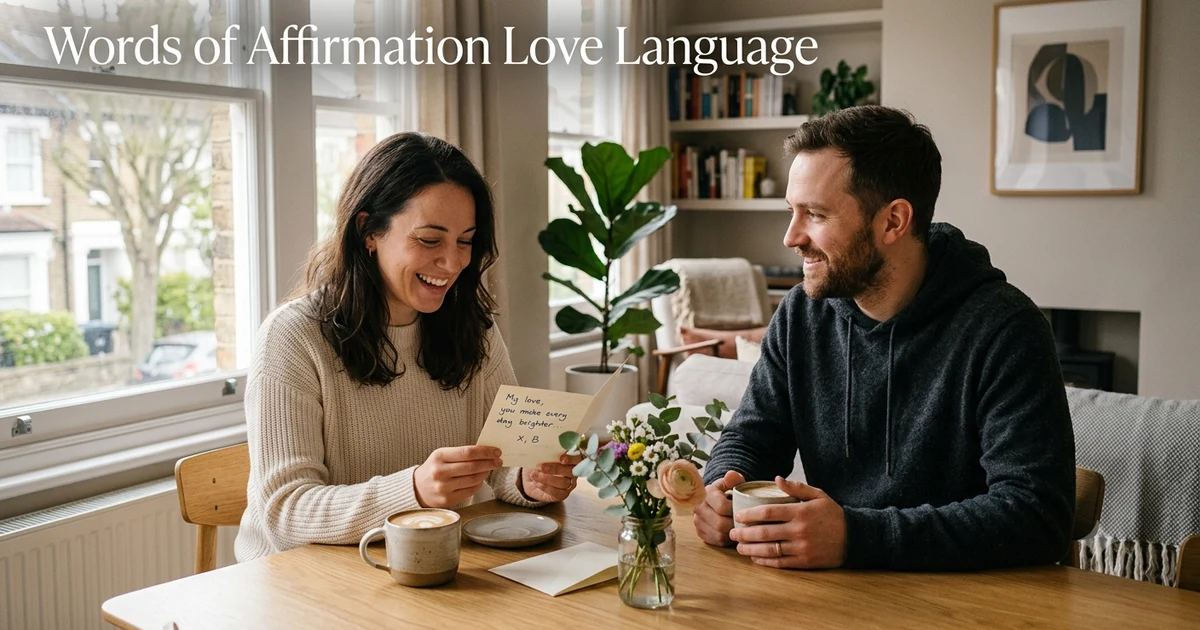
Words can shape the way people feel about themselves and their relationships. For some people, kind, encouraging, and sincere words are more than nice gestures. They are the clearest expression of love. If your partner lights up after hearing genuine praise or thoughtful encouragement, their primary love language may be words of affirmation.
Understanding the words of affirmation love language can help you communicate in a way that feels authentic and emotionally supportive. The goal is not to shower someone with endless compliments. Instead, it is to express appreciation, respect, encouragement, and affection in ways that make them feel seen and valued.
In this guide, you’ll learn what words of affirmation really mean, why they matter, how to use them naturally, and plenty of practical examples you can personalize for your own relationship.
Short Answer
The words of affirmation love language is one of the five love languages. It focuses on expressing love through spoken or written words that encourage, appreciate, reassure, or compliment another person. Simple, sincere messages often have the greatest impact because they remind someone that they are valued, respected, and loved.
Quick Tip
Be specific instead of generic. Saying I appreciate how patient you were with me today usually feels much more genuine than simply saying You’re amazing.
What Is the Words of Affirmation Love Language?
Words of affirmation is one of the five love languages introduced by relationship counselor Gary Chapman. People who connect with this love language feel most loved when they hear genuine words of encouragement, appreciation, gratitude, and affection.
These words can come through everyday conversations, text messages, handwritten notes, greeting cards, or even a quick compliment before leaving for work.
This love language is not about constant praise or empty flattery. It is about honest communication that helps another person feel appreciated and emotionally secure.
Examples include:
- Telling your partner you appreciate their effort.
- Thanking them for something thoughtful they did.
- Encouraging them before a difficult meeting.
- Recognizing personal growth.
- Saying you love them in meaningful ways.
- Reminding them that you believe in them.
Small moments often create lasting memories when the words feel sincere.
Why Words of Affirmation Matter in Relationships
Everyone enjoys compliments from time to time, but people with this love language often experience verbal appreciation as emotional connection.
Consistent affirmation can help strengthen a relationship by creating a sense of trust and emotional safety.
Some of the biggest benefits include:
- Building confidence during stressful seasons.
- Helping partners feel appreciated rather than overlooked.
- Reducing misunderstandings through open communication.
- Reinforcing positive behaviors without sounding controlling.
- Creating stronger emotional intimacy.
- Making everyday interactions feel more supportive.
Words alone cannot replace healthy actions, honesty, or accountability. However, when they match consistent behavior, they become a powerful way to strengthen a relationship.
Signs That Words of Affirmation May Be Your Love Language
Not everyone expresses or receives love in the same way. If these situations sound familiar, words of affirmation might be your primary love language.
You may value words of affirmation if you:
- Feel encouraged after receiving genuine compliments.
- Save thoughtful texts or handwritten notes.
- Remember encouraging conversations for a long time.
- Feel hurt by harsh criticism.
- Often encourage others with kind words yourself.
- Enjoy hearing appreciation for your effort.
- Feel closest to people who openly express gratitude and affection.
Recognizing these patterns can help you understand your own emotional needs and communicate them more clearly with your partner.
Best Words of Affirmation Love Language Examples
The most effective affirmations sound natural and fit the moment. They do not need to be poetic or elaborate.
Everyday Appreciation
Use these when you want your partner to feel noticed during ordinary moments.
- I noticed how much effort you put into today. It didn’t go unnoticed.
- You make difficult days easier for both of us.
- I appreciate everything you do, even the things nobody else sees.
- Your kindness changes the mood of our home.
- I always feel supported when you’re around.
- Thank you for being reliable when life gets busy.
- You handle challenges with so much patience.
- I love how thoughtful you are with the people you care about.
Encouragement
These messages work well before an interview, presentation, exam, or important decision.
- You’ve prepared for this. Trust yourself.
- I believe in what you’re capable of.
- No matter how today goes, I’m proud of your effort.
- You have handled harder things before.
- Your determination always inspires me.
- Keep going. You’re making more progress than you realize.
- I know you’ll give it your best, and that’s enough.
- I’m cheering for you every step of the way.
Gratitude
Gratitude helps people feel appreciated without making the message sound overly formal.
- Thank you for always listening without judging.
- I never take your support for granted.
- I’m grateful for the way you care about us.
- Thank you for making time for me today.
- I appreciate your honesty, even during difficult conversations.
- You make me feel understood.
- I’m thankful for the consistency you bring into our relationship.
- Life feels better because you’re part of it.
Reassurance
Sometimes people need reminders that they are loved, respected, and accepted.
- I’m here with you through every season.
- You don’t have to face this alone.
- I love you exactly as you are.
- We’ll figure this out together.
- I’m proud to stand beside you.
- You matter to me every single day.
- I appreciate who you are, not just what you do.
- I’m grateful we have each other.
Words of Affirmation by Situation
Choosing the right message becomes easier when you match it to the moment.
| Situation | Purpose | Example |
|---|---|---|
| Before work | Build confidence | I know you’re ready for today. |
| After a difficult day | Offer reassurance | You handled today with more strength than you realize. |
| Celebration | Share pride | I’m proud of everything you’ve accomplished. |
| Everyday appreciation | Express gratitude | Thank you for always making time for us. |
| During stress | Provide support | We’ll get through this together. |
| Random text | Stay connected | Just wanted you to know you’re on my mind, and I appreciate you. |
| After solving a disagreement | Reinforce connection | I appreciate how respectfully we worked through that together. |
| Personal achievement | Celebrate success | You earned this, and I’m genuinely happy for you. |
Why Specific Words Feel More Genuine
General compliments can feel nice, but specific affirmations usually leave a stronger impression because they show that you’re paying attention.
Compare these examples:
| Generic Message | More Personal Alternative |
|---|---|
| You’re amazing. | I admire how patient you were with everyone today. |
| You’re the best. | I appreciate how dependable you are when things get stressful. |
| Good job. | You worked incredibly hard on that project, and it really shows. |
| I love you. | I love the way you make people feel comfortable around you. |
| Thanks. | Thank you for making dinner after your long day. I really appreciated it. |
Specific praise feels sincere because it focuses on real actions, qualities, or moments instead of broad compliments that could apply to anyone.
Short Words of Affirmation Love Language Examples
Sometimes a few thoughtful words can have more impact than a long message. These short affirmations fit naturally into everyday conversations, quick texts, or sticky notes.
- You make my day better.
- I’m proud of you.
- I believe in you.
- You handled that so well.
- Thank you for being you.
- You always make me smile.
- I appreciate your kindness.
- You inspire me.
- I’m lucky to have you.
- You make life easier.
- I trust you.
- You are enough.
- You always show up.
- You make me feel safe.
- I’m grateful for you.
- You have a good heart.
- I admire your honesty.
- You matter to me.
- I’m thinking about you.
- You make me feel loved.
These work best when you send them unexpectedly rather than waiting for a special occasion.
Romantic Words of Affirmation Examples
Romantic affirmations should sound natural, not overly dramatic. Focus on what you genuinely admire about your partner and how they make your life better.
Everyday Romance
These messages work well for daily conversations or thoughtful texts.
- Being with you feels like coming home.
- I love the way you make ordinary days feel brighter.
- You make me laugh when I need it most.
- Every day, I find another reason to appreciate you.
- I still look forward to spending time with you.
- Your support gives me confidence.
- I love the life we’re building together.
- You bring out the best in me.
During a Busy Week
Busy schedules often leave little time for long conversations. A simple message can still help your partner feel valued.
- I know today is packed, but I wanted you to know I’m thinking about you.
- Thanks for working so hard for us.
- I hope you remember how capable you are.
- You handle so much with grace.
- I appreciate every effort you make.
- I can’t wait to catch up later.
- You’ve got this.
- I hope today brings you something to smile about.
Before Bed
Ending the day with encouragement helps create emotional closeness.
- I hope you sleep well. You deserve some rest.
- Thank you for sharing today with me.
- I’m grateful we get to do life together.
- I love ending my day knowing you’re in it.
- Rest well. Tomorrow is another chance to shine.
- No matter how today went, I’m proud of you.
- Good night. I’ll be thinking about you.
- Sweet dreams. I appreciate you more than I probably say.
Words of Affirmation Text Messages
Text messages don’t need to be long to make someone feel appreciated.
Morning Texts
A thoughtful morning message can set a positive tone for the day.
- Good morning. I hope today brings you plenty of reasons to smile.
- You’ve got everything you need to handle today.
- Wishing you a productive day. I know you’ll do great.
- Just a reminder that I’m proud of you.
- Thanks for being such a positive part of my life.
- I hope something wonderful happens for you today.
- You’ve been on my mind this morning.
- I can’t wait to hear how your day goes.
Midday Check In
These messages remind your partner they’re supported, even during a busy day.
- Hope your day is going smoothly.
- Just checking in to say I appreciate you.
- Keep going. You’re doing great.
- Don’t forget to take a break if you can.
- Thinking about you today.
- I know you’ve been working hard.
- Sending a little encouragement your way.
- Looking forward to seeing you later.
Evening Messages
Evenings offer a chance to reflect and reconnect.
- Thanks for everything you did today.
- I hope you’re proud of yourself.
- You handled today really well.
- I’m grateful we can end the day together.
- Thanks for always making time for us.
- You deserve to relax tonight.
- I’m lucky to have someone like you.
- Sleep well. Tomorrow is a fresh start.
Positive Words of Affirmation for Daily Use
Using affirmations regularly helps appreciation become a habit instead of something reserved for birthdays or anniversaries.
Here are examples you can naturally work into daily conversations.
At Home
- Dinner was great. Thank you for making the effort.
- I noticed how much you helped today.
- You always think about everyone else.
- I appreciate everything you do around the house.
- You make our home feel comfortable.
- I love how dependable you are.
At Work or During Career Goals
- I know you’ll handle that meeting well.
- Your hard work always stands out.
- I’m proud of how dedicated you are.
- You continue to grow every year.
- I admire your commitment.
- Keep believing in yourself.
During Difficult Times
- We’ll face this together.
- You don’t have to carry everything alone.
- I’m here for you.
- It’s okay to have hard days.
- You’ve overcome challenges before.
- I believe in your strength.
Appreciation Messages
Appreciation is one of the easiest ways to speak this love language naturally.
Use these when you want your partner to feel noticed without making the message sound too formal.
- I noticed how much effort you put in today. It really mattered to me.
- Thank you for showing up for me, even when your own day was full.
- You make ordinary days feel easier.
- I’m grateful for how patient you are with me.
- You have a way of making people feel comfortable around you.
- I don’t always say it at the right time, but I notice the care you put into us.
- Thank you for being steady when things feel messy.
- I appreciate your honesty, especially when conversations get difficult.
Encouraging Messages for Difficult Days
Support often matters more than trying to solve every problem.
These affirmations acknowledge what someone is going through while reminding them they aren’t alone.
- Today doesn’t define you.
- You are stronger than this challenge.
- I’m proud of how you’re handling everything.
- You don’t have to be perfect.
- Take things one step at a time.
- I’m here whenever you need me.
- You’re making progress, even if it doesn’t feel like it.
- I’ll keep believing in you, especially when you’re struggling to believe in yourself.
Copy and Paste Words of Affirmation Messages
These ready-to-use messages can be copied as they are or personalized before sending.
Simple and Sweet
- Just wanted to remind you that I appreciate everything you do.
- You make my life happier simply by being part of it.
- I’m proud of the person you continue to become.
- Thank you for always supporting me.
- You make difficult days easier.
Romantic
- Loving you is one of my favorite parts of life.
- You make me feel understood and accepted.
- I never want you to doubt how much you mean to me.
- Every day with you gives me another reason to smile.
- I appreciate you more than words can fully express.
Encouragement
- I know today feels challenging, but I believe in you.
- Whatever happens, I’m proud of your effort.
- Keep moving forward. You’re doing better than you think.
- You’ve overcome difficult seasons before.
- I’ll always be one of your biggest supporters.
How to Personalize Words of Affirmation
The most memorable affirmations sound personal because they reflect real moments instead of generic compliments.
Here are a few ways to make your messages feel more sincere:
Mention Something Specific
Instead of saying:
- You’re amazing.
Try:
- I really appreciated how calmly you handled that stressful situation today.
Recognize Effort, Not Just Results
People often feel more encouraged when their effort is noticed.
Examples include:
- I saw how much work you put into that project.
- I know that wasn’t easy, and I’m proud of you for sticking with it.
Match the Moment
Think about what your partner needs right now.
- Before a presentation, offer confidence.
- After a hard day, offer reassurance.
- During success, celebrate their achievement.
- During disappointment, remind them of their strengths.
Use Your Own Voice
You don’t have to sound poetic or perfect.
If you’re naturally casual, let your affirmations sound casual too.
Simple messages often feel more believable because they sound like something you’d actually say.
A message that reflects your personality will almost always feel more meaningful than one copied word for word from the internet.
Common Mistakes to Avoid with Words of Affirmation
Words of affirmation work best when they reflect honesty and consistent actions. Even well-meaning compliments can lose their impact if they feel repetitive or insincere.
1. Using Generic Compliments Too Often
Saying the same thing every day can make your words feel automatic.
Instead of repeating:
- You’re amazing.
Try something more specific:
- I appreciated how patient you were with the kids today.
- You stayed calm during a stressful situation, and I really admired that.
- I noticed how much effort you put into helping your friend.
2. Praising Only Big Achievements
Don’t wait for promotions, birthdays, or anniversaries to express appreciation.
Notice everyday actions such as:
- Making time for each other.
- Listening without interrupting.
- Helping around the house.
- Showing kindness to others.
- Keeping promises.
These small acknowledgments often mean just as much.
3. Forgetting to Match Words with Actions
Kind words matter, but they should reflect your behavior.
If you regularly say someone is important to you but rarely make time for them, your words may start to feel empty.
Healthy relationships grow through both communication and consistent actions.
4. Copying Messages Without Personalizing Them
Using ready-made messages is completely fine, but adding one personal detail makes a big difference.
Instead of sending:
- I’m proud of you.
Try:
- I’m proud of how you handled that meeting today. I know how much preparation went into it.
5. Turning Praise into Manipulation
Affirmation should never be used to control someone’s behavior or avoid honest conversations.
Healthy affirmation:
- I appreciate how open you were during that conversation.
Unhealthy affirmation:
- If you really loved me, you’d always do this.
The goal is encouragement, not pressure.
How to Use Words of Affirmation Naturally
If words of affirmation don’t come naturally to you, start small. Consistency matters more than length.
Here are a few simple habits you can build into everyday life.
Notice Something Specific Every Day
Spend a few seconds looking for something you genuinely appreciate.
It could be:
- A thoughtful decision.
- A kind gesture.
- A personal strength.
- A hard-earned achievement.
- A moment of patience.
Say It While the Moment Is Fresh
Don’t wait until later if you can express appreciation now.
Immediate encouragement often feels more genuine because it connects directly to what happened.
Mix Spoken and Written Messages
Different situations call for different forms of communication.
You might:
- Say thank you during dinner.
- Send a supportive text before an interview.
- Leave a handwritten note in a lunch bag.
- Write a birthday card that includes personal memories.
- Send a quick message during a busy workday.
Variety keeps your communication fresh.
Keep It Honest
You don’t need perfect wording.
Natural phrases such as these often feel more authentic:
- I noticed what you did today.
- I’m really grateful for your help.
- I appreciate your patience.
- I believe in you.
- I’m proud of how you’ve grown.
Expert Tips for Making Words of Affirmation More Meaningful
If you want your affirmations to leave a lasting impression, focus on quality rather than quantity.
- Be observant. Notice the little things your partner does instead of waiting for major milestones.
- Recognize character as well as accomplishments. Compliment qualities like kindness, resilience, honesty, patience, and generosity.
- Use your own voice. Your partner wants to hear your words, not something that sounds copied from a greeting card.
- Balance praise with honesty. Genuine affirmation builds trust because it reflects reality.
- Adapt your message to the situation. Encouragement before a challenge sounds different from appreciation after a successful day.
- Listen to their response. If certain messages seem to resonate more, continue using that style naturally.
- Remember the other love languages. Someone who values words of affirmation may also appreciate quality time, acts of service, physical touch, or thoughtful gifts. Healthy relationships often include a mix of all five.
Final Thoughts
The words of affirmation love language is about helping someone feel appreciated through sincere communication. It is not about giving endless compliments or trying to sound poetic. The most meaningful affirmations are honest, specific, and connected to real moments.
Whether you choose a short text, a thoughtful conversation, or a handwritten note, your words carry more weight when they reflect genuine appreciation and are backed by consistent actions.
If you found examples that fit your relationship, save your favorites, personalize them, and use them naturally. Even a few thoughtful words at the right moment can strengthen trust, encourage growth, and remind someone that they are truly valued.
Frequently Asked Questions
What is the words of affirmation love language?
The words of affirmation love language is a way of expressing and receiving love through encouraging, appreciative, and supportive words. People with this love language often feel most valued when they hear sincere compliments, gratitude, or reassurance.
What are some good words of affirmation love language examples?
Simple examples include:
- I’m proud of you.
- I appreciate everything you do.
- I believe in you.
- Thank you for always supporting me.
- You make my life better.
The best affirmations are specific and relate to real actions or qualities.
How often should I use words of affirmation?
There is no perfect schedule. Many couples naturally use affirming words every day through conversations, texts, or small notes. Focus on sincerity rather than frequency.
Can words of affirmation improve a relationship?
Yes. Genuine encouragement and appreciation can strengthen trust, improve communication, and help partners feel seen and respected. They work best when combined with consistent actions and honest communication.
What should I avoid when using words of affirmation?
Avoid exaggerated praise, repetitive compliments, empty flattery, or using affirmation to manipulate someone. Honest, specific messages are much more effective.
Can I use words of affirmation through text messages?
Absolutely. A thoughtful text before work, after a difficult day, or during a busy afternoon can remind your partner that they are appreciated and supported.
What if words of affirmation don’t come naturally to me?
Start with simple observations. Notice something your partner did well and mention it. Over time, expressing appreciation becomes more comfortable and authentic.
Are words of affirmation only for romantic relationships?
No. While they’re often discussed in dating and marriage, words of affirmation also strengthen friendships, family relationships, and professional connections by helping people feel respected and valued.