
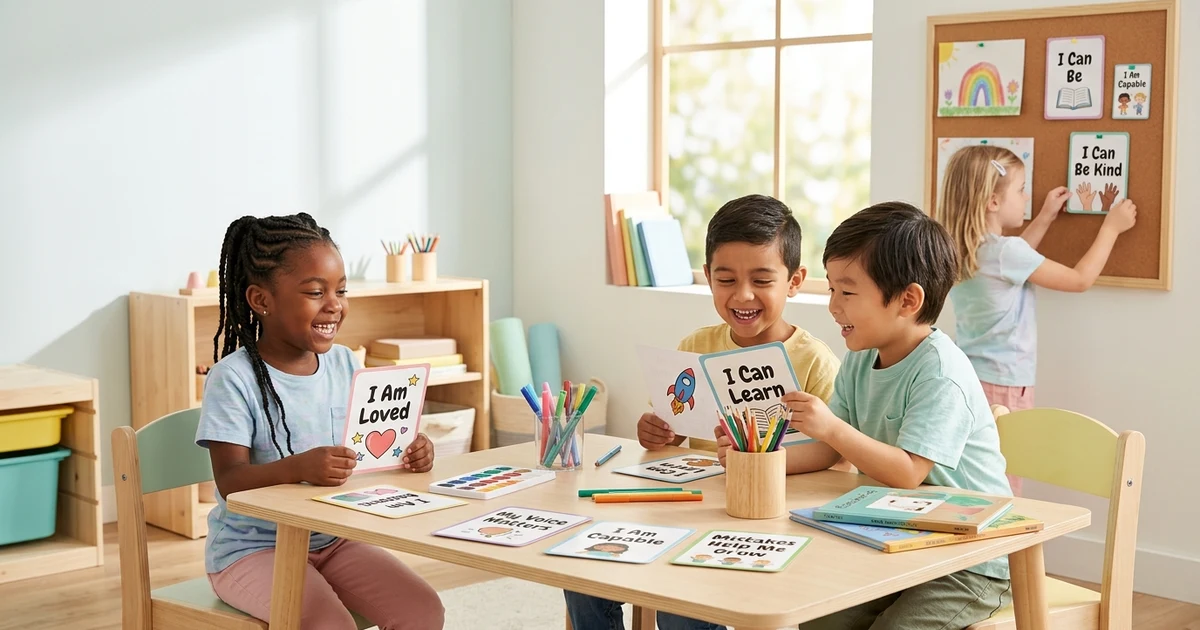
Kids affirmations are simple, encouraging statements that help children develop self-belief, recognize their strengths, and approach everyday challenges with a more positive mindset. Whether a child is starting school, making new friends, learning something difficult, or managing big feelings, the right words can offer comfort and encouragement.
The best affirmations for kids are short, positive, realistic, and easy to understand. Children do not need to believe every statement immediately. Repeating gentle phrases and connecting them with everyday experiences can help children practice self-kindness, patience, courage, and resilience.
In this guide, you will find more than 150 kids affirmations for daily use, school, confidence, friendship, emotional support, and personal growth, along with practical tips for using them naturally.
Kids Affirmations: A Quick List to Get Started
Here are some simple kids affirmations that children can repeat in the morning, before school, during a difficult moment, or at bedtime.
- I am loved just as I am.
- I believe in myself.
- I can learn new things.
- I am brave enough to try.
- My feelings matter.
- I can ask for help when I need it.
- I am kind to myself and others.
- I do not have to be perfect.
- Mistakes help me learn.
- I can take things one step at a time.
- I am proud of my effort.
- I can try again when something is hard.
- I have good ideas.
- I deserve kindness and respect.
- I can be a good friend.
- I can learn at my own pace.
- I am allowed to feel my feelings.
- I can make helpful choices.
- I bring something special to the world.
- Today is a new chance to learn and grow.
Choose a few statements that feel natural to your child. A short phrase they understand and connect with is often more useful than a long list they feel pressured to memorize.
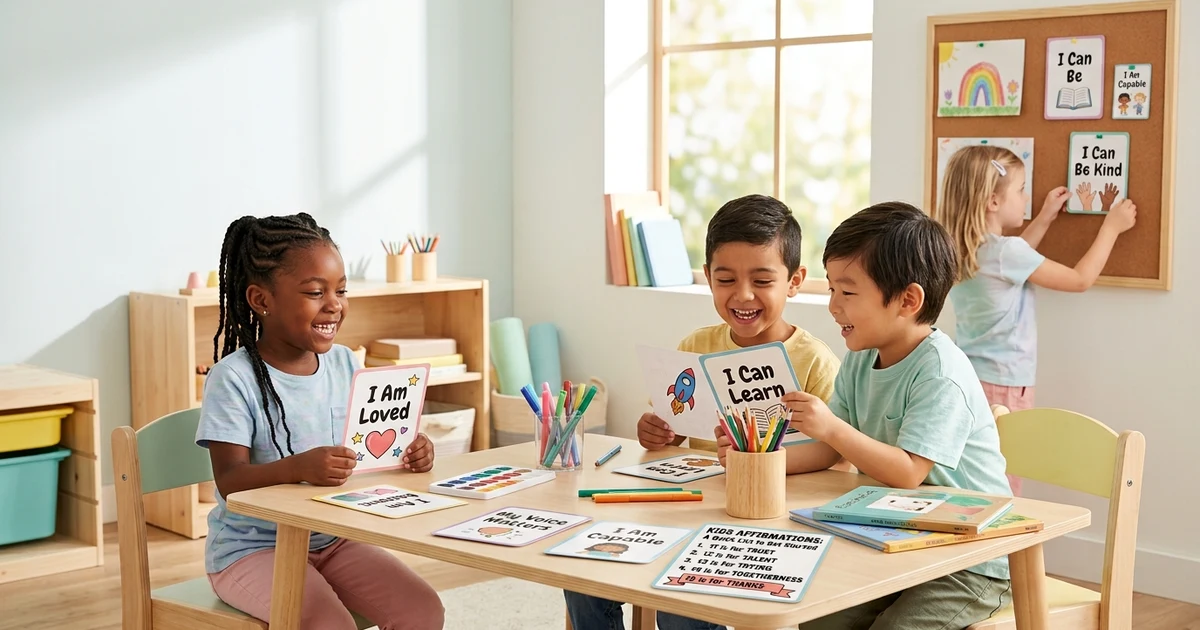
What Are Kids Affirmations?
Kids affirmations are positive, supportive statements that children can use to encourage themselves and develop a healthier relationship with their thoughts and feelings.
These statements focus on qualities and skills such as confidence, kindness, courage, patience, and perseverance. They can also remind children that asking for help is okay and that making mistakes is a normal part of learning.
For example, a child who feels nervous about answering a question in class might repeat, “I can try even when I feel nervous.” This statement does not deny the child’s fear. Instead, it offers a gentle reminder that nervousness and courage can exist together.
Kids affirmations can be used at home, in classrooms, during bedtime routines, or whenever a child needs encouragement.
How Do Positive Affirmations Help Children?
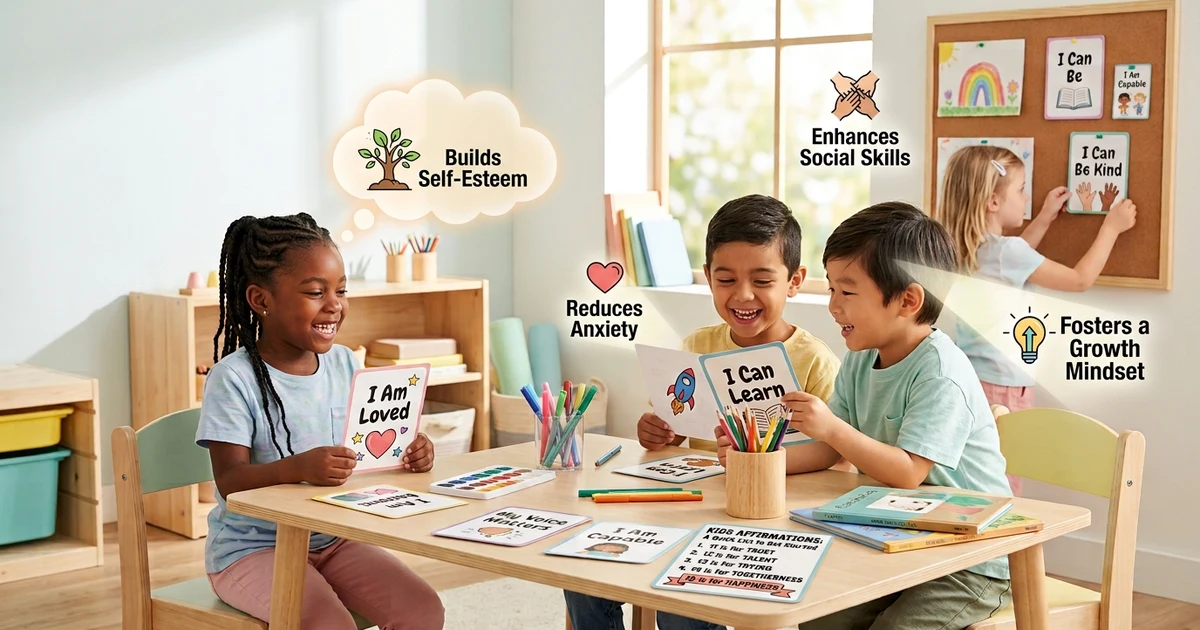
Positive affirmations can support children’s emotional development when they are realistic, age-appropriate, and paired with supportive actions.
They may help children:
- Practice positive self-talk instead of harsh self-criticism.
- Recognize their strengths and personal qualities.
- Approach unfamiliar situations with greater willingness.
- Learn to respond to mistakes with patience.
- Express emotions without feeling ashamed.
- Remember that they can ask trusted adults for support.
Affirmations are not a guarantee that a child will always feel confident or happy. They work best as one small part of a caring environment where children feel heard, accepted, and safe to learn.
Best Kids Affirmations for Confidence
Confidence develops gradually as children learn new skills, make decisions, and discover that they can handle challenges with support.
These kids affirmations encourage children to trust themselves without suggesting that they must always succeed.
- I believe I can learn and grow.
- I have strengths that make me unique.
- I can share my ideas with others.
- My voice deserves to be heard.
- I can make decisions with care.
- I am learning to trust myself.
- I can try something new.
- I have good qualities to be proud of.
- I can speak up when I need something.
- I do not need to be like everyone else.
- I can learn from my experiences.
- I am becoming more confident every day.
- I can be proud of trying something difficult.
- I can make mistakes and still feel good about myself.
- I have something valuable to contribute.
- I can take small steps toward my goals.
- I am learning what works for me.
- I can stand up for what is right.
- I deserve to believe in my abilities.
- I can feel nervous and still give something a try.
Helpful tip: Instead of telling a child to be confident, recognize a specific action. For example, say, “You asked your teacher for help even though you felt shy. That took courage.”
Short Kids Affirmations for Everyday Use
Short affirmations are especially useful for younger children who are still learning new words or for children who prefer simple reminders.
These phrases are easy to remember, write on cards, or repeat together.
- I am loved.
- I am enough.
- I can learn.
- I can try.
- I am kind.
- I am brave.
- I matter.
- I can grow.
- I can ask.
- I am helpful.
- I can choose.
- I am learning.
- I can listen.
- I can share.
- I can rest.
- I am creative.
- I can be patient.
- I can try again.
- I can use my words.
- I can take my time.
- My feelings matter.
- I can learn from mistakes.
- I can be a good friend.
- I can do hard things with help.
- I deserve kindness.
Let children choose their favorite phrases. They can say them aloud, whisper them, draw a picture to represent them, or simply listen while a trusted adult reads them.
Positive Kids Affirmations for Different Situations
Children experience different challenges throughout the day. An affirmation that helps before school may not be the same one they need after an argument with a friend.
Matching the phrase to the situation makes it easier for children to understand how to use positive self-talk in real life.
Kids Affirmations for School
School brings opportunities to learn, solve problems, work with others, and practice new skills. It can also bring worry about tests, homework, and classroom participation.
Try these school affirmations:
- I am ready to learn something new.
- I can ask questions when I am confused.
- I can take my time with my work.
- I do not need to know every answer.
- I can focus on one task at a time.
- I can learn from my mistakes.
- I can ask my teacher for help.
- My effort helps me improve.
- I can keep practicing when a lesson feels difficult.
- I am more than my grades.
- I can learn in my own way.
- I can be proud of the progress I make.
- I can take a deep breath when I feel overwhelmed.
- I can prepare for a challenge one step at a time.
- I belong in my classroom.
These phrases are especially helpful when adults reinforce the same message through patience, encouragement, and realistic expectations.
Kids Affirmations for Anxiety and Worry
Children may feel worried about separation, unfamiliar places, social situations, or things they cannot control. Affirmations should acknowledge those feelings instead of telling children they have nothing to worry about.
Try these gentle reminders:
- It is okay to feel worried sometimes.
- I can take a slow breath.
- I can tell someone how I feel.
- I do not have to solve everything right now.
- I can take one small step.
- I can ask a trusted adult for support.
- I can feel scared and still try.
- I can give myself time to feel calm.
- My feelings will change, and I can get support while I wait.
- I do not have to handle everything alone.
- I can focus on what I know right now.
- I can take a break when I need one.
- It is okay to ask questions.
- I can practice new things at my own pace.
- I deserve to feel safe and supported.
If worry regularly interferes with a child’s sleep, school attendance, friendships, or everyday activities, affirmations alone may not be enough. A parent or caregiver can speak with a qualified health professional for additional guidance.
Kids Affirmations for Friendship
Friendships teach children about cooperation, boundaries, empathy, and resolving disagreements. These affirmations encourage healthy relationships without suggesting that children must please everyone.
- I can be kind and still say no.
- I can listen when others speak.
- I can share my feelings respectfully.
- I deserve friends who treat me kindly.
- I can make new friends at my own pace.
- I can include others when it feels appropriate.
- I can apologize when I make a mistake.
- I can forgive myself while learning.
- I can choose friends who respect me.
- I do not have to agree with everyone.
- I can ask for space when I need it.
- I can solve some problems by talking.
- I can be happy for another person’s success.
- I can respect differences.
- I am worthy of friendship and care.
Remind children that being kind does not mean accepting unkind treatment. They can be respectful while setting boundaries and asking adults for help when needed.
Kids Affirmations for Big Feelings
Children may struggle to explain anger, disappointment, sadness, frustration, or excitement. Simple affirmations can give them language for recognizing emotions and choosing what to do next.
- All my feelings deserve attention.
- I can name what I am feeling.
- I can pause before I respond.
- I can talk about what upset me.
- I can ask for a quiet moment.
- I can be disappointed and still be okay.
- I can feel angry without being unkind.
- I can learn better ways to express myself.
- I can ask for comfort.
- I do not have to hide my feelings.
- I can take a break and try again.
- I can listen to my body when I need rest.
- I can tell someone when something feels wrong.
- I can work through difficult moments with support.
- I deserve patience while I learn.
When a child is overwhelmed, connect with them before introducing an affirmation. A calm adult might say, “I can see that you’re upset. Let’s take a moment together.” The goal is not to stop the feeling immediately but to help the child feel understood.
Kids Affirmations for Trying New Things
New experiences can feel exciting and intimidating at the same time. These phrases encourage curiosity and effort rather than demanding perfect results.
- I can try before deciding something is too hard.
- I can learn by practicing.
- I do not have to get everything right the first time.
- I can be curious about new experiences.
- I can ask someone to show me how.
- I can celebrate small steps.
- I can change my approach when needed.
- I can learn from feedback.
- I can keep going or ask for a break.
- I can try again when I am ready.
- I can be proud of my effort.
- I can learn something from every experience.
- I can take my time.
- I can be a beginner.
- I can grow through practice and support.
Parents can reinforce these messages by praising persistence, curiosity, and problem-solving instead of focusing only on the final result.
Kids Affirmations for Bedtime
Bedtime can be an opportunity to reflect on the day, appreciate supportive relationships, and settle into a familiar routine.
Try these gentle bedtime affirmations:
- I am loved and cared for.
- I did what I could today.
- I can learn from today and begin again tomorrow.
- I can let myself rest.
- I am allowed to make mistakes.
- I can feel proud of one small thing I did today.
- I can ask for help when tomorrow feels difficult.
- I deserve a peaceful place to rest.
- I can be gentle with myself.
- I do not have to finish everything tonight.
- I am growing and learning.
- I can remember the good moments from today.
- I am thankful for the people who care about me.
- I can face tomorrow one step at a time.
- I am safe to share my worries with a trusted adult.
Bedtime affirmations do not need to become another task children must complete. Reading one or two together can be enough.

Powerful Kids Affirmations for Self-Love and Self-Belief
Children benefit from knowing that their worth does not depend on achievement, popularity, appearance, or always behaving perfectly.
These affirmations encourage self-respect and a balanced sense of identity.
- I am worthy of love and respect.
- I can appreciate who I am.
- I have qualities that make me unique.
- I deserve to speak kindly to myself.
- I can be proud of who I am becoming.
- I do not need to be perfect to be loved.
- I can accept compliments with a thank you.
- I can learn without comparing myself to others.
- I deserve care when I make mistakes.
- I can celebrate my own progress.
- My interests and ideas matter.
- I can respect myself and other people.
- I can be different and still belong.
- I can recognize what makes me a good friend.
- I am valuable even on difficult days.
- I can treat myself with patience.
- I can learn to appreciate my strengths.
- I deserve to feel heard.
- I can make room for both strengths and areas I want to improve.
- I can keep discovering who I am.
These affirmations are most meaningful when children experience acceptance in everyday life. Adults can model self-kindness by speaking respectfully about their own mistakes and treating others with consideration.
Simple Kids Affirmations for Different Ages
The best affirmation depends partly on a child’s age, language skills, experiences, and personality. Younger children usually benefit from concrete phrases, while older children may appreciate statements that acknowledge more complicated feelings.
Affirmations for Preschoolers
Preschoolers often respond well to short statements they can connect with familiar activities.
- I am loved.
- I can ask for help.
- I can take turns.
- I can use gentle hands.
- I can try something new.
- I can tell you how I feel.
- I can learn while I play.
- I can try again.
- I can be kind.
- I can do some things by myself.
An adult can pair each phrase with a simple example. For instance, “You asked for a turn with the toy. You used your words to tell your friend what you needed.”
Affirmations for Elementary School Children
School-age children can understand affirmations about learning, responsibility, friendship, and managing frustration.
- I can work through problems one step at a time.
- I can ask questions when I need more information.
- I can be proud of my effort.
- I can learn from constructive feedback.
- I can tell someone when I need support.
- I can disagree respectfully.
- I can try a different strategy.
- I can take responsibility for my choices.
- I can be a thoughtful friend.
- I can improve with practice.
Encourage children to choose phrases that match their actual challenges rather than assigning the same list to everyone.
Affirmations for Tweens and Older Children
Older children may prefer more natural statements that respect their growing independence and recognize the pressure they sometimes experience.
- I can make choices that reflect my values.
- I do not have to follow every trend to belong.
- I can ask for clarification instead of pretending to understand.
- I can learn from criticism without believing every negative comment.
- I can set boundaries respectfully.
- I can change my mind when I learn something new.
- I can handle uncertainty one step at a time.
- I can ask for support without feeling ashamed.
- I can make mistakes without defining myself by them.
- I can take responsibility while treating myself with compassion.
Avoid making affirmations sound like lectures. Older children are more likely to engage when they have a say in the wording and can explain what the phrases mean to them.
How to Use Kids Affirmations Naturally
Affirmations are most useful when they become a gentle part of everyday life rather than a rule children must follow.
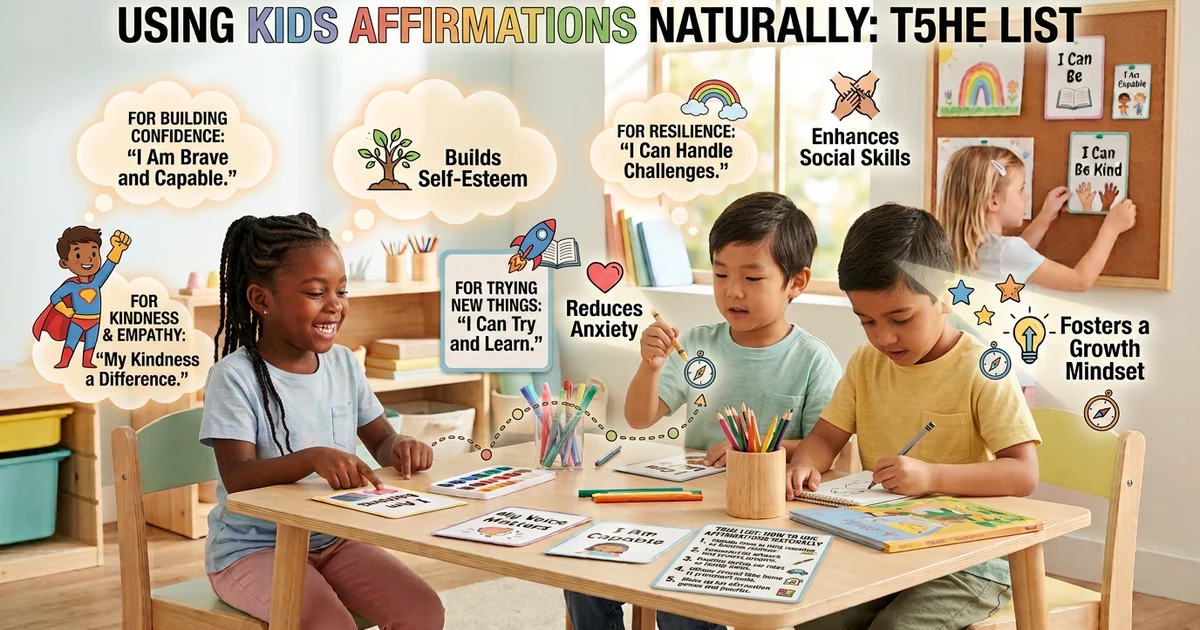
Here are six practical ways to introduce them.
1. Choose One or Two Phrases Together
Start with a situation your child recognizes. If they are nervous about a class presentation, you might suggest, “I can prepare and take it one step at a time.”
Ask whether the phrase feels helpful. If it does not, invite them to change the words.
2. Connect Affirmations With Real Actions
Pair words with something the child can do.
For example:
- Affirmation: “I can ask for help.”
- Action: Practice how to approach a teacher when a question is confusing.
- Affirmation: “I can try again.”
- Action: Take another attempt at a puzzle after a short break.
- Affirmation: “My feelings matter.”
- Action: Help the child name the feeling and explain what happened.
This makes the statement practical instead of simply repetitive.
3. Use Affirmations at Predictable Times
A familiar routine can help children remember their chosen phrases. Try one before school, during a morning routine, after reading a story, or while preparing for bed.
There is no required number of repetitions. Keep it comfortable and flexible.
4. Model Positive Self-Talk
Children notice how adults respond to everyday difficulties.
Instead of saying, “I’m terrible at this,” you could say, “This is taking me a little longer than I expected, so I’ll try another way.”
This demonstrates that positive self-talk is about responding constructively to challenges, not pretending that everything is easy.
5. Let Children Personalize the Words
Some children enjoy saying affirmations aloud. Others prefer writing them, drawing pictures, choosing cards, or hearing a caregiver read them.
Let your child decide which approach feels comfortable. They can also change a phrase as their needs and understanding develop.
6. Keep the Experience Pressure-Free
Do not require a child to repeat a statement when they are upset or insist that they feel positive.
If a child says, “I don’t believe that I’m brave,” try responding, “That’s okay. You don’t have to feel brave all the time. We can start with, ‘I can ask someone to help me.’”
A believable statement can be more reassuring than one that feels too far removed from a child’s experience.
Gentle Wording Tips for Parents and Caregivers
Not every positive statement is equally helpful. The wording should acknowledge a child’s reality while offering encouragement.
Use these simple guidelines when choosing or writing kids affirmations.
Choose believable phrases. Replace “I am never afraid” with “I can ask for support when I feel afraid.”
Focus on effort and learning. Replace “I am the best at everything” with “I can improve when I practice.”
Make room for emotions. Replace “I am always happy” with “I can feel different emotions and talk about them.”
Avoid perfection. Replace “I never make mistakes” with “Mistakes can help me learn.”
Encourage healthy boundaries. Replace “Everyone likes me” with “I deserve respectful relationships.”
Use words children understand. A simple sentence connected to their everyday life is easier to remember than abstract language.
The purpose of an affirmation is not to convince a child that they are always strong, happy, or successful. It is to help them practice a kind and realistic way of talking to themselves.
What to Avoid When Teaching Kids Affirmations
A well-intended affirmation can become unhelpful when it dismisses a child’s experience or creates pressure to feel a certain way.
Watch out for these common mistakes.
- Forcing repetition: Children should not have to repeat phrases they dislike or do not understand.
- Dismissing difficult emotions: Avoid saying, “Just think positively,” when a child needs comfort or practical help.
- Making unrealistic promises: Statements such as “Everything will always work out” can create expectations no one can guarantee.
- Focusing only on achievement: Affirmations should not suggest that a child’s value depends on grades, trophies, or praise.
- Comparing siblings or classmates: Every child develops different skills at a different pace.
- Using affirmations as punishment: A child who is upset needs understanding and guidance, not pressure to say something positive.
- Ignoring ongoing problems: Positive phrases cannot replace action when a child is struggling with bullying, persistent anxiety, learning difficulties, or an unsafe situation.
Affirmations should complement listening, consistent care, appropriate boundaries, and practical problem-solving. They are one tool for encouragement, not a substitute for meeting a child’s needs.
Printable Kids Affirmations: Easy Ideas for Home and School
A printable affirmation list can make it easier for children to choose and revisit their favorite statements. You do not need special supplies or an elaborate activity to create one.

1. Affirmation cards
Write one short phrase on each card. Add simple drawings, shapes, or stickers. Children can pick a card in the morning or whenever they want an encouraging reminder.

2. Fill-in-the-blank worksheet
Try prompts such as “I feel proud when I…” or “When something is difficult, I can…” Children can complete them with their own words or pictures.

3. A family affirmation poster
Invite everyone to contribute one phrase. Display the poster somewhere convenient, such as near a reading area or homework space.

4. A simple affirmation journal
Children can write or draw one helpful thought each day. They can also record something they tried, a feeling they noticed, or a moment when someone helped them.
Copy-and-Paste Kids Affirmations for a Printable List
You can copy these phrases into a document and print them for home or classroom use.
- I am loved and supported.
- I can learn new things.
- I can ask for help.
- I can be kind to myself.
- I can make mistakes and learn.
- I can take my time.
- I can share my ideas.
- I can respect other people’s feelings.
- I can speak up when something is wrong.
- I can be proud of my effort.
- I can try a new approach.
- I deserve kindness and respect.
- I can learn from difficult moments.
- I can take a break when I need one.
- I can be myself.
For younger children, consider using larger text, one phrase per card, and a simple picture that illustrates the meaning. For older children, offer a blank space where they can write their own affirmations.
Conclusion
Kids affirmations offer children simple ways to practice confidence, kindness, patience, and positive self-talk. From short daily reminders to phrases for school, friendship, bedtime, and difficult emotions, the most helpful statements are those that children understand and find believable.
Start with one or two affirmations that fit your child’s current needs. Repeat them naturally, connect them with everyday actions, and let your child choose words that feel right. Most importantly, support each affirmation with patience, listening, and encouragement. Save this list of kids affirmations so you can return to it whenever your child needs a gentle reminder that learning takes time, feelings matter, and asking for help is always okay.
Frequently Asked Questions About Kids Affirmations
1. What are the best kids affirmations?
The best kids affirmations are short, realistic, encouraging, and suitable for a child’s age. Examples include “I can learn new things,” “My feelings matter,” and “I can ask for help.” Choose phrases that address the child’s actual needs and allow them to personalize the wording.
2. At what age can children start using affirmations?
Children can begin hearing simple encouraging phrases in early childhood. Preschoolers may understand statements such as “I am loved” or “I can try again.” As children grow, their affirmations can address more complex ideas, including boundaries, responsibility, and handling setbacks.
3. How many affirmations should a child repeat each day?
There is no fixed number. One or two meaningful phrases may be enough to start. Let the child decide whether to repeat them aloud, write them down, draw a picture, or simply listen. The experience should remain flexible rather than becoming another daily obligation.
4. Do kids affirmations really work?
Kids affirmations may help children practice supportive self-talk and reflect on their strengths. Their usefulness depends on the child, the wording, and the surrounding environment. Affirmations are not guaranteed to change a child’s feelings or behavior, and they work best alongside caring relationships and practical support.
5. What are some short positive affirmations for kids?
Short examples include “I am loved,” “I can learn,” “I am brave,” “I can ask for help,” and “I can try again.” These phrases are easy to remember and can be adapted to suit different ages, experiences, and situations.
6. How can parents teach affirmations to children?
Start by choosing a phrase together and explaining what it means. Connect it with a real situation, such as asking a teacher for help or trying a new activity. Model supportive self-talk yourself and let children change phrases that do not feel natural to them.
7. Are affirmations helpful for children who feel anxious?
Gentle affirmations may give anxious children supportive words to use during challenging moments. Phrases such as “I can take one step at a time” and “I can ask a trusted adult for help” acknowledge their feelings without dismissing them. Persistent or disruptive anxiety may require additional professional support.
8. Can teachers use kids affirmations in the classroom?
Yes. Teachers can include affirmations in morning meetings, classroom displays, reflection activities, or individual encouragement. Phrases such as “Mistakes help us learn” and “Everyone deserves respect” can reinforce a supportive classroom culture. Participation should be optional and inclusive of different learning needs.
9. How can I make a printable kids affirmations worksheet?
Create a simple document with short phrases, large readable text, and space for children to write or draw. You can organize statements by topic, such as confidence, school, friendship, and emotions. Let children select their favorite phrases and decorate the worksheet if they wish.
10. What should I avoid when using positive affirmations with children?
Avoid unrealistic promises, forced repetition, comparisons, and phrases that dismiss genuine emotions. Do not suggest that a child must always feel happy or confident. Choose believable statements that encourage learning, self-kindness, healthy boundaries, and asking for help when needed.