

Children hear many messages as they grow, and the words they repeat to themselves can become part of how they approach everyday challenges. An affirmation for kids is a simple, encouraging statement that reminds children of their strengths, feelings, and ability to learn. These statements can be useful before school, during difficult moments, when making friends, or at bedtime. The best affirmations for children are short, age-appropriate, and believable. This collection includes positive affirmations for daily use, confidence, school, friendship, emotional growth, and more, along with practical tips for helping children use them naturally.
Affirmation for Kids: 20 Positive Examples for Daily Use
These simple affirmations help children practice positive self-talk throughout the day. Parents, teachers, and caregivers can share them during morning routines, after school, or whenever a child needs an encouraging reminder.
- I am loved just as I am.
- I can learn something new every day.
- My ideas matter.
- I am allowed to make mistakes.
- I can try again when something is hard.
- I have something special to share.
- My feelings are important.
- I can ask for help when I need it.
- I treat others with kindness.
- I am proud of my efforts.
- I can take things one step at a time.
- I deserve respect.
- I can learn from yesterday.
- My voice deserves to be heard.
- I can be a good friend.
- I am growing and learning.
- I can make thoughtful choices.
- I bring my own ideas to the world.
- I can handle small challenges.
- Today is a new chance to learn.
Short Affirmations for Kids to Remember Easily
Young children often respond better to a few familiar words than to long sentences. Short affirmations are easy to repeat, remember, write on a card, or display near a bedroom mirror.
- I am loved.
- I can learn.
- I am brave.
- I belong.
- I can try.
- I am kind.
- My voice matters.
- I can ask.
- I am enough.
- I can grow.
- I am helpful.
- I can choose.
- I am important.
- I keep learning.
- I can begin again.
- I am a good friend.
- My feelings matter.
- I can take a break.
- I am worthy of respect.
- I can do hard things with help.
Positive Affirmations for Kids to Build Confidence
Confidence does not mean never feeling nervous or getting everything right. It means learning to trust their abilities, speak up when needed, and keep going when a task takes practice.
- I have strengths that make me unique.
- I can share my thoughts with others.
- I do not need to be perfect to do well.
- I can feel nervous and still give something a try.
- My effort matters, even when the result is not perfect.
- I can stand up for what is right.
- I have good ideas.
- I can learn skills with practice.
- I can be proud of who I am.
- I do not need to compare myself with others.
- I can make decisions with care.
- I am learning to trust myself.
- I can speak kindly about myself.
- I can try new things at my own pace.
- I have the courage to ask questions.
- I can handle being a beginner.
- I can celebrate my progress.
- I deserve to be included and respected.
Morning Affirmations for Kids Before School
A calm morning routine can give children a positive starting point before lessons, friendships, and other daily responsibilities. Choose one or two statements rather than expecting a child to repeat a long list.
- I am ready to learn something new.
- I can ask questions when I am confused.
- I will treat my classmates with kindness.
- I can take my time with difficult work.
- I can make today meaningful in small ways.
- I am allowed to learn at my own pace.
- I can be a good listener.
- I will give my best effort.
- I can handle changes in my plans.
- I can ask a trusted adult for support.
- I have something valuable to contribute.
- I can make a fresh start today.
- I can take a deep breath when I feel nervous.
- I will be patient with myself.
- I can find one good thing about today.
Affirmations for Kids at School and During Homework
Schoolwork can bring excitement, frustration, and pressure. These affirmations remind children that learning is a process and that asking questions, practicing, and correcting mistakes are normal parts of it.
- I do not have to know every answer right away.
- Mistakes help me see what to practice.
- I can break a big task into smaller steps.
- I am capable of learning difficult things.
- I can focus on one question at a time.
- I can ask my teacher to explain something again.
- My grades do not define my worth.
- I can learn from feedback.
- I can take a short break when I need one.
- I can prepare for a test one step at a time.
- I can keep trying without rushing.
- I am more than one school assignment.
- I can organize my work and begin.
- I can learn in my own way.
- I can celebrate understanding something new.
- I do not need to compete with everyone.
- I can practice until a skill becomes easier.
- I can be proud of honest effort.
Affirmations for Kids Who Feel Shy or Nervous
Some children need extra time to feel comfortable in new places or around unfamiliar people. These affirmations should offer encouragement without pressuring a child to become outgoing or act brave before they feel ready.
- I can take my time getting comfortable.
- It is okay to be quiet.
- I can say hello when I feel ready.
- I can speak one sentence at a time.
- I do not have to impress everyone.
- I can ask someone to join me.
- I can be nervous and still take a small step.
- I am allowed to need time.
- I can tell someone how I feel.
- I can choose a trusted person to talk to.
- I belong even when I am quiet.
- I can practice speaking up.
- I can say no when something feels wrong.
- I can ask for help in a new place.
- I can be myself around other people.
Kindness and Friendship Affirmations for Kids
Friendships help children practice sharing, listening, cooperation, and boundaries. These positive statements encourage caring behavior while reminding children that being kind does not mean agreeing with everyone or accepting unkind treatment.
- I can listen when someone is speaking.
- I can include others when it feels appropriate.
- I can share without giving up everything I have.
- I can apologize when I hurt someone.
- I can tell the truth kindly.
- I can respect another person’s differences.
- I can choose friends who treat me well.
- I can disagree without being mean.
- I can celebrate someone else’s success.
- I can ask before borrowing something.
- I can give others a chance to speak.
- I can tell someone when their words hurt me.
- I can be kind without pleasing everyone.
- I can forgive while keeping healthy boundaries.
- I can make room for new friendships.
- I can respect other people’s feelings.
- I deserve friendships built on respect.
- I can be a good friend to myself, too.
Affirmations for Kids to Understand and Manage Emotions
Children may not always have the words to explain what they feel. Gentle affirmations can help them name their emotions, pause before reacting, and understand that difficult feelings are part of being human.
- All my feelings are allowed.
- I can feel angry and still choose safe actions.
- I can tell someone when I feel sad.
- I do not have to hide my disappointment.
- I can pause before I respond.
- My feelings can change over time.
- I can ask for comfort.
- I can take a quiet moment when I feel overwhelmed.
- I can learn what my feelings are telling me.
- I can be upset and still be loved.
- I can try again after a difficult moment.
- I can talk about what is bothering me.
- I do not need to solve everything right now.
- I can breathe slowly and notice what I need.
- I can accept help when emotions feel too big.
- I can make a mistake without being a bad person.
- I can repair a mistake when possible.
- I deserve patience while I learn.
Affirmations for Kids Who Struggle With Mistakes
Children sometimes worry about disappointing adults or getting things wrong. These affirmations encourage a growth-minded approach without suggesting that every mistake feels good or that effort always leads to immediate success.
- Making a mistake does not make me a failure.
- I can learn a different way to solve a problem.
- I do not have to get everything right.
- I can try again after a setback.
- I can learn from what did not work.
- I am still learning, and that is okay.
- I can ask for feedback.
- One difficult day does not define me.
- I can take responsibility for my choices.
- I can make things right when I can.
- I can be patient with my progress.
- I can celebrate small improvements.
- I can change my approach when needed.
- I do not need to give up because something is hard.
- I can learn from others without comparing myself.
- I can start again with what I know now.
Bedtime Affirmations for Kids
Bedtime affirmations can give children a gentle way to reflect on the day. Use them during a story, a quiet conversation, or a bedtime routine. Children do not need to pretend every day was wonderful to end it with reassurance.
- I am loved when the day is easy or hard.
- I can rest and try again tomorrow.
- I did some things well today.
- I can learn from the parts that were difficult.
- I am safe to ask for comfort.
- I do not have to solve tomorrow tonight.
- I can let my body relax.
- I am proud of the effort I made.
- I can talk about my worries with someone I trust.
- I deserve rest.
- I can leave today’s mistakes in the past and learn from them.
- I am cared for by people who support me.
- I can feel peaceful one moment at a time.
- Tomorrow gives me another chance to learn.
- I can be gentle with myself.
Affirmations for Kids About Self-Love and Self-Worth
Children deserve to know that their worth does not depend on popularity, achievements, appearance, or always making other people happy. These statements reinforce self-respect and acceptance in language children can understand.
- I matter even when I make mistakes.
- I deserve love and care.
- My worth is not measured by my grades.
- I can appreciate what makes me different.
- I deserve to be treated fairly.
- I can respect my own needs.
- I do not have to be like my friends.
- I can be proud of my personality.
- My body deserves care and respect.
- I can ask others to respect my boundaries.
- I am allowed to have my own opinions.
- I deserve kindness from myself and others.
- I can accept compliments without feeling embarrassed.
- I do not need everyone’s approval.
- I have value on ordinary days, too.
- I can celebrate the things I enjoy.
- I am learning who I am.
- I can treat myself with the same kindness I give a friend.
Affirmations for Kids Who Need Encouragement on Difficult Days
Some days include arguments, disappointment, loneliness, or unexpected changes. On those days, affirmations should acknowledge what a child is experiencing instead of demanding that they feel happy.
- This is a hard moment, not my whole story.
- I can ask someone to sit with me.
- I do not have to pretend I am happy.
- I can take one small step.
- I can tell a trusted adult what happened.
- I deserve support when things feel difficult.
- I can try a different solution.
- I can rest before trying again.
- I am not alone in every problem.
- I can learn to handle challenges with help.
- I can take time to understand my feelings.
- I can speak up when something is unfair.
- I can change my plan if I need to.
- I can be disappointed and still find hope.
- I do not have to fix everything by myself.
- I can begin again when I am ready.
Powerful Affirmations for Kids to Encourage Independence
As children grow, they gradually learn to make decisions, take responsibility, and solve everyday problems. These affirmations support independence while making it clear that asking for help is also a strength.
- I can make thoughtful choices.
- I can take responsibility for my actions.
- I can ask questions before deciding.
- I can try solving a problem on my own first.
- I can ask for help when I reach my limit.
- I can take care of my belongings.
- I can speak up about what I need.
- I can learn from the choices I make.
- I can follow through on small responsibilities.
- I can admit when I need more information.
- I can practice a new skill until I improve.
- I can make a plan and take the first step.
- I can listen to advice and make my own thoughtful decision.
- I can say no to unsafe or uncomfortable situations.
- I can learn to manage my time.
- I can be responsible without being perfect.
Simple Affirmations for Preschoolers and Younger Kids
Preschoolers and younger elementary-school children usually benefit from concrete, familiar words. Pair an affirmation with an everyday activity, such as putting away toys, sharing a story, or getting ready for school.
- I am loved.
- I can help.
- I can learn.
- I am a good helper.
- I can use gentle hands.
- I can take turns.
- I can try again.
- I can use my words.
- I can ask for help.
- I can be gentle with myself.
- I can learn to share.
- I can wait for my turn.
- I can tell someone how I feel.
- I can try something new.
- I can clean up one thing at a time.
- I can be kind to animals.
- I can listen and learn.
- I can take a break.
- I can practice being patient.
- I can show kindness today.
Affirmations for Older Kids and Tweens
Older children may face more complicated friendships, academic pressure, changing responsibilities, and worries about fitting in. Use affirmations that respect their growing independence rather than making them feel talked down to.
- I can have my own opinions.
- I can change my mind when I learn something new.
- I do not need to follow every trend.
- I can protect my time and energy.
- I can speak up respectfully.
- I can learn to handle criticism.
- I can choose what deserves my attention.
- I am allowed to outgrow old interests.
- I can make mistakes without losing my identity.
- I can ask questions about things I do not understand.
- I can choose friends who respect my boundaries.
- I can balance responsibilities with rest.
- I can take pride in progress others may not see.
- I do not need to share everything to belong.
- I can disagree without disrespecting someone.
- I can focus on my own growth.
- I can ask a trusted adult for guidance.
- I deserve to be heard.
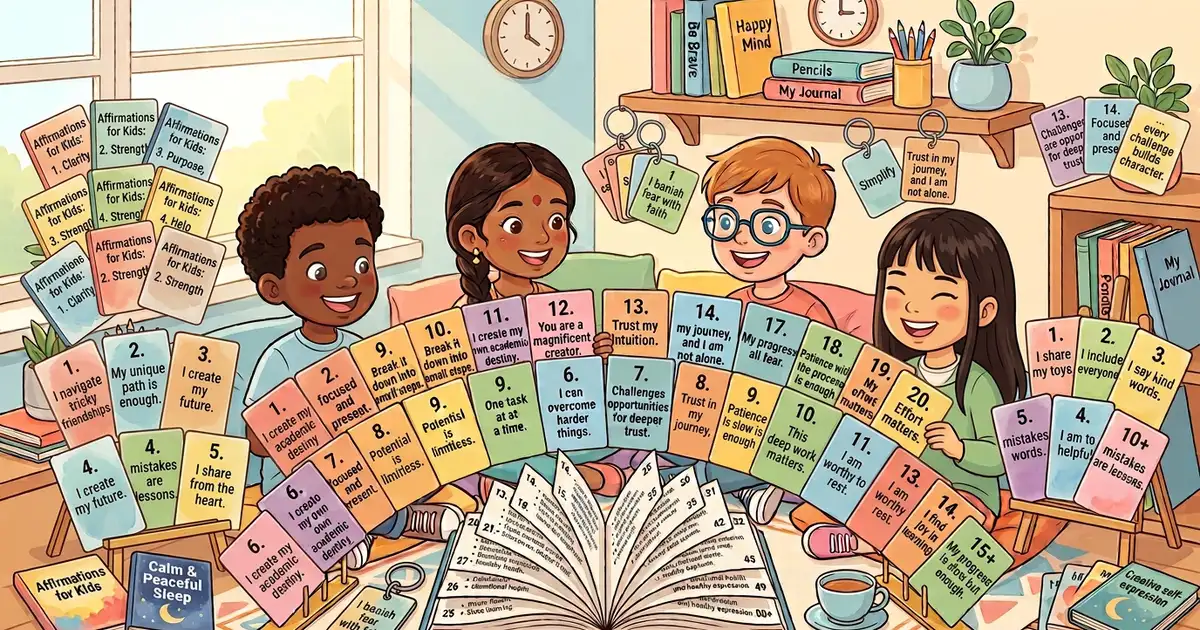
How to Use Affirmations for Kids Naturally
Affirmations work best as gentle reminders, not as another task children must complete perfectly. Keep the experience relaxed and allow each child to decide which statements feel meaningful.
- Choose one or two statements. Start with something connected to the child’s current needs, such as confidence before school or patience during homework.
- Use everyday moments. Try an affirmation while getting dressed, packing a backpack, reading a bedtime story, or preparing for a new activity.
- Say it together if the child wants. Adults can model positive self-talk without demanding that children repeat every word.
- Connect words with actions. After saying, “I can try again,” help the child break a difficult task into a smaller step.
- Let the child choose. Invite them to select a favorite affirmation, change the wording, or create one of their own.
- Keep it flexible. Some days, a child may enjoy affirmations. On other days, listening and offering comfort may be more helpful.
Consistency can make affirmations familiar, but children should never feel they have failed because they forgot to use one.
How to Choose an Age-Appropriate Affirmation for Kids
The most useful affirmation matches a child’s age, language, and actual experience. A statement that sounds natural to a six-year-old may feel childish to a twelve-year-old.
- For preschoolers: Use short, concrete phrases such as “I can ask for help” or “I can take turns.”
- For elementary-school children: Try statements about learning, friendship, patience, and trying again.
- For older kids and tweens: Focus on self-respect, boundaries, decision-making, and handling pressure.
- For a specific challenge: Choose words that address the situation, such as “I can ask my teacher a question.”
- For a child who feels discouraged: Start with an achievable statement rather than an exaggerated claim.
Notice how the child responds. If an affirmation feels embarrassing or unbelievable, simplify it or let the child choose different words.
Generic vs. Realistic Affirmations for Children
An affirmation does not have to claim that everything is wonderful. Children may find it easier to connect with statements that acknowledge their feelings while offering a manageable next step.
| Less realistic wording | More realistic alternative |
|---|---|
| I am never afraid. | I can feel afraid and ask for help. |
| I am the best at everything. | I can keep learning and improving. |
| Everyone likes me. | I can build friendships with people who respect me. |
| I never make mistakes. | I can learn from my mistakes. |
| Nothing can upset me. | I can learn ways to handle upsetting moments. |
| I can do everything alone. | I can try independently and ask for help when needed. |
Realistic affirmations do not dismiss a child’s struggles. They offer a supportive way to respond to those struggles.
What to Avoid When Teaching Children Affirmations
The goal is to help children develop kinder self-talk, not to make them feel responsible for being happy all the time.
- Avoid forced positivity. Do not tell a child to repeat “I am happy” when they are upset. Help them name and express the feeling first.
- Avoid perfection-based statements. Phrases such as “I always get everything right” can make ordinary mistakes feel like failure.
- Avoid comparisons. Encourage children to notice their own growth instead of claiming they are better than their classmates.
- Avoid using affirmations as punishment. A child should not have to repeat positive phrases to earn comfort or approval.
- Avoid dismissing real problems. If a child reports bullying, persistent fear, or another serious concern, listen and take appropriate action rather than relying on affirmations alone.
- Avoid promising results. Affirmations cannot guarantee good grades, friendship, or success.
Children can benefit from reassurance, practical support, and adults who listen. Positive self-talk is only one part of that support.
Printable Affirmations for Kids: Easy Ideas for Home and School
A printable affirmation list can help children see and revisit their favorite statements. You do not need a complicated design or special materials to make one useful.
- Affirmation cards: Write one short statement on each card and let the child choose one daily.
- Morning affirmation chart: Place three to five familiar statements near a school bag or breakfast area.
- Bedtime affirmation sheet: Choose gentle phrases about rest, learning, and feeling supported.
- Classroom affirmation board: Invite students to contribute respectful, encouraging statements.
- Coloring pages: Let younger children decorate cards with drawings that match the words.
- Personal affirmation journal: Encourage older children to write a statement and one small action they can take.
- Pocket-size reminders: Keep a favorite card in a pencil case or school folder.
For a simple printable PDF, place 12 to 20 short affirmations on a page, use readable text, and leave enough space between lines. Let children choose the statements they want to keep. Avoid presenting the printable as a test or requiring every affirmation to be completed each day.
Conclusion
The best affirmation for kids is one that feels encouraging, understandable, and relevant to a child’s real life. A short reminder about learning, friendship, confidence, or emotions can give children helpful words to return to when they face everyday challenges. Choose a few affirmations that match the child’s age and needs, and let them change the wording so it feels natural. Pair positive self-talk with patience, practical guidance, and genuine listening. Save this list, revisit favorite statements together, and remember that children do not need to feel positive all the time to be valued, supported, and capable of growing.
Frequently Asked Questions
1. What is an affirmation for kids?
An affirmation for kids is a short, encouraging statement that helps children practice supportive self-talk. Examples include “I can learn from my mistakes” and “My feelings matter.” These statements can remind children of their strengths and options when they face challenges, without suggesting that they must always feel happy or confident.
2. Do positive affirmations work for children?
Positive affirmations may help children practice more encouraging ways of talking to themselves. Their usefulness depends on the child, the wording, and the situation. Affirmations are not a guaranteed solution to emotional or behavioral difficulties, and they work best alongside caring relationships, practical guidance, and appropriate support.
3. How many affirmations should a child say each day?
Start with one to three affirmations that fit the child’s current needs. A short, meaningful statement is often easier to remember than a long list. There is no required daily number, so let the child decide whether to repeat a favorite phrase, write it down, or simply keep it in mind.
4. What is the best time for kids to use affirmations?
Children can use affirmations in the morning, before school, during homework, before a new activity, or at bedtime. Choose a moment when the child feels comfortable and has time to engage. Avoid turning affirmations into a rushed obligation or insisting on them when the child needs to talk about a problem.
5. Should kids say affirmations aloud or write them down?
Both approaches are options. Younger children may enjoy repeating a phrase with a parent or drawing a picture to represent it. Older children might prefer writing affirmations in a journal or keeping a card in their backpack. Let the child choose the format that feels comfortable and useful.
6. What are some good affirmations for kids with low confidence?
Try realistic statements such as “I can learn with practice,” “My ideas matter,” “I can ask questions,” and “I do not need to be perfect.” Choose phrases that address a specific concern. Pair them with opportunities to practice skills and receive encouragement for effort rather than only for achievements.
7. How can parents teach affirmations to young children?
Use simple words during familiar routines and model the statements yourself. For example, after making a mistake, you might say, “I can learn from this and try again.” Invite the child to join you, but do not force repetition. Everyday examples help children understand what the words mean.
8. What should a child do if an affirmation feels fake?
Change the wording until it feels more believable. Instead of “I am always confident,” try “I am learning to feel more confident” or “I can take one small step.” Children do not need to agree with an unrealistic statement. Honest, manageable language is often a better starting point.
9. Can teachers use affirmations in the classroom?
Yes. Teachers can display encouraging phrases, invite students to select a daily reminder, or use affirmations during classroom reflection. Choose inclusive language that respects different personalities and abilities. Participation should be optional, and affirmations should support rather than replace practical help with learning, peer relationships, or classroom challenges.
10. Can affirmations replace professional support for a struggling child?
No. Affirmations may provide encouragement, but they cannot replace appropriate support when a child experiences ongoing distress, significant anxiety, bullying, or other serious difficulties. Listen carefully, communicate with the child’s caregivers or school when appropriate, and seek guidance from a qualified professional if concerns persist.