

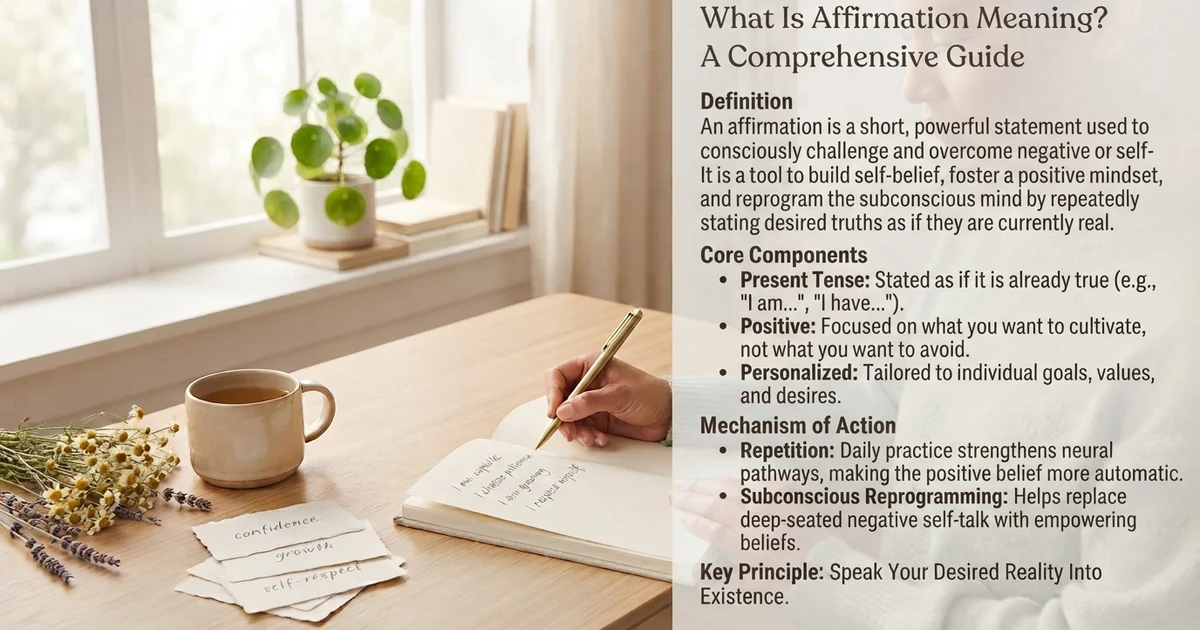
An affirmation is a short statement you intentionally repeat to support a helpful thought, belief, or mindset. You may use affirmations to focus on confidence, patience, motivation, self-respect, gratitude, or other qualities you want to practice. They can be spoken aloud, written in a journal, read silently, or added to a daily routine. If you are new to affirmations, the idea is simple: choose words that feel realistic and useful, then return to them consistently.
Quick Answer: What Is Affirmation?
An affirmation is a positive or supportive statement that a person repeats or reflects on to encourage a particular mindset or way of thinking.
For example:
- I can take this one step at a time.
- I am learning to trust myself.
- I deserve to treat myself with respect.
- I can handle today with patience.
- I am proud of the progress I am making.
Affirmations are best viewed as a form of intentional self-talk. They do not need to sound dramatic or make unrealistic promises. A useful affirmation can simply remind you of a quality, value, or action you want to keep in mind.

What Is Affirmation in Simple Words?
In simple words, an affirmation is a statement you repeat or think about on purpose because you want to encourage a helpful thought.
The word can refer to the act of affirming something as well as a statement used for self-affirmation. In everyday personal development, affirmations usually mean short phrases designed to support positive or constructive self-talk.
For example, instead of repeatedly thinking:
“I always get everything wrong.”
You might practice:
“I can learn from mistakes and keep going.”
The second statement does not pretend that mistakes never happen. It gives you a more constructive way to respond to them.
What Is Affirmation Meaning?
The meaning of affirmation is closely connected to confirmation, encouragement, and expressing something positively.
In a personal-growth context, an affirmation is usually a deliberate statement that reinforces a thought, value, intention, or personal quality.
An affirmation can focus on:
- Confidence
- Self-respect
- Patience
- Gratitude
- Courage
- Motivation
- Focus
- Kindness
- Personal growth
- Healthy boundaries
The most useful statements are often simple enough to understand and repeat without feeling forced.
What Is Affirmation Examples?
Affirmations can be created for almost any area of everyday life. Here are some simple examples:
Confidence Affirmations
- I can trust myself to learn.
- I am becoming more confident with practice.
- My voice deserves to be heard.
- I can face challenges one step at a time.
- I do not have to be perfect to make progress.
Self-Worth Affirmations
- I deserve kindness and respect.
- I am learning to value myself.
- My worth is not measured by one mistake.
- I can speak to myself with patience.
- I am worthy of healthy relationships.
Daily Motivation Affirmations
- I can focus on what I can do today.
- Small steps still count.
- I can begin before I feel completely ready.
- I am capable of making steady progress.
- I can keep going at my own pace.
Calm and Patience Affirmations
- I can pause before I react.
- I can give myself time to think.
- I can handle this moment with patience.
- I do not need to solve everything at once.
- I can return my attention to what matters now.
What Is Affirmation List for Daily Use?
A daily affirmation list is simply a collection of statements you can return to regularly.
You do not need dozens of statements. Five or ten meaningful affirmations can be enough to create a simple routine.
Try this short list:
- I can take today one step at a time.
- I am learning something new every day.
- I can choose patience when things feel difficult.
- I am allowed to make mistakes and learn.
- I can focus on what is within my control.
- My progress does not have to be perfect.
- I can treat myself with kindness.
- I can make thoughtful choices today.
- I am capable of learning and growing.
- I can give myself another chance.
Save this list and choose one or two statements that feel especially relevant to your day.
What Is a Positive Affirmation?
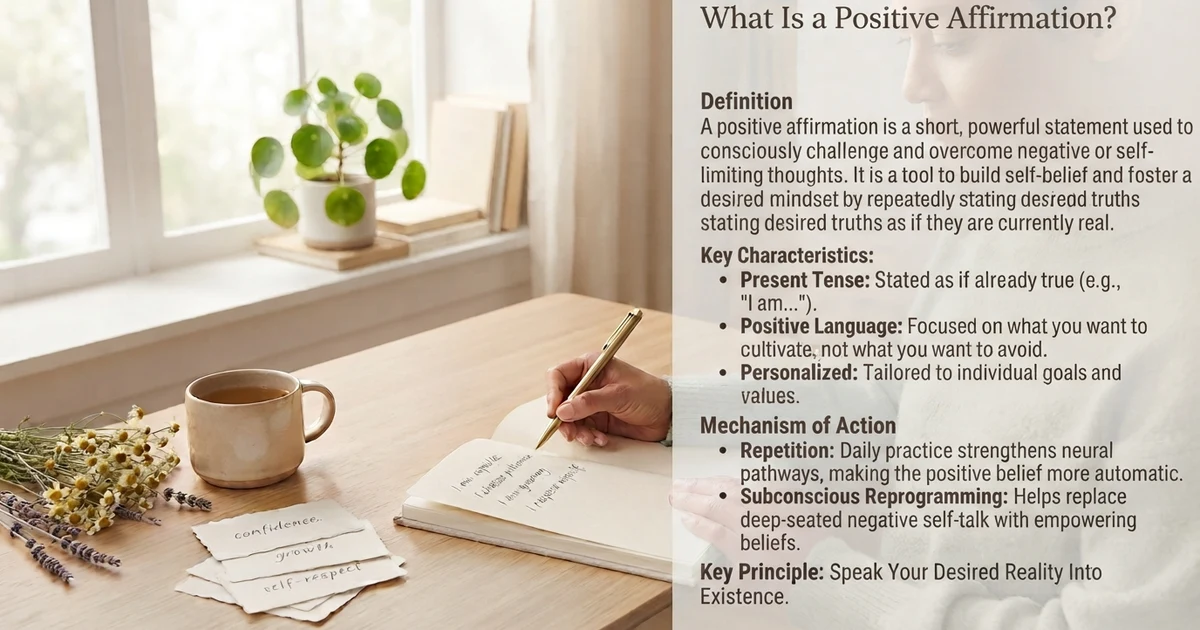
A positive affirmation is a statement framed around a constructive thought, quality, intention, or possibility.
Positive does not have to mean unrealistically cheerful.
For example, “Everything will always be perfect” may feel difficult to believe. A more grounded statement could be:
“I can handle unexpected changes one step at a time.”
That kind of wording can be easier to connect with because it acknowledges that life can be challenging while still encouraging a helpful response.
What Is Affirmation Compared With Positive Self-Talk?
Affirmations and positive self-talk are closely related, but they are not exactly the same.
Positive self-talk is the broader practice of speaking to yourself in a supportive, constructive, or balanced way.
Affirmations are usually specific statements that you intentionally repeat or reflect on.
For example:
Positive self-talk:
“I made a mistake, but I can figure out what to do differently next time.”
Affirmation:
“I can learn from mistakes.”
Both can encourage a more helpful inner dialogue. The difference is that an affirmation is usually a short, intentional statement.
What Is Affirmation Compared With a Mantra?
An affirmation and a mantra can look similar because both may involve repeating a short phrase.
An affirmation generally focuses on reinforcing a thought, belief, value, or intention. A mantra can have a broader role and may be used in spiritual, religious, meditative, or contemplative practices depending on the tradition.
For example:
Affirmation:
“I can stay focused on what matters today.”
Mantra:
A repeated word, phrase, or sacred expression used as part of a particular practice.
The terms can overlap in casual conversation, but they are not automatically interchangeable.
How Do Affirmations Work in Everyday Life?
Affirmations can become useful when they are connected to reflection and action rather than treated as magic phrases.
You might read an affirmation in the morning and use it as a reminder throughout the day.
For example:
Affirmation:
“I can respond with patience.”
Everyday action:
Before replying to a frustrating message, pause and take a moment to think.
The affirmation provides a mental reminder, while your behavior puts the intention into practice.

How to Use Affirmations Correctly
There is no single required method for using an affirmation. The best approach is one that fits naturally into your routine.
1. Choose a specific focus
Think about what you want to practice.
Maybe you want more patience, confidence, focus, or self-compassion.
2. Keep the statement simple
A short statement is usually easier to remember.
Instead of:
“I am going to completely change every part of my life starting immediately.”
Try:
“I can make one helpful change today.”
3. Use believable language
An affirmation does not have to be something you already fully believe. However, extremely unrealistic wording may feel disconnected from your actual experience.
You can soften a statement with phrases such as:
- I am learning to…
- I am becoming more comfortable with…
- I can practice…
- I am open to…
- I am choosing to…
4. Repeat it consistently
You can write your affirmation in a journal, read it in the morning, keep it on a note, or repeat it during a quiet moment.
5. Connect it with an action
If your affirmation is about confidence, take one small action that supports confidence.
If it is about patience, practice pausing before reacting.
This makes the affirmation part of a broader habit instead of a phrase you simply repeat without reflection.
Common Mistakes When Using Affirmations
Affirmations are simple, but a few common mistakes can make them less useful.
Making every statement unrealistic
You do not have to tell yourself something that feels completely disconnected from reality.
Using too many affirmations
A huge list can become difficult to remember. Start with a small group that fits your current needs.
Expecting instant results
Affirmations are not a guaranteed quick fix. They are better understood as a self-talk or mindset practice.
Repeating words without reflection
If you say a phrase mechanically but never connect it to your choices, it may become less meaningful.
Copying statements that do not fit you
An affirmation written for someone else may not match your circumstances. Personalizing the wording can make it more relevant.
What Makes an Affirmation Effective?
A useful affirmation is often:
- Clear
- Short
- Relevant
- Positive or constructive
- Realistic enough to engage with
- Connected to a value or intention
- Easy to remember
For example, “I can take the next step” is short and practical.
You can also make an affirmation more personal:
“I can take the next step even when I feel uncertain.”
The best wording depends on what you are trying to remind yourself of.
Can Affirmations Be Short?
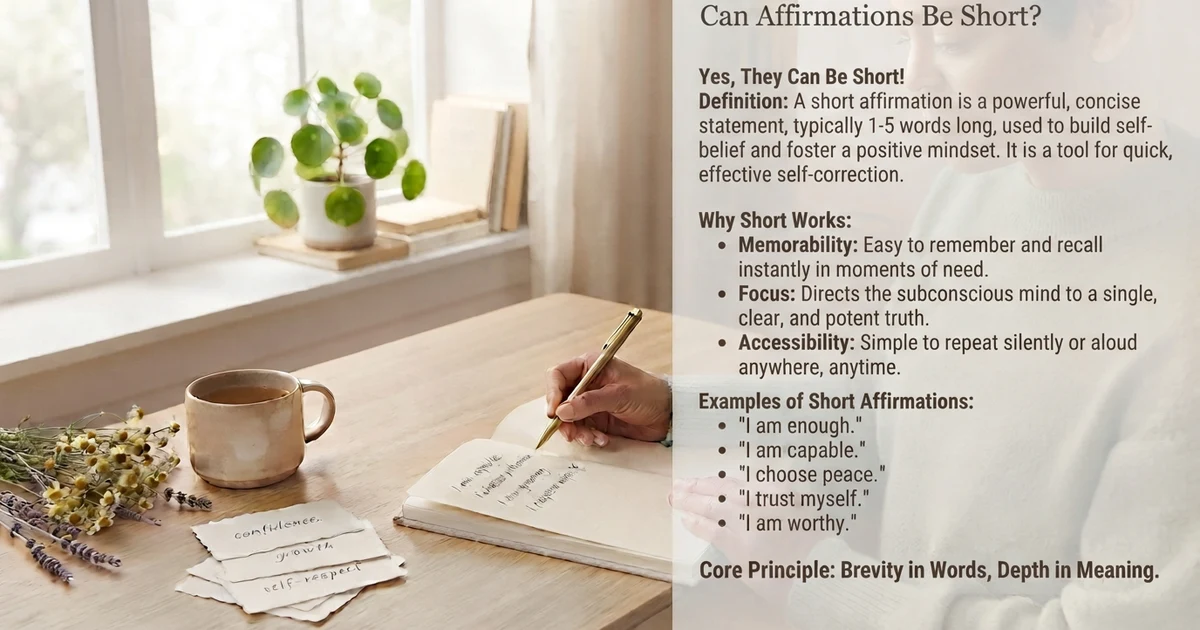
Yes. In fact, short affirmations can be especially convenient for daily use.
Examples include:
- I can begin.
- I am learning.
- I choose patience.
- I can keep going.
- I trust my process.
- I deserve respect.
- I can handle today.
- Small steps matter.
- I can try again.
- I am growing.
A short statement can be written on a sticky note, added to a journal, or used as a daily reminder.
What Is Affirmation Copy and Paste?
If you want ready-to-use statements, copy-and-paste affirmations are simply affirmations that are already written so you can save or reuse them.
Here are a few:
I can take things one step at a time.
I am learning to trust myself.
I can choose a helpful response.
I deserve kindness and respect.
I am allowed to grow at my own pace.
I can learn from today.
I can focus on what matters most.
You can copy these into a notes app, journal, printable, or daily reminder.
What Is Affirmation for Beginners?
For beginners, an affirmation is simply a short statement you intentionally use to support a helpful mindset.
You do not need a complicated routine.
Start with one statement that matches something you want to practice.
For example:
“I can take today one step at a time.”
Read it once in the morning. Write it down. Return to it when you need a reminder. Most importantly, connect it with a small action that reflects the statement.
As you become comfortable, you can create more personalized affirmations.
What Is Affirmation and What Is It Not?
An affirmation is a tool for intentional self-talk. It is not a guarantee that a desired outcome will happen.
It is also not a replacement for professional support when someone is dealing with serious emotional, mental, or physical difficulties.
For example, saying “I can ask for help when I need it” can be a useful reminder. It does not mean a person should avoid getting appropriate support.
This distinction keeps affirmations practical and grounded.
Conclusion
So, what is affirmation? An affirmation is a short, intentional statement used to encourage a helpful thought, value, belief, or mindset. It can be as simple as “I can take one step at a time” or “I choose patience today.” The most useful affirmations are clear, relevant, and realistic enough to engage with. You can repeat them, write them down, or connect them with everyday actions. Start with one statement that feels meaningful to you, use it consistently, and adjust the wording as your needs change.
Frequently Asked Questions
What is affirmation in simple terms?
An affirmation is a short statement that you intentionally repeat or reflect on to encourage a helpful thought, value, belief, or intention.
What is an example of an affirmation?
“I can take one step at a time” is a simple affirmation. Other examples can focus on confidence, patience, self-respect, gratitude, or personal growth.
What is a positive affirmation?
A positive affirmation is a constructive statement used to encourage a helpful mindset or reinforce a quality, intention, or value.
What are affirmations used for?
People may use affirmations as part of intentional self-talk, reflection, journaling, meditation, or daily routines focused on qualities such as confidence, patience, motivation, and self-respect.
How do you write a good affirmation?
Choose one clear idea, keep the wording simple, use language that feels meaningful to you, and focus on something you want to practice or reinforce.
Can affirmations be one sentence?
Yes. Many affirmations are a single short sentence. Some are only a few words, such as “I can begin” or “I choose patience.”
How often should I repeat an affirmation?
There is no required number of repetitions. You can use an affirmation once during a quiet moment or include it regularly in a daily routine.
Are affirmations the same as mantras?
Not always. They can overlap because both may involve repeating phrases, but affirmations generally focus on intentional self-talk, while mantras can have broader spiritual, religious, meditative, or contemplative meanings.
Do affirmations have to be positive?
They are generally framed constructively, but they do not have to sound exaggerated or cheerful. A grounded statement such as “I can handle this one step at a time” can be more useful than an unrealistic claim.
Can I create my own affirmations?
Yes. Creating your own affirmations can help you choose wording that reflects your personal goals, values, and current situation.