
School and college life bring many opportunities to learn, grow, and discover what you can do. They can also come with exams, homework, deadlines, and moments of self-doubt. On difficult days, a few encouraging words can help you approach your studies with a more positive and patient mindset.
Positive affirmations for students are short, encouraging statements that remind you of your strengths, effort, and ability to learn. They do not promise perfect grades or make challenges disappear. Instead, they offer a simple way to practice self-belief, manage everyday academic pressure, and keep moving forward one step at a time.
Whether you are preparing for an exam, starting a new school year, or trying to feel more confident in class, these affirmations can give you words to return to whenever you need encouragement.
Positive Affirmations for Students
These positive affirmations for students are easy to remember, simple to personalize, and suitable for everyday school or college life.
- I am capable of learning new things.
- My effort matters.
- I believe in my ability to improve.
- I can learn from my mistakes.
- I deserve patience as I grow.
- I am proud of my progress.
- I can take one step at a time.
- My questions help me learn.
- I have something valuable to contribute.
- I can keep trying when things feel difficult.
- I am allowed to learn at my own pace.
- Every lesson gives me a chance to grow.
- I can ask for help when I need it.
- I am more than my grades.
- I can make progress through practice.
- I welcome new opportunities to learn.
- I can handle challenges with patience.
- My ideas deserve to be heard.
- I can improve with time and effort.
- I am building skills that will help me in the future.
Choose the statements that feel meaningful to you. You do not need to repeat every affirmation every day.
Short Positive Affirmations for Students
Short affirmations are helpful when you want something easy to remember before a lesson, during a study break, or on your way to school.
- I can do this.
- I am learning.
- My effort counts.
- I am growing.
- I can improve.
- I trust my preparation.
- I can stay focused.
- I am capable.
- I choose to keep trying.
- I can begin again.
- I learn every day.
- I deserve encouragement.
- I can ask questions.
- I believe in progress.
- I can take my time.
- I am ready to learn.
- I can adapt.
- I have strengths.
- I can work through this.
- I am proud of trying.
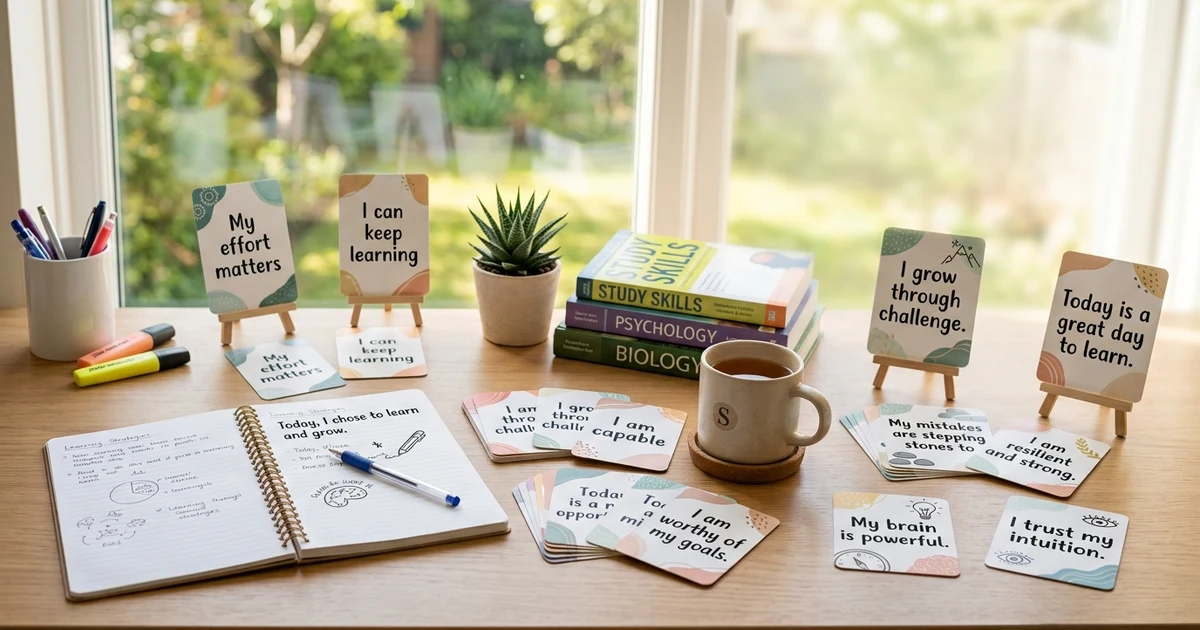
Quick tip: Pick one short affirmation and write it on a notebook cover, planner, or study card. Seeing the same meaningful reminder regularly can make it easier to recall when you need encouragement.
Positive Affirmations for Students Before Exams
Exams can feel stressful, especially when you have worked hard and want to do well. These affirmations encourage preparation, realistic confidence, and a calmer approach to test day.
- I have prepared as well as I can.
- I can approach this exam one question at a time.
- I do not need to know everything perfectly.
- I can pause and think carefully.
- I will focus on what I know.
- I can use my time wisely.
- One difficult question does not define my ability.
- I can breathe slowly and return my attention to the task.
- I can read each question carefully.
- My worth is not determined by one result.
- I can learn from this experience.
- I can give myself credit for preparing.
Use these statements alongside practical preparation, such as reviewing important topics, getting enough rest, and following your exam instructions. Affirmations support your mindset, but studying and preparation remain important.
Positive Affirmations for Studying and Concentration
Sometimes the hardest part of studying is getting started. Other times, distractions or a difficult topic make it challenging to stay focused. These affirmations encourage steady effort without demanding perfection.
- I can begin with one small task.
- I give myself time to understand.
- I can return to my work after a distraction.
- I do not need to finish everything at once.
- I can break a big task into smaller steps.
- My attention can improve with practice.
- I am willing to try a different approach.
- I can take a useful break when needed.
- I can make a realistic study plan.
- I can focus on the next step.
- I can practice even when a topic feels unfamiliar.
- I can learn by reviewing what I studied.
- I can work steadily without rushing.
- I am building better study habits.
- Starting small is still progress.
For the best results, connect an affirmation to a clear action. For example, say, “I can begin with one small task,” and then study one topic or solve one practice question.
Positive Affirmations for Students Who Lack Confidence
It is normal to question your abilities sometimes, particularly when a subject feels difficult or someone else seems to understand it more quickly. These affirmations help students focus on individual growth rather than constant comparison.
- I have the ability to develop new skills.
- I do not need to compare my progress with others.
- I can speak up even when I feel nervous.
- My mistakes do not make me a failure.
- I deserve to take up space in the classroom.
- I can be proud of small improvements.
- I have strengths that I am still discovering.
- I can learn something from constructive feedback.
- I am allowed to be a beginner.
- I can trust myself to keep learning.
- I can share my ideas respectfully.
- I do not need to be perfect to be capable.
Confidence does not mean feeling certain all the time. It can also mean trying something new while accepting that you are still learning.
Positive Affirmations for Students Who Feel Overwhelmed
Assignments, exams, extracurricular activities, and personal responsibilities can sometimes feel like too much at once. When this happens, gentle affirmations can help you focus on manageable steps instead of expecting yourself to solve everything immediately.
- I can take things one step at a time.
- I am allowed to ask someone for support.
- I do not have to solve every problem today.
- I can make a plan that fits my time.
- Rest is part of taking care of myself.
- I can adjust my plan when necessary.
- I can focus on what is within my control.
- I deserve kindness on difficult days.
- I can take a break and return when I am ready.
- I can handle one responsibility at a time.
- I do not have to carry every worry alone.
- It is okay to tell someone when I am struggling.
Try pairing one affirmation with a practical step. You might list your tasks, choose the most urgent one, or speak with a teacher or trusted adult if your workload feels unmanageable.
Positive Affirmations for Academic Success
Academic success involves more than earning high marks. It also includes developing useful skills, learning from feedback, becoming more organized, and building the confidence to keep improving.
These affirmations encourage a balanced approach to achievement.
- I can work toward my academic goals.
- I learn from both success and mistakes.
- I can improve through consistent practice.
- I take responsibility for my learning.
- I can use feedback to grow.
- I can develop habits that support my goals.
- I am willing to learn from difficult lessons.
- I can celebrate progress along the way.
- I can make thoughtful choices about my time.
- I can keep going when improvement takes time.
- I can set goals that challenge me realistically.
- I can be proud of my effort, not only my results.
Instead of using an affirmation such as “I will always get the highest marks,” choose something you can realistically work toward, such as “I can prepare carefully and learn from my results.”
Positive Affirmations for Students Who Fear Failure
Fear of making mistakes can stop students from asking questions, trying unfamiliar subjects, or participating in class. These affirmations remind you that learning involves uncertainty and that a disappointing result does not determine your future.
- I can try even when I am unsure.
- Mistakes can show me what to practice.
- I do not have to get everything right on the first attempt.
- I can learn from a disappointing result.
- One setback does not define me.
- I can change my approach when something is not working.
- I am brave enough to keep learning.
- I can accept feedback without losing confidence.
- I can give myself another chance.
- I can improve after a difficult experience.
When you make a mistake, ask yourself, “What can I learn from this?” That question turns an uncomfortable moment into a practical opportunity to identify what you need to review or practice.
Positive Affirmations for Classroom Participation
Speaking in class, answering questions, presenting a project, or working with classmates can feel uncomfortable for some students. These affirmations encourage participation while respecting the fact that confidence develops differently for everyone.
- My questions are worth asking.
- I can share my thoughts one sentence at a time.
- I can participate without knowing every answer.
- I am allowed to take a moment before speaking.
- I can listen carefully to other viewpoints.
- I can express disagreement respectfully.
- My contribution does not need to be perfect.
- I can ask my teacher to explain something again.
- I can work with others and learn from them.
- I can practice speaking with more confidence.
- I can learn from group discussions.
- I deserve to be treated with respect.
If speaking in front of others feels difficult, start with a small step. You could ask one question after class, contribute a short idea during group work, or practice your presentation with someone you trust.
Positive Affirmations for Students of Different Ages
Students have different needs depending on their age, learning environment, and responsibilities. The most useful affirmations match the student’s experience and use language that feels natural.
For elementary school students
- I am curious and ready to learn.
- I can ask questions.
- I can be kind to myself and others.
- I can try again when something is hard.
- I am proud when I do my best.
For middle school students
- I can learn from new experiences.
- I do not have to fit in with everyone.
- I can make mistakes and keep growing.
- I can ask for help without feeling ashamed.
- I can build friendships that feel supportive.
Choose age-appropriate wording rather than expecting every student to respond to the same message. Younger students may prefer very short sentences, while older students may appreciate affirmations that acknowledge independence, uncertainty, and responsibility.
How to Use Positive Affirmations for Students Every Day
Affirmations are most useful when they become a small, realistic part of your routine. You do not need a long morning ritual or a large list to get started.

1. Choose one affirmation
Pick a sentence that relates to what you are experiencing. For a busy school day, you might choose, “I can take things one step at a time.”

2. Connect it to an action
Pair the words with something practical, such as opening your textbook, reviewing notes, or asking for clarification.

3. Keep the reminder visible
Write your affirmation in a planner, on a study card, or in your notebook so it is easy to revisit.

4. Reflect on your progress
At the end of the day, notice one thing you learned, one effort you made, or one challenge you handled.
You can repeat an affirmation silently, say it aloud, or write it down. Choose whichever approach feels comfortable. If a statement sounds unrealistic, adjust it until it feels believable.
How to Write Your Own Positive Affirmations
Personal affirmations can feel more meaningful than general quotes because they address your actual needs.
Use these simple steps to create your own:
- Identify the challenge. Are you worried about an exam, struggling with a subject, or finding it difficult to speak in class?
- Choose a supportive message. Focus on something you can practice or influence.
- Keep the wording simple. Use everyday language that sounds like something you would genuinely say.
- Make it realistic. Replace absolute promises with statements about effort, learning, or asking for support.
- Connect it to an action. Decide what small step you can take after repeating the affirmation.
For example:
| Instead of saying | Try saying |
|---|---|
| I never make mistakes. | I can learn from my mistakes. |
| I must get perfect grades. | I can prepare carefully and do my best. |
| I am the smartest student. | I can develop my skills through practice. |
| I will never feel nervous. | I can take a small step even when I feel nervous. |
| I can do everything alone. | I can ask for help when I need it. |
The goal is not to force yourself to feel positive. It is to find a supportive statement that helps you approach the situation constructively.
What to Avoid When Using Student Affirmations
Affirmations should encourage students rather than add another standard they feel pressured to meet.
Keep these guidelines in mind:
- Avoid unrealistic promises. Statements such as “I always succeed” leave little room for normal setbacks.
- Do not tie your worth to grades. Academic results matter in some situations, but they do not measure every part of who you are.
- Avoid comparing yourself with classmates. Focus on your own progress and learning needs.
- Do not ignore difficult feelings. You can feel nervous, disappointed, or frustrated and still use a helpful affirmation.
- Do not replace action with repetition. Encouraging words work best alongside studying, planning, practice, and asking for support.
- Do not force yourself to believe every statement immediately. Begin with wording that feels possible and adjust it as needed.
If school-related stress continues to feel overwhelming, talk with a trusted adult, teacher, school counselor, or another appropriate support person. You deserve practical help as well as encouragement.
Positive Affirmations for Students: Printable and Journal Ideas
A printable affirmation list can make it easier to keep encouraging words close at hand. You can create your own simple resource using a notebook, paper, or digital document.
Here are a few practical ideas:
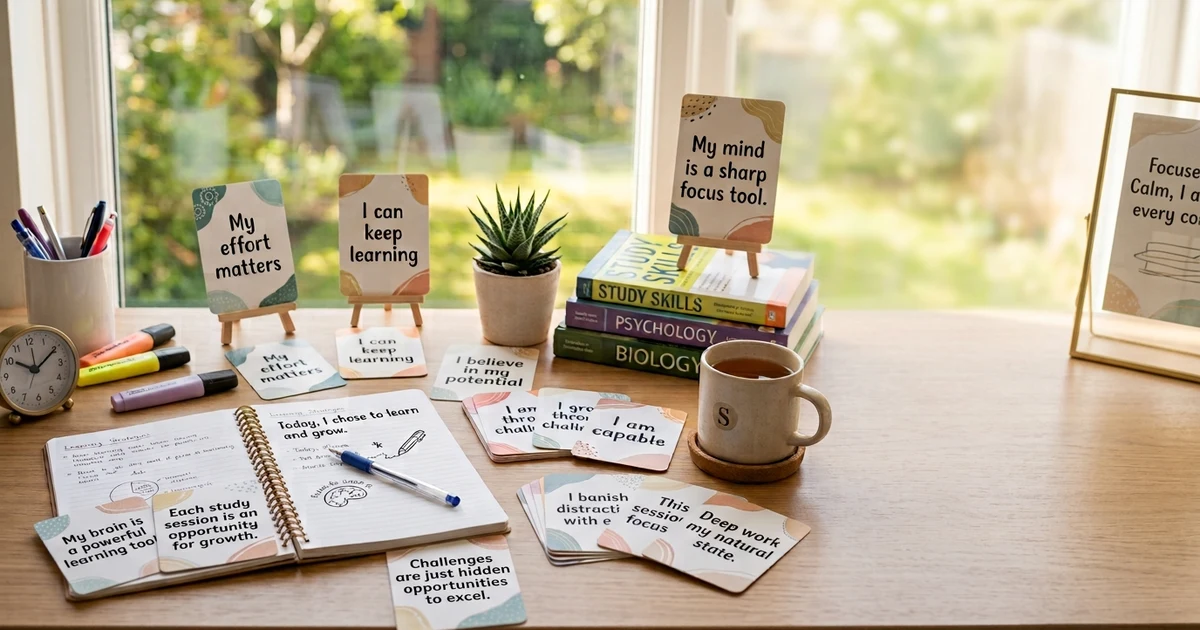
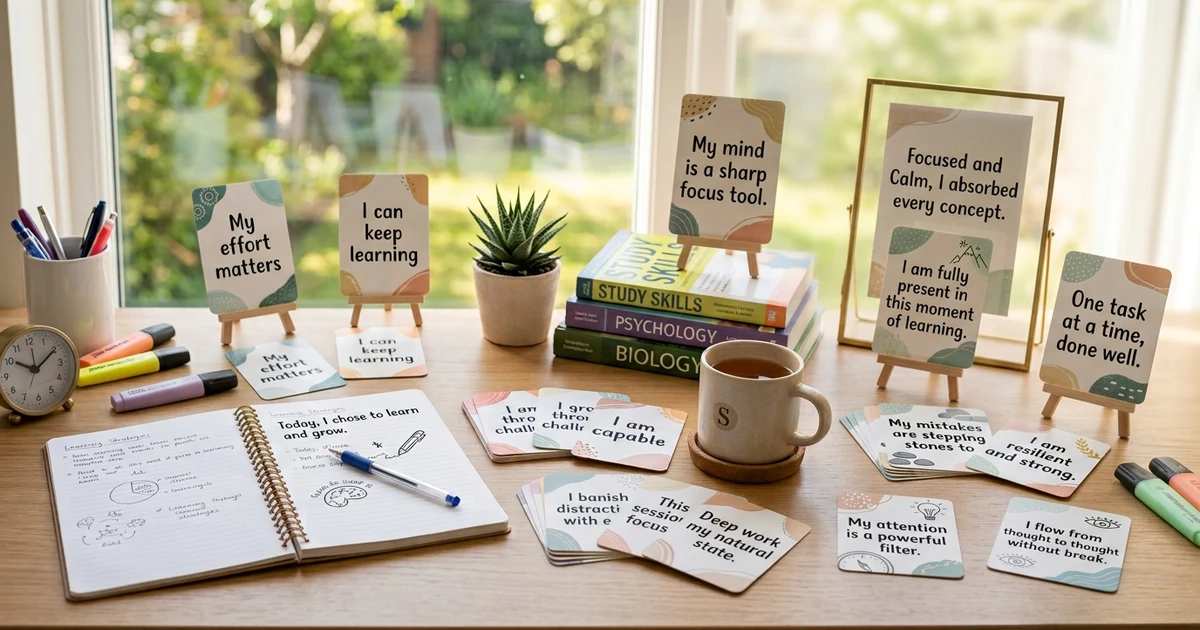
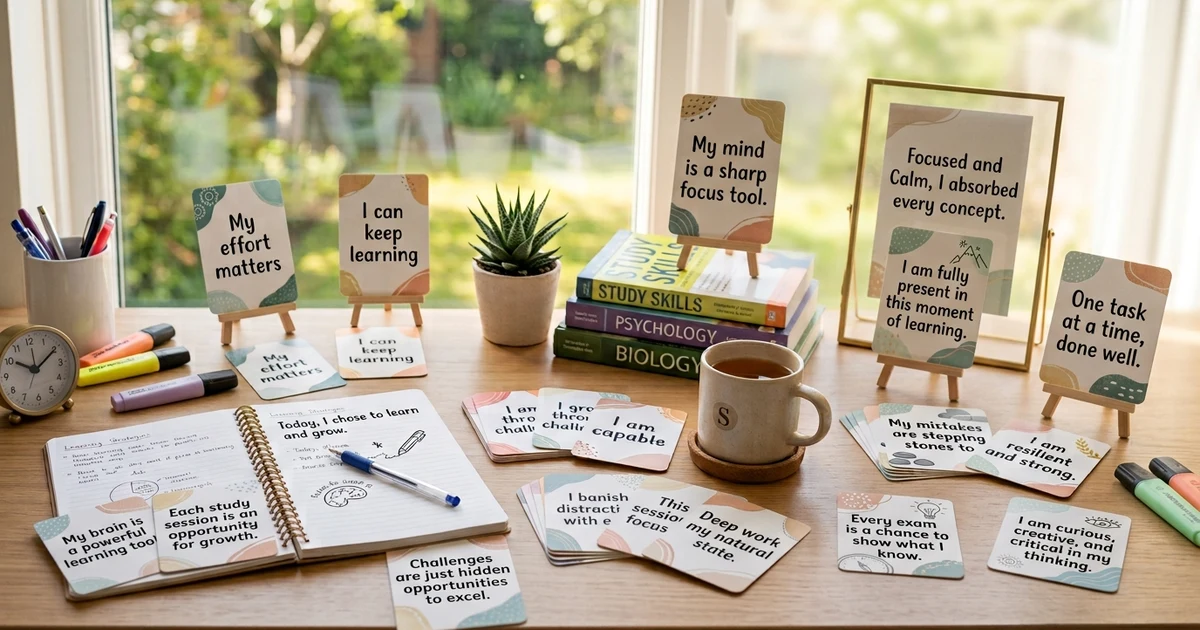
- Affirmation cards: Write one short statement on each card and choose one before studying.
- Study planner reminders: Add a sentence such as “I can focus on the next step” beside your daily tasks.
- Desk notes: Place a small reminder near your study materials.
- Journal prompts: Write one affirmation and then describe an action that supports it.
- Classroom displays: Teachers can use age-appropriate affirmations to encourage effort, curiosity, and respectful participation.
- Weekly reflection sheets: Record one challenge, one thing you learned, and one goal for the following week.
A simple affirmation worksheet
Use this mini worksheet whenever you want to create a reminder that fits your day.
My Student Affirmation
What am I working through today?Preparing for an examStaying focused while studyingBuilding confidence in classManaging a busy school dayMy affirmationI can prepare carefully and take one question at a time.One small action I can takeReview one topic and complete three practice questions.
Copy my worksheet
Save your completed worksheet and revisit it when you need a reminder. You can change the affirmation as your goals and circumstances change.
Conclusion
Positive affirmations for students offer a simple way to practice self-belief, approach challenges with patience, and remember that learning takes time. Whether you need encouragement before an exam, help getting started with homework, or a reminder that one difficult grade does not define you, choose words that feel realistic and supportive. Start with one affirmation, connect it to a small action, and notice your progress without expecting perfection. You can save this list, copy your favorite statements into a planner, or create your own affirmation cards for daily use. The most helpful affirmation is one that encourages you to keep learning while treating yourself with kindness.
Frequently Asked Questions
1. What are positive affirmations for students?
Positive affirmations for students are short, encouraging statements that support a constructive mindset toward learning, personal growth, and academic challenges. Examples include “I can learn from my mistakes” and “My effort matters.”
2. What is the best affirmation for a student?
A useful general affirmation is “I am capable of learning and improving.” It emphasizes growth rather than perfection and can apply to different subjects, school years, and learning situations.
3. Do positive affirmations help students study?
Affirmations may help students approach studying with a more encouraging mindset. They are most useful when paired with practical habits such as making a study plan, reviewing material, taking breaks, and seeking help when needed.
4. What are some short positive affirmations for students?
Examples include “I can do this,” “My effort counts,” “I am learning,” “I can improve,” and “I can begin again.” Short statements are easy to remember and use throughout the school day.
5. Which affirmations can students use before an exam?
Students can try “I can take one question at a time,” “I trust my preparation,” and “One difficult question does not define my ability.” These statements encourage a steady approach without promising a particular result.
6. How often should students repeat affirmations?
Students can repeat an affirmation whenever it feels helpful, such as in the morning, before studying, or before an exam. There is no required number of repetitions or single routine that works for everyone.
7. Can teachers use positive affirmations in the classroom?
Yes. Teachers can use age-appropriate affirmations to encourage curiosity, persistence, respectful participation, and learning from mistakes. Examples include “Questions help us learn” and “We can improve with practice.”
8. How can students make their own affirmations?
Students can identify a challenge, write a short and realistic supportive statement, and connect it to a practical action. For example, “I can improve in math” can be paired with reviewing one difficult concept.
9. Are positive affirmations useful for students who lack confidence?
They may offer a helpful reminder of a student’s ability to learn and grow. Statements such as “I am allowed to be a beginner” can encourage students to try new things while recognizing that confidence develops over time.
10. Can students use affirmations in a printable PDF?
Yes. Students can put affirmations into a printable PDF, worksheet, planner, or set of cards. Choose a manageable number of statements, use clear formatting, and leave space to add personal reminders or study goals.