

Teachers do more than teach lessons. Their words can help students feel capable, valued, and willing to keep learning when something feels difficult. Positive affirmations for students from teachers are simple, encouraging statements that recognize effort, build self-belief, and remind students that mistakes are part of learning.
Whether you teach young children, middle school students, or teenagers, the right words can help create a classroom where students feel respected and supported. You do not need a long speech or a perfect quote. A short, sincere sentence can communicate that a student’s effort matters and that improvement is possible.
In this article, you will find affirmations teachers can share during lessons, before exams, after mistakes, and throughout the school day, along with practical tips for using them naturally.
Quick Answer: What Are Positive Affirmations for Students From Teachers?
Positive affirmations for students from teachers are encouraging statements that help learners recognize their strengths, develop confidence, and approach challenges with a healthier mindset.
Examples include:
- “I believe in your ability to learn and grow.”
- “Your effort matters, even when progress feels slow.”
- “You are allowed to ask questions.”
- “Mistakes help us discover new ways to learn.”
- “You do not have to be perfect to make progress.”
- “I am proud of the effort you are putting into your learning.”
- “Your ideas and questions are important.”
Teachers can say these statements aloud, write them on classroom boards, add them to feedback, or share them on printable affirmation cards.

Positive Affirmations for Students From Teachers: Best Examples
The best teacher affirmations are warm, believable, and specific. They encourage students without comparing them with classmates or suggesting that everyone must succeed in exactly the same way.
Use these examples as they are or adjust the wording to suit your students’ ages, needs, and classroom environment.
Short Positive Affirmations for Students From Teachers
These short statements work well on the classroom board, in planners, on sticky notes, or at the beginning of a lesson.
- “You are capable of learning new things.”
- “Your voice matters in this classroom.”
- “You can improve with practice.”
- “You bring something valuable to our class.”
- “Keep asking thoughtful questions.”
- “Your effort makes a difference.”
- “You are allowed to learn at your own pace.”
- “You can take one step at a time.”
- “You deserve kindness and respect.”
- “I am glad you are part of this class.”
- “You have the courage to try.”
- “Every question is an opportunity to learn.”
- “You can learn from today’s challenges.”
- “Your progress is worth celebrating.”
- “You do not have to know everything today.”
Powerful Positive Affirmations for Students From Teachers
Powerful affirmations do not need dramatic language. They are most useful when they remind students of their ability to learn, make choices, and work through challenges.
- “I believe you can make progress with practice and support.”
- “You have strengths that can help you solve difficult problems.”
- “You can face a challenge without giving up on yourself.”
- “Your current performance does not define your potential.”
- “You are capable of developing skills that feel difficult today.”
- “You can learn from feedback without taking it as a personal failure.”
- “Your ideas deserve to be heard and considered.”
- “You can be proud of your effort, even when the result is not what you hoped for.”
- “You have the ability to reflect, adjust, and try again.”
- “You are more than a grade on a report card.”
- “You can make meaningful progress one step at a time.”
- “You deserve the opportunity to learn, improve, and succeed in your own way.”
Positive Affirmations Teachers Can Say Directly to Students
These statements sound natural in everyday conversations. They can be especially helpful when a student needs encouragement, reassurance, or recognition.
- “I can see how much thought you put into this.”
- “You kept working even when the task became challenging.”
- “Thank you for sharing your idea with the class.”
- “You asked a useful question that helped us think more deeply.”
- “I appreciate the way you treated your classmate.”
- “You have made progress in this skill.”
- “It is okay to need more time to understand something.”
- “You can ask me for help when you need it.”
- “You approached that problem in a thoughtful way.”
- “I noticed that you tried a different strategy.”
- “You are learning, and learning takes practice.”
- “Your contribution helped our class today.”
Tip: Whenever possible, connect praise to something you actually observed. Saying, “You checked your work carefully,” gives a student clearer feedback than simply saying, “You are brilliant.”
Daily Positive Affirmations for Students From Teachers
A daily affirmation routine can give students a predictable moment to reflect on their effort, goals, and attitude toward learning. Keep it brief so it feels like a natural part of the school day rather than another assignment.
Here are statements teachers can share during morning meetings, attendance, or the start of a lesson.
- “Today is another opportunity to learn.”
- “I can ask questions when I need clarity.”
- “I can listen to others and share my own ideas.”
- “I can focus on the next step.”
- “I can learn something useful from a challenge.”
- “I can treat myself and others with respect.”
- “I can take responsibility for my choices.”
- “I can give myself time to understand new ideas.”
- “I can celebrate progress without needing to be perfect.”
- “I can make today meaningful through small efforts.”
- “I can accept helpful feedback and use it to improve.”
- “I can begin again when something does not go as planned.”
Teachers can invite students to choose one statement for the day. Students should also be free to select a different statement or simply listen if they do not want to participate aloud.

Positive Affirmations for Students Before Exams
Exams can make students feel nervous, especially when they are worried about grades, expectations, or disappointing others. Affirmations can offer a reminder to focus on preparation and the next manageable step.
- “I have prepared, and I will do my best with what I know.”
- “I can take a moment to read each question carefully.”
- “I can approach one question at a time.”
- “Feeling nervous does not mean I am unprepared.”
- “I can use the strategies I have practiced.”
- “I can ask for clarification when instructions are unclear.”
- “One exam does not measure everything about my abilities.”
- “I can learn from this experience, whatever the result.”
- “I can pause, breathe gently, and return my attention to the task.”
- “I can focus on doing my best rather than being perfect.”
Teachers can write one or two of these statements on the board before an assessment. Avoid promising students that they will definitely earn high marks. Reassure them that preparation, effort, and learning matter even when the outcome is uncertain.
Positive Affirmations for Students Who Struggle With Learning
Some students need extra time, different explanations, or additional support to understand a lesson. Encouraging words should acknowledge their experience without making them feel singled out or embarrassed.
- “You can learn this in smaller steps.”
- “Needing help is a normal part of learning.”
- “You can ask for another explanation.”
- “Your progress does not have to look like someone else’s.”
- “You are allowed to take the time you need.”
- “A difficult task does not mean you cannot learn.”
- “You can try a different strategy if the first one does not work.”
- “You have already learned things that once felt unfamiliar.”
- “You can make progress with practice and appropriate support.”
- “It is okay to tell me when something is confusing.”
- “You do not have to struggle silently.”
- “We can work together to find a way forward.”
Pair these statements with practical assistance. A student who is struggling may benefit from clearer instructions, a worked example, a short break, or a conversation about what is making the task difficult.
Positive Affirmations for Students After Mistakes
Mistakes are a normal part of learning, but students may feel embarrassed when they answer incorrectly, receive disappointing feedback, or misunderstand an assignment. Teachers can help students respond with curiosity instead of shame.
- “A mistake can show us what to practice next.”
- “You can correct your work and keep learning.”
- “Getting something wrong does not make you a failure.”
- “You can take responsibility without being unkind to yourself.”
- “You are allowed to change your mind when you learn something new.”
- “One difficult moment does not define your whole day.”
- “You can learn from feedback and decide what to do next.”
- “You do not have to hide every mistake to be a good student.”
- “Trying a new approach is part of solving problems.”
- “You can reflect on what happened without giving up.”
- “Improvement begins with understanding what needs to change.”
- “You can make a better choice next time.”
When responding to a mistake, try asking, “What did you learn from this?” or “What could you try differently?” These questions help students move from embarrassment toward practical problem-solving.
Positive Affirmations for Shy Students
Quiet students may have valuable ideas even when they are not comfortable speaking in front of a group. Teachers can encourage participation without pressuring students to become more outgoing.
- “Your ideas matter, even when you share them quietly.”
- “You can participate in a way that feels manageable.”
- “You may take time to think before answering.”
- “You can share your thoughts with a partner first.”
- “You are allowed to ask for help privately.”
- “Your questions are welcome here.”
- “You do not need to be the loudest person to contribute.”
- “You can build confidence through small steps.”
- “You deserve to be listened to.”
- “You can speak up when you feel ready.”
- “There are different ways to show what you know.”
- “Your thoughtful observations can help others learn.”
Give students different ways to participate, such as writing a response, working with a partner, or submitting a question privately. Affirmations are more meaningful when the classroom environment supports the message.

Positive Affirmations for Students Who Lack Confidence
Students may doubt their abilities after receiving low marks, comparing themselves with classmates, or finding a subject difficult. Teachers can remind them that current challenges do not determine what they can learn in the future.
- “You have strengths that you can continue to develop.”
- “You do not need to be the best to belong here.”
- “You can take pride in your own progress.”
- “You are capable of learning from constructive feedback.”
- “You can attempt something new without knowing the outcome.”
- “Your abilities can grow as you practice.”
- “You deserve encouragement while you learn.”
- “You can recognize what you do well and what needs work.”
- “You can set a goal that feels challenging but manageable.”
- “You can ask for support without feeling ashamed.”
- “Your worth is not determined by your grades.”
- “You can give yourself the same patience you offer others.”
Whenever possible, point to specific progress. For example, tell a student that they explained a concept more clearly this week or used a strategy independently. Specific feedback helps make encouragement believable.
Positive Affirmations for Students About Kindness and Respect
Academic learning is only one part of the classroom experience. Students also need opportunities to practice empathy, cooperation, responsibility, and respectful communication.
Teachers can use these affirmations during class meetings, group projects, or discussions about classroom expectations.
- “I can treat others with kindness and respect.”
- “I can listen even when someone has a different opinion.”
- “I can disagree without insulting another person.”
- “I can include others when working in a group.”
- “I can take responsibility for my words and actions.”
- “I can apologize when I have hurt someone.”
- “I can respect other people’s boundaries.”
- “I can ask for help when a situation feels difficult.”
- “I can be honest while speaking respectfully.”
- “I can recognize the effort others contribute.”
- “I can help create a classroom where people feel welcome.”
- “I can learn from people whose experiences differ from mine.”
These statements work best when teachers model the same behavior. Students are more likely to understand respect when they see it practiced consistently in everyday classroom interactions.
How Teachers Can Use Positive Affirmations Naturally
Affirmations do not need to be a separate classroom activity every day. They can be part of ordinary teaching, feedback, and student support.
1. Start the Day With One Encouraging Statement
Write a short affirmation on the board or share it during morning attendance. For example, “Today, we can learn from our questions and mistakes.” Give students a moment to think about what it means.
2. Include Affirmations in Written Feedback
Add a specific, encouraging sentence to a student’s work. Instead of writing only “Try again,” you might say, “You have the right starting idea. Review this step, then try the next one.”
3. Use Affirmations During Challenging Lessons
When students become frustrated, remind them that difficult work can take time. Say, “You do not have to solve the whole problem at once. Let’s start with the first step.”
4. Let Students Choose Their Own Affirmations
Offer several statements and let students select one that feels relevant. Choice helps affirmations feel personal rather than forced.
5. Connect Encouragement With Action
Pair an affirmation with a practical next step. For example, “You can improve your writing. Let’s look at one paragraph and identify a place to add detail.”
6. Recognize Different Types of Progress
Celebrate persistence, thoughtful questions, collaboration, creativity, and improvement. This helps students understand that learning involves more than getting the highest score.
7. Keep the Routine Brief
A daily affirmation can take less than a minute. A short, consistent practice is often easier to maintain than a lengthy activity that competes with lesson time.
Gentle Wording Tips for Teachers
The way an affirmation is delivered can be as important as the words themselves. The goal is to encourage students while respecting their individual experiences.
- Be specific. Mention an action or skill you have genuinely observed.
- Keep it age-appropriate. Use simple language for younger children and more collaborative wording for teenagers.
- Focus on growth. Encourage learning, effort, reflection, and helpful strategies.
- Make room for real feelings. A student can feel nervous and still take a positive next step.
- Avoid comparisons. Recognize individual progress instead of ranking students against their classmates.
- Respect student choice. Some students enjoy repeating affirmations; others prefer to read or reflect silently.
- Follow through with support. Encouraging words should be backed by useful instruction, fair expectations, and help when needed.
For example, rather than saying, “You are never afraid of challenges,” try, “You can ask for help and take the next step, even when something feels challenging.” The second statement allows room for normal emotions and practical action.
What Teachers Should Avoid When Giving Affirmations
Positive affirmations should help students feel supported, not pressured to hide their feelings or meet unrealistic expectations.
Avoid these common mistakes:
Making unrealistic promises. Statements such as “You will always succeed” can make ordinary setbacks feel like personal failures. Try “You can learn from setbacks and keep improving.”
Praising only natural ability. Calling a student a genius may sound kind, but it can make future challenges feel threatening. Recognize effort, strategy, curiosity, and progress instead.
Dismissing difficult feelings. Telling a worried student to “just be positive” may leave them feeling misunderstood. Acknowledge the concern and offer a manageable next step.
Using the same statement for everyone. Students have different needs and preferences. Choose wording that fits the individual and the situation.
Forcing students to repeat affirmations aloud. Public participation should not become a source of embarrassment. Offer private reflection or written alternatives.
Using affirmations instead of meaningful help. A student who needs academic assistance, emotional support, or accommodations may need more than encouraging words. Affirmations can complement appropriate support, but they cannot replace it.
Printable Positive Affirmations for Students From Teachers
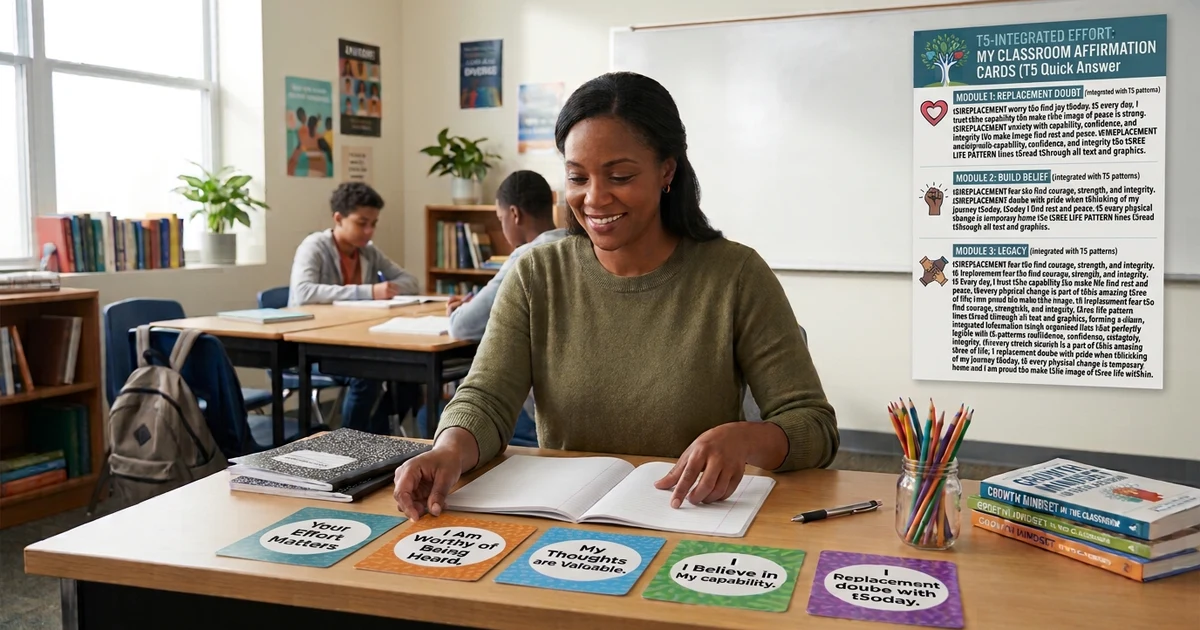
A printable list can help teachers keep encouraging phrases accessible throughout the school year. You can turn the statements below into classroom cards, a worksheet, a bulletin board, or a page for student planners.
My Classroom Affirmation Cards
Choose one affirmation to read, reflect on, or keep in your planner.
I can learn one step at a time.
My questions help me learn.
I can improve with practice and support.
I deserve kindness and respect.
Copy affirmation cards
To create your own printable, place each statement in a large, readable font, leave space between cards, and use simple designs that are suitable for your students’ ages. You can print the page or share it digitally. Invite students to select the statements that feel useful to them.
Examples of Affirmations by Classroom Situation
Use this quick reference to find wording that matches what a student may need at a particular moment.
| Classroom situation | Affirmation to use |
|---|---|
| Beginning a new lesson | “I can approach new ideas with curiosity.” |
| Preparing for a test | “I can focus on one question at a time.” |
| Receiving a low grade | “This result can help me decide what to practice.” |
| Making a mistake | “I can learn from what happened.” |
| Asking for assistance | “Asking for help is part of learning.” |
| Working in a group | “My contribution can help the team.” |
| Feeling left out | “I deserve respect and a chance to participate.” |
| Completing a difficult task | “I can recognize the progress I have made.” |
| Giving a presentation | “I can share my ideas one step at a time.” |
| Starting again after a setback | “I can choose a helpful next step.” |
Conclusion
Positive affirmations for students from teachers are a simple way to encourage confidence, curiosity, kindness, and a willingness to learn. Whether you share a short phrase before an exam, recognize a student’s effort, or create printable affirmation cards, choose words that are sincere and appropriate for the situation.
Remember that students do not need to feel confident every day to make progress. They need opportunities to learn, room to make mistakes, and adults who treat them with patience and respect. Pair encouraging words with specific feedback and practical support to help create a classroom where every student has the opportunity to grow.
Save this list and return to it whenever you need a thoughtful way to encourage your students.
Frequently Asked Questions
1. What are positive affirmations for students from teachers?
They are encouraging statements teachers share to help students recognize their abilities, approach learning challenges, and feel valued. They may focus on effort, confidence, kindness, resilience, or asking for help.
2. What is a good affirmation a teacher can say to a student?
A useful example is, “I believe you can make progress, and I am here to help you work through the next step.” It communicates confidence while offering practical support.
3. What are some short positive affirmations for students?
Examples include “Your effort matters,” “You can keep learning,” “Your ideas count,” “Mistakes help us learn,” and “You deserve respect.” Short phrases are easy to remember and use throughout the school day.
4. How can teachers use affirmations in the classroom?
Teachers can share a daily statement, write affirmations on the board, include them in feedback, create affirmation cards, or invite students to choose a phrase for the week. Keep the practice brief and optional where appropriate.
5. Do positive affirmations help students build confidence?
Affirmations can provide encouragement and help students focus on learning, effort, and personal strengths. Their usefulness depends on the student and the situation. Specific feedback, supportive relationships, and opportunities to practice are also important.
6. What affirmations can teachers use before exams?
Try “I can take one question at a time,” “I can use what I have practiced,” and “One test does not define all my abilities.” These statements encourage preparation and a manageable approach rather than guaranteeing a particular result.
7. What should teachers say to students who make mistakes?
Teachers can say, “Let’s see what this mistake can teach us,” or “You can review this step and try another approach.” The aim is to help students learn from errors without shaming themselves.
8. Are affirmations suitable for younger children and teenagers?
Yes, but the wording should fit the students’ ages and preferences. Younger children may benefit from simple phrases such as “I can keep trying,” while teenagers may prefer more realistic statements about independence, growth, and handling challenges.
9. Can teachers make printable affirmation cards for students?
Yes. Teachers can place short statements on individual cards, worksheets, planners, or classroom displays. Let students choose statements that feel meaningful, and keep the design clear and easy to read.
10. What should teachers avoid when using positive affirmations?
Avoid unrealistic promises, comparisons, forced participation, and statements that dismiss genuine feelings. Affirmations should support students rather than pressure them to feel positive all the time or replace the practical help they need.