
Taking care of your mental well-being can start with small, supportive habits. Positive affirmations for mental health are simple statements you can repeat to encourage self-belief, patience, emotional awareness, and a kinder way of talking to yourself.
Affirmations do not need to sound overly positive or unrealistic. The most useful ones are words you can actually accept, especially on difficult days. Whether you are a beginner or already use affirmations daily, the right phrase can give you a gentle reminder to pause, breathe, and respond to yourself with more compassion.
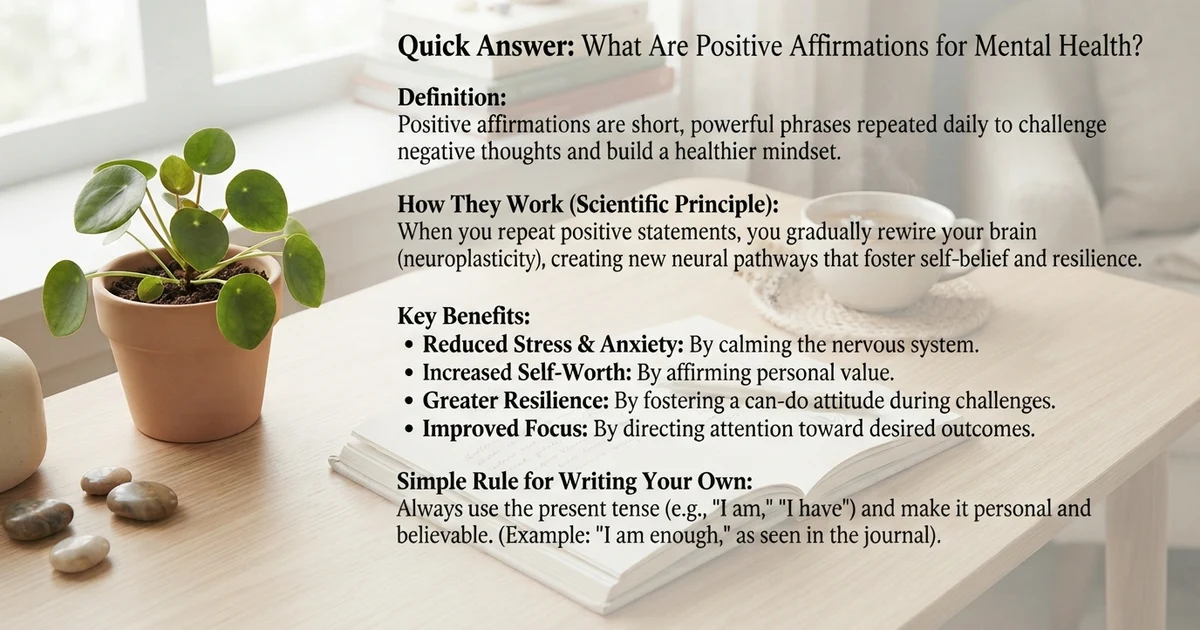
Quick Answer: What Are Positive Affirmations for Mental Health?
Positive affirmations for mental health are short, encouraging statements used to support a healthier and more compassionate mindset. They can focus on self-worth, patience, emotional awareness, confidence, boundaries, hope, and coping with everyday challenges.
For example:
- I can take things one step at a time.
- My feelings are worth noticing.
- I can be patient with myself.
- I do not have to solve everything today.
- I am learning to trust myself.
- I can ask for support when I need it.
- I am allowed to rest.
- I can handle this moment gently.
Affirmations are a self-talk practice. They may support emotional well-being, but they are not a replacement for professional mental health care when someone needs it.
Positive Affirmations for Mental Health
Here is a simple list of affirmations you can read, save, or adapt for your own daily routine.
Self-Worth Affirmations
- I am worthy of kindness and respect.
- I matter, even on difficult days.
- My worth is not based on my productivity.
- I deserve to treat myself with compassion.
- I am learning to appreciate who I am.
- I do not need to be perfect to have value.
- I can recognize the good qualities in myself.
- I am allowed to make mistakes and learn.
- I deserve healthy and respectful relationships.
- I can speak to myself with kindness.
Emotional Well-Being Affirmations
- I can acknowledge my feelings without judging myself.
- My feelings can change with time.
- I can give myself space to process emotions.
- I can be gentle with myself today.
- I do not have to understand everything immediately.
- I can pause before reacting.
- I can take care of myself when emotions feel strong.
- It is okay to have difficult days.
- I can listen to what my emotions are telling me.
- I can choose a kind response to myself.
Short Positive Affirmations for Mental Health
Short affirmations can be easier to remember and repeat throughout the day.
- I am here.
- I am worthy.
- I can breathe.
- I can pause.
- I can slow down.
- I am learning.
- I can be patient.
- I deserve kindness.
- I can ask for help.
- I can take one step.
- I am doing my best.
- I can begin again.
- I am allowed to rest.
- I can trust myself.
- I can face today gently.
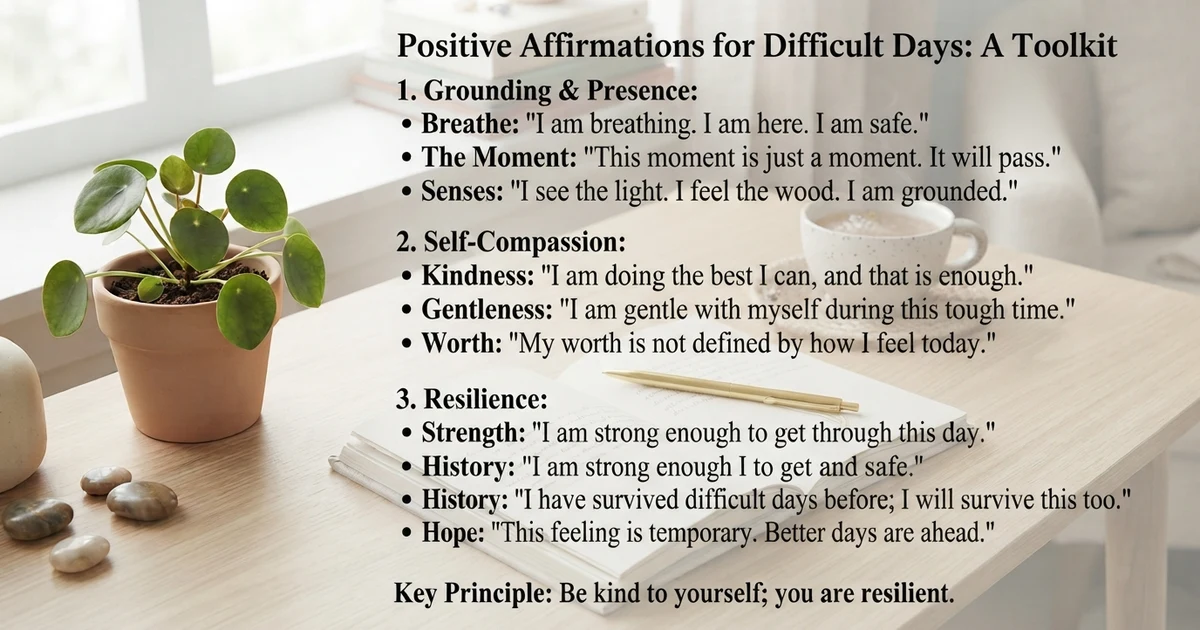
Positive Affirmations for Difficult Days
Some days call for affirmations that feel realistic rather than extremely positive. Instead of forcing yourself to believe that everything is perfect, choose words that acknowledge the difficulty while leaving room for hope.
- Today is difficult, but I can take it one moment at a time.
- I do not have to have everything figured out today.
- I can focus on what I can do right now.
- I can give myself permission to slow down.
- I can get through this moment without judging myself.
- A difficult day does not define my whole life.
- I can take a break when I need one.
- I can reach out to someone I trust.
- I can be patient with my progress.
- I can care for myself even when motivation is low.
Positive Affirmations for Self-Confidence
Mental well-being can also involve how you see your own abilities. These affirmations encourage confidence without requiring you to feel confident all the time.
- I am capable of learning new things.
- I can trust myself to keep learning.
- My mistakes can teach me something useful.
- I can speak up for myself respectfully.
- I can try even when I feel unsure.
- I am becoming more comfortable with who I am.
- I can handle challenges one step at a time.
- I do not need everyone’s approval.
- I can recognize my own progress.
- I am allowed to believe in myself.
Positive Affirmations for Anxiety and Overthinking
If your mind tends to focus on many possibilities at once, choose affirmations that bring your attention back to the present moment.
- I can focus on this moment.
- I do not need to solve every possible problem right now.
- I can take a slow breath and pause.
- I can separate what I know from what I fear.
- I can return my attention to what is happening now.
- I can give myself time before making a decision.
- I do not have to follow every thought.
- I can respond instead of immediately reacting.
- I can take one small step at a time.
- I can ask someone I trust for support.
These phrases are not intended to diagnose, treat, or eliminate anxiety. They are simply examples of supportive self-talk that some people may find useful.
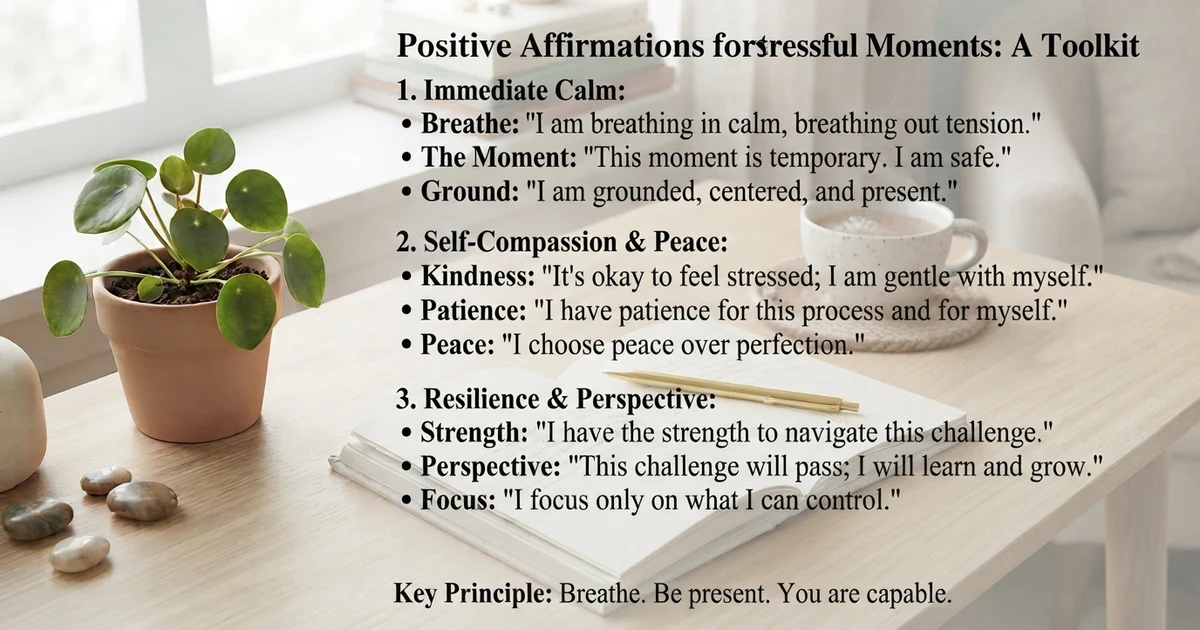
Positive Affirmations for Stressful Moments
Stress can make ordinary tasks feel harder. During a stressful moment, a short phrase may be easier to use than a long affirmation.
- I can slow down.
- One thing at a time is enough.
- I can take a short pause.
- I do not have to rush every decision.
- I can focus on what is within my control.
- I can give myself a moment to reset.
- I can ask for help when I need it.
- I can take care of my basic needs.
- I can make the next small choice.
- I can be patient with myself.
Positive Affirmations for Beginners
If you are new to affirmations, start with statements that feel believable. You do not need to repeat a phrase that feels completely disconnected from how you currently feel.
Try these beginner-friendly examples:
- I am learning to be kinder to myself.
- I can make small positive changes.
- I am allowed to take my time.
- I can learn from today.
- I can care for myself in simple ways.
- I am becoming more aware of my needs.
- I can practice healthier self-talk.
- I can celebrate small steps.
- I can give myself another chance.
- I am learning what works for me.
Best Positive Affirmations for Daily Use
A daily affirmation should be easy enough to remember and flexible enough to fit ordinary situations.
You might choose one affirmation for the morning:
I can approach today one step at a time.
One for stressful moments:
I can pause and choose my next step.
One for the evening:
I can let today be finished and give myself time to rest.
You can also keep a small list in a journal, notes app, planner, or printable page. The goal is not to repeat dozens of phrases every day. A few meaningful statements can be enough.
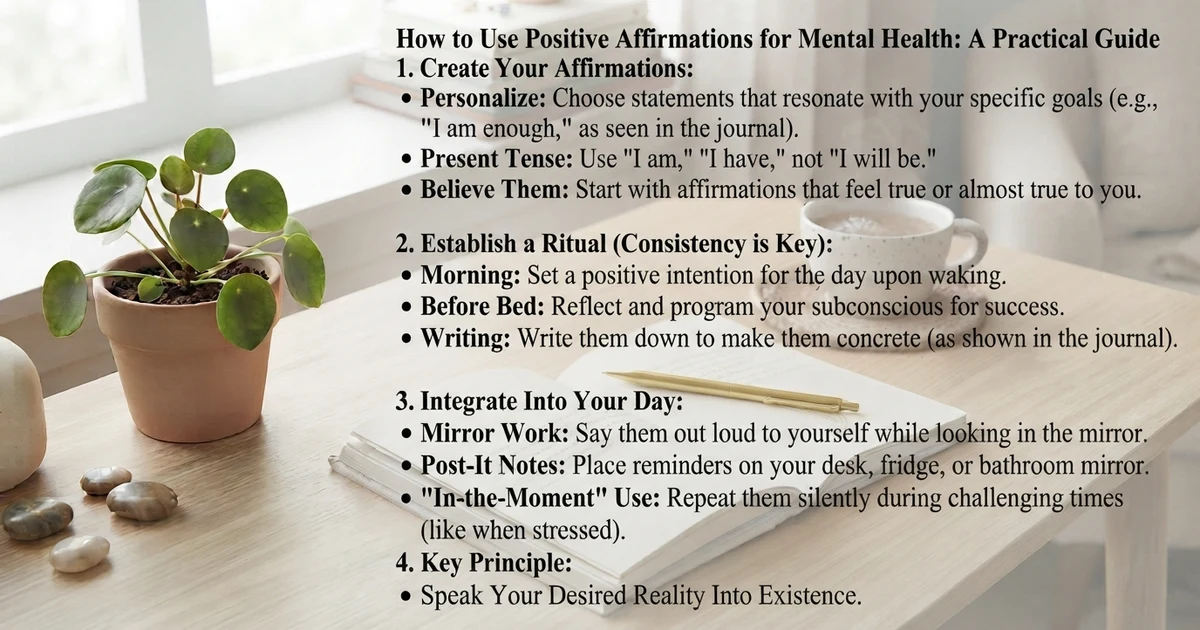
How to Use Positive Affirmations for Mental Health
There is no single correct way to practice affirmations. Choose a method that feels natural and does not turn the practice into another task you have to complete perfectly.
1. Choose a realistic statement
Start with words you can accept. If “I am completely confident” feels untrue, try “I am learning to trust myself.”
2. Repeat it at a useful time
You might read your affirmation after waking up, before studying, during a break, or before going to bed.
3. Say it quietly or write it down
You can repeat an affirmation in your head, say it aloud, or write it in a journal.
4. Connect it with an action
For example, after saying “I deserve rest,” actually give yourself a short break.
5. Adjust the wording
Your affirmation can change as your needs change. Personal phrases are often more useful than generic statements that do not fit your situation.
How to Make Mental Health Affirmations More Believable
A common mistake is choosing an affirmation simply because it sounds powerful. A statement can be positive while still feeling realistic.
Instead of:
I never feel stressed.
Try:
I can learn healthy ways to respond to stressful moments.
Instead of:
Everything in my life is perfect.
Try:
I can notice what is going well while accepting that some days are difficult.
Instead of:
I am always confident.
Try:
I can take small steps even when I feel uncertain.
Believable wording gives you something you can actually practice rather than something you feel pressured to prove.
What to Avoid in Positive Mental Health Affirmations
Good affirmations should support you rather than make you feel guilty.
Avoid statements that:
- Tell you that you should never feel sad, worried, or stressed.
- Suggest that positive thinking can solve every mental health problem.
- Blame you for difficult emotions.
- Demand perfection.
- Make unrealistic promises.
- Replace needed professional support.
- Force you to ignore serious problems.
- Make you feel worse when you cannot believe the statement.
For example, “I should always be happy” is not a helpful standard. A gentler alternative is:
I can make room for different emotions while caring for myself.
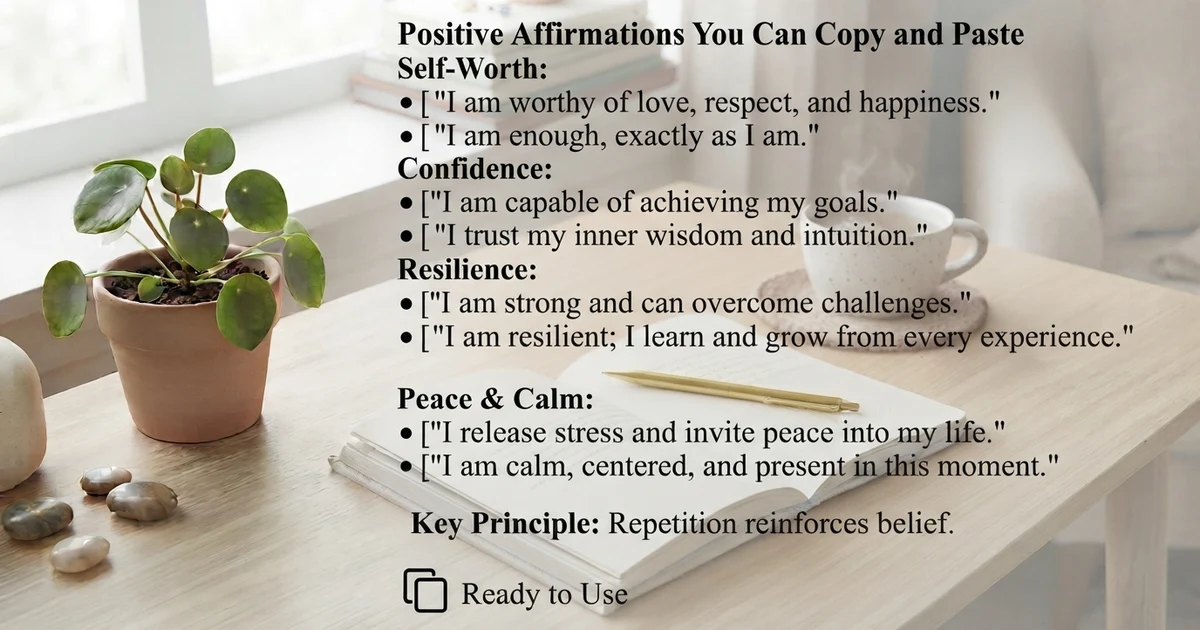
Positive Affirmations You Can Copy and Paste
If you want a ready-to-use list, save these simple phrases:
- I am worthy of kindness.
- I can take one step at a time.
- I am allowed to rest.
- I can ask for support.
- I can be patient with myself.
- My feelings deserve attention.
- I can learn from difficult moments.
- I do not need to be perfect.
- I can focus on what I can control.
- I can give myself another chance.
- I can slow down when I need to.
- I can choose kinder self-talk.
- I am learning to trust myself.
- I can recognize small progress.
- I deserve respectful relationships.
- I can take care of myself today.
- I can pause before I react.
- I can let some things take time.
- I can make space for rest.
- I am doing what I can today.
Positive Affirmation Printable Ideas
A printable affirmation page can make daily practice simple. You could create a one-page list with sections such as:
Morning
- I can begin today with patience.
- I can take today one step at a time.
During Stress
- I can pause.
- I can focus on the next small step.
Self-Worth
- I deserve kindness.
- My worth is not based on perfection.
Evening
- I can let myself rest.
- I can be proud of the effort I made today.
You can keep the page beside your desk, in a journal, or somewhere you naturally see it. The most useful printable is one you will actually use.
Final Thoughts on Positive Affirmations for Mental Health
Positive affirmations for mental health can be a simple way to practice kinder, more supportive self-talk. The best statements do not require you to pretend that difficult emotions do not exist. Instead, they can remind you that you can respond to yourself with patience, compassion, and realistic encouragement.
Choose a few phrases that feel meaningful, repeat them when they are useful, and adjust them as your needs change. If you are dealing with ongoing or serious mental health concerns, affirmations can be one small supportive habit, but professional help may be important too.
Frequently Asked Questions
What are positive affirmations for mental health?
They are short, encouraging statements that support kinder self-talk and a more compassionate mindset. They can focus on self-worth, patience, emotional awareness, confidence, boundaries, and everyday coping.
Do positive affirmations improve mental health?
Affirmations may support positive self-talk and emotional well-being for some people. They should be viewed as a supportive practice rather than a treatment for a mental health condition.
What is a good affirmation for mental health?
A useful affirmation is one that feels supportive and believable. For example, “I can take things one step at a time” is simple, realistic, and easy to use during everyday challenges.
What are some short positive affirmations for mental health?
Examples include “I am worthy,” “I can pause,” “I can breathe,” “I can be patient,” “I deserve kindness,” and “I can take one step at a time.”
How often should I use positive affirmations?
You can use them whenever they feel helpful. Some people repeat an affirmation once or twice a day, while others use one during specific situations such as stressful moments or before an important task.
Can I write my own mental health affirmations?
Yes. Personal affirmations can be based on something you want to practice, such as patience, self-respect, confidence, or asking for support.
Should affirmations always be positive?
They should generally be supportive, but they do not need to sound extremely positive. A realistic statement such as “I can get through this moment one step at a time” can feel more natural than an exaggerated statement.
Can children and teenagers use positive affirmations?
Age-appropriate affirmations can be used as a simple self-talk activity. Keep the wording natural and avoid making young people feel responsible for fixing difficult emotions through positive thinking alone.
Can affirmations replace therapy or professional help?
No. Affirmations are not a substitute for therapy, medical care, or other professional mental health support. They can be used as one small self-care or self-reflection practice alongside appropriate support.
What is the best way to start using affirmations?
Choose one or two realistic statements that match something you want to practice. Repeat or write them at a convenient time, and change the wording if it does not feel natural.