

Journaling affirmations give you a simple way to put supportive thoughts into words and return to them regularly. You can write them in the morning, add them to a daily journal entry, or use a few before bed. The best statements are usually clear and believable rather than overly positive or unrealistic. This collection includes journaling affirmations for confidence, self-worth, motivation, calm, personal growth, relationships, work, and difficult days. You’ll also find practical ways to personalize your words and turn an affirmation into a small action you can actually take.
Journaling Affirmations for Daily Use
These journaling affirmations are useful when you want simple statements to copy into a notebook or use as daily writing prompts. Pick the ones that fit your current situation instead of trying to write every statement at once.
- I trust myself to handle today.
- I can take one step at a time.
- Today, I choose thoughts that support me.
- I give myself room to grow.
- I can begin again when I need to.
- My effort matters, even when progress feels slow.
- I am learning to trust my own decisions.
- I can focus on what I can control.
- I deserve patience from myself.
- I can make today meaningful in a simple way.
- My needs deserve attention.
- I allow myself to move at my own pace.
- I can learn something from today.
- I choose progress over perfection.
- I am allowed to change my mind.
- One small step is still progress.
- I can handle what is in front of me.
- I make space for what matters.
- I can give myself a fresh start.
- Today, I will act with intention.
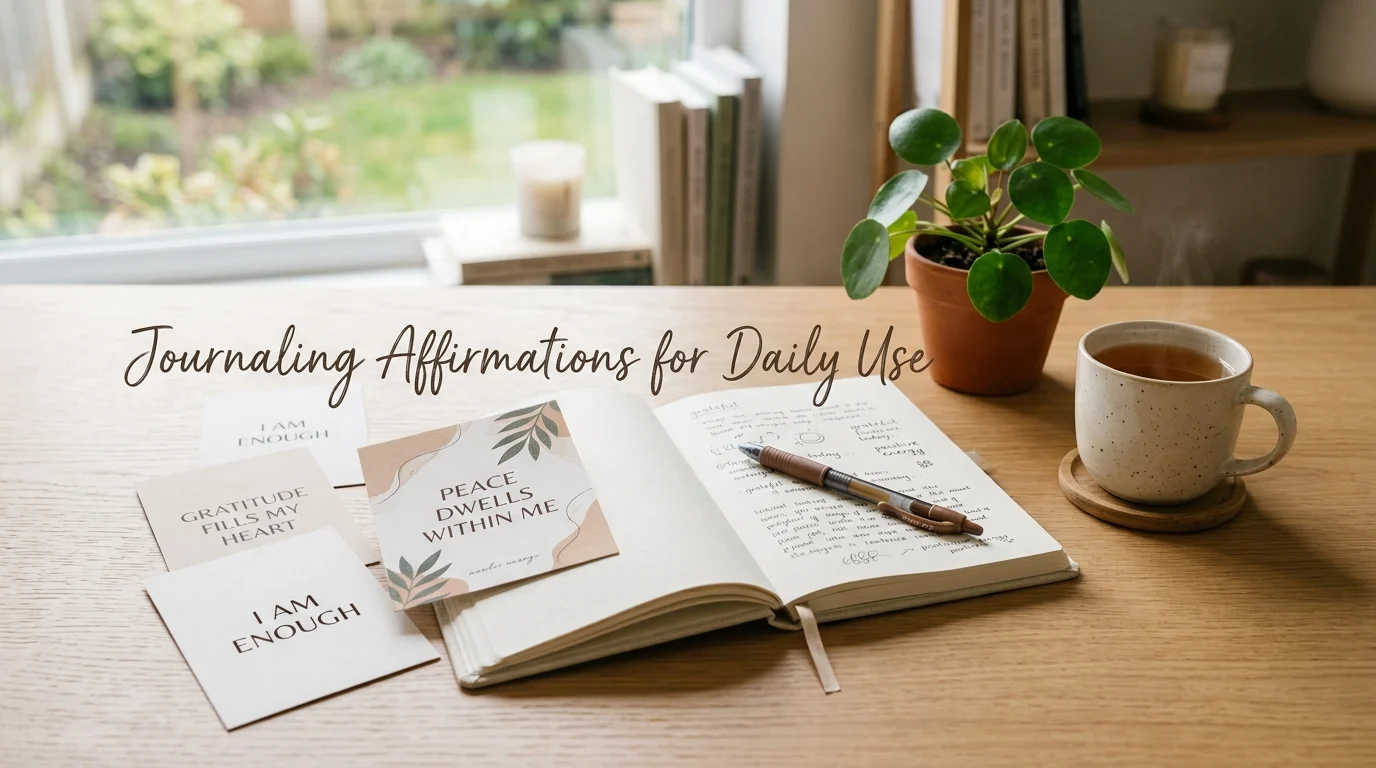
Positive Journaling Affirmations for Confidence
Confidence can be easier to write about when your affirmation focuses on trust, effort, and willingness to try. These statements work well before a challenging task, conversation, presentation, or new experience.
- I trust my ability to learn.
- I can speak clearly and honestly.
- My ideas deserve to be heard.
- I can try without knowing everything.
- I am becoming more comfortable with myself.
- I can make decisions with care.
- Mistakes do not erase my progress.
- I can handle constructive feedback.
- I have learned from difficult experiences.
- I can take up space without apology.
- My voice matters.
- I don’t need to be perfect to participate.
- I can face unfamiliar situations with patience.
- I trust myself to adjust when plans change.
- I can be confident and still keep learning.
- I am capable of asking for help when I need it.
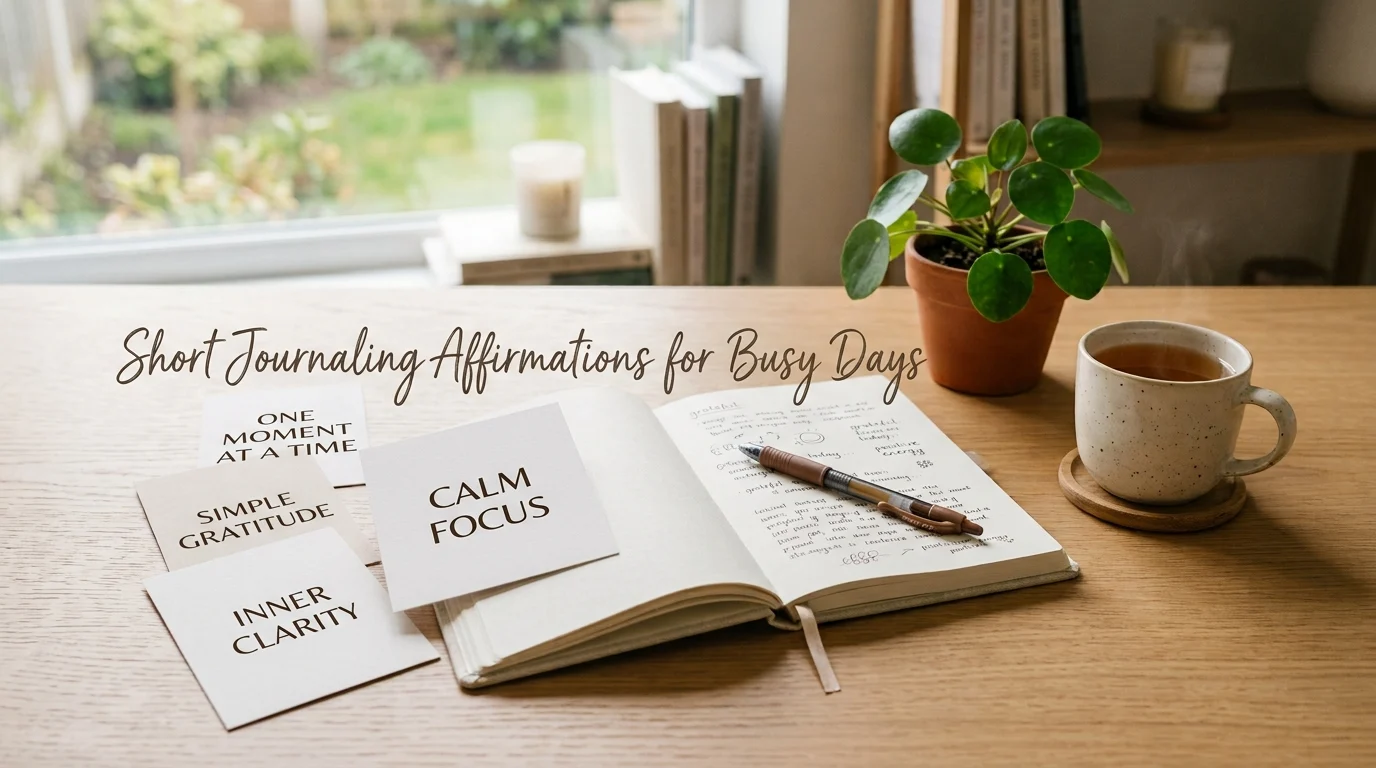
Short Journaling Affirmations for Busy Days
Short affirmations are useful when you only have a few minutes to journal. Write one sentence several times, choose one as a morning prompt, or use three different statements as the starting point for a quick entry.
- I can begin.
- I trust myself.
- I choose calm.
- I am learning.
- I can adapt.
- I deserve rest.
- My effort counts.
- I can slow down.
- I choose what matters.
- I can try again.
- I am enough for today.
- I welcome new possibilities.
- I can ask for support.
- I release what I can’t control.
- I choose steady progress.
- I can handle this moment.
- My feelings can be acknowledged.
- I have choices.
- I can make space for joy.
- Today is a new opportunity.
Journaling Affirmations for Self-Worth
Self-worth affirmations can help you practice kinder self-talk without pretending that every day feels easy. Choose language that feels believable enough to write honestly.
- I deserve to treat myself with respect.
- My worth is not measured by one mistake.
- I can accept myself while still growing.
- I don’t have to earn basic kindness.
- My needs are worth listening to.
- I can set boundaries without feeling guilty.
- I am more than my accomplishments.
- I can recognize my own strengths.
- I deserve relationships built on mutual respect.
- My past does not define every part of my future.
- I can be honest about what I need.
- I am allowed to take care of myself.
- I don’t have to compare my life with someone else’s.
- My progress deserves recognition.
- I can respect myself through difficult moments.
- I am learning to speak to myself with patience.
Morning Journaling Affirmations
Morning journaling can be a useful time to choose an intention for the day. Rather than predicting that everything will go perfectly, these affirmations focus on how you want to approach whatever happens.
- I welcome this new day with an open mind.
- I can decide what deserves my attention today.
- I will focus on one priority at a time.
- I can create a steady start to my day.
- I choose patience when things feel rushed.
- I am ready to learn from today’s experiences.
- I can protect time for what matters.
- I will take care of my energy today.
- I can respond thoughtfully instead of reacting quickly.
- I am open to small moments of happiness.
- I can make useful choices today.
- I will give myself permission to pause.
- I can handle changes to my plans.
- Today, I choose consistency over perfection.
- I will notice what is going well.
- I can finish the day knowing I made an honest effort.
Evening Journaling Affirmations
Evening affirmations can help you close your journal entry with reflection rather than self-criticism. Use them alongside a few lines about what you learned, appreciated, or want to handle differently tomorrow.
- I can let today be finished.
- I am proud of the effort I made.
- I can learn without criticizing myself.
- I release the need to solve everything tonight.
- I am allowed to rest.
- Today taught me something useful.
- I can leave some tasks for tomorrow.
- I appreciate the small things I noticed today.
- I forgive myself for what I could not change.
- I can be gentle with myself tonight.
- Rest is part of caring for myself.
- I don’t need a perfect day to have a meaningful one.
- I can reflect without judging myself.
- Tomorrow can begin with a clean page.
- I have done enough for today.

Journaling Affirmations for Motivation and Discipline
Motivation can change from day to day, so these affirmations focus on taking manageable action. They can work well when you’re procrastinating, starting a project, studying, exercising, or trying to maintain a routine.
- I can start before I feel completely ready.
- Small actions can move me forward.
- I choose consistency over waiting for motivation.
- I can work on one task at a time.
- I don’t need to finish everything today.
- I can make the next step smaller.
- My routine can be flexible and useful.
- I can return to a goal after a difficult day.
- I will focus on what I can do now.
- I can take breaks without abandoning my goal.
- Progress can happen quietly.
- I can keep a promise to myself today.
- I am building habits through repeated choices.
- I can make room for both effort and rest.
- One completed step is better than endless planning.
- I can adjust my approach when something isn’t working.
Journaling Affirmations for Stressful or Difficult Days
Difficult days call for realistic language. Instead of forcing yourself to feel positive, use affirmations that acknowledge the moment while reminding you that you still have choices.
- I don’t have to solve everything at once.
- I can focus on the next manageable step.
- I am allowed to ask for help.
- I can take a pause before responding.
- This moment does not require a perfect answer.
- I can give myself time to think.
- I can acknowledge my feelings without letting them make every decision.
- I can choose what deserves my energy.
- I am allowed to change my plans when needed.
- I can get through this moment one step at a time.
- I don’t need to pretend that everything is fine.
- I can make one helpful choice today.
- I can rest and return to the problem later.
- I am learning how to handle difficult moments.
- I can be patient with myself while things are unsettled.
- Support is something I can reach for when I need it.
Journaling Affirmations for Personal Growth
Personal growth doesn’t require constant improvement. These statements encourage curiosity, reflection, flexibility, and a willingness to learn from experience.
- I am allowed to outgrow old patterns.
- I can learn from experiences without dwelling on them.
- I welcome honest self-reflection.
- I can change in ways that feel right for me.
- I am becoming more aware of what I need.
- I can learn from people who see things differently.
- I don’t need to have my entire future figured out.
- I can choose values that guide my decisions.
- Every mistake can give me information.
- I can make changes gradually.
- I am open to discovering new strengths.
- I can let go of habits that no longer serve me.
- My perspective can grow with experience.
- I can stay curious when something challenges me.
- I am responsible for the choices I make today.
- I can become more intentional with my time.
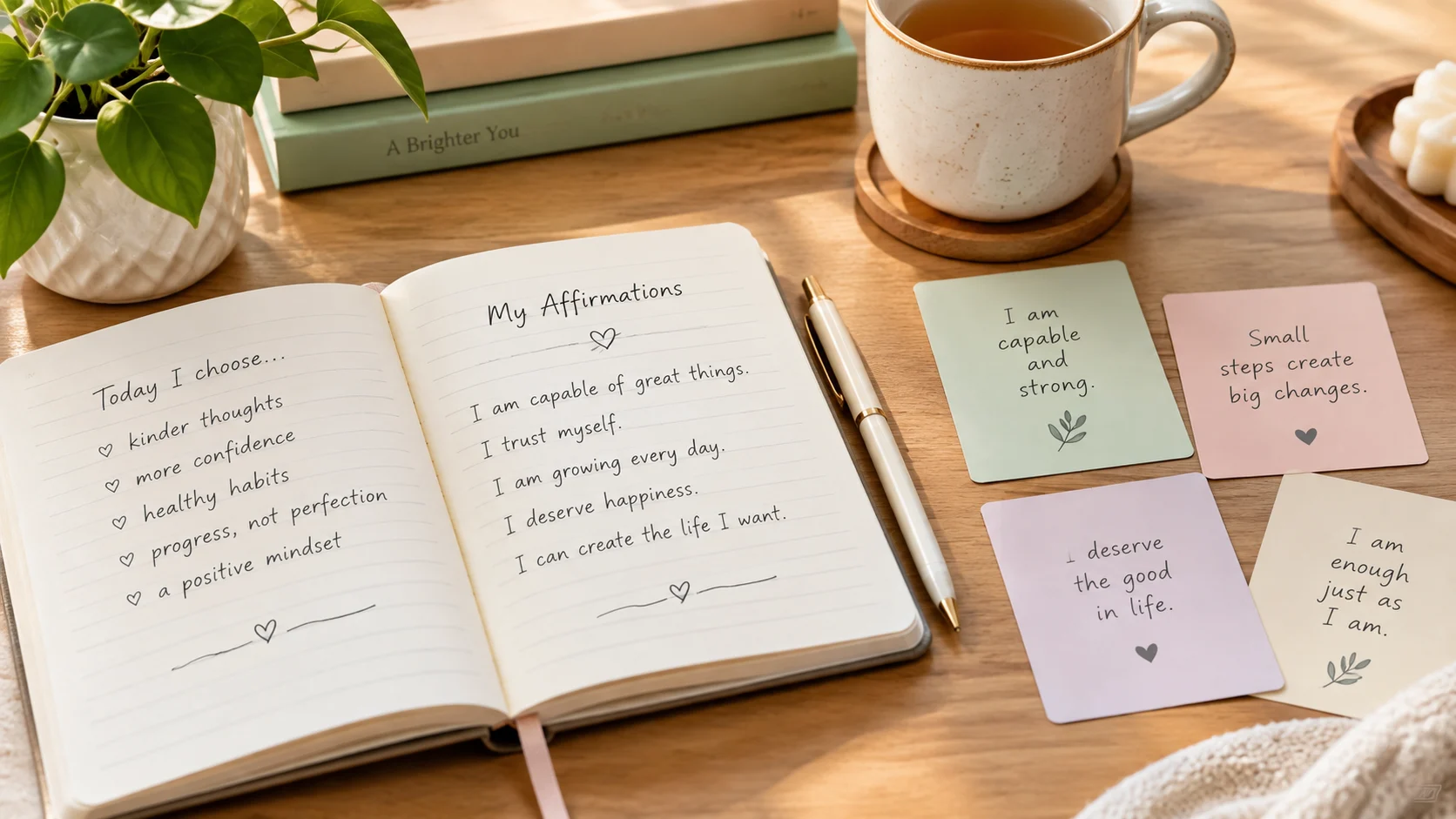
Journaling Affirmations for Work and Goals
Use these when your journal is connected to school, work, creative projects, career goals, or another long-term objective. Pair a statement with one concrete task to keep your writing connected to action.
- I can focus on the task in front of me.
- My work improves through practice.
- I can ask questions when instructions aren’t clear.
- I can organize my priorities realistically.
- I don’t have to compare my progress with someone else’s.
- I can finish one important task before starting another.
- I can learn from feedback.
- My goals can change as I learn more.
- I can make progress without rushing.
- I can protect time for meaningful work.
- I am capable of learning new skills.
- I can break large goals into smaller actions.
- I can recognize what I accomplished today.
- I can return to a project after a setback.
- I choose useful action over endless worrying.
- I can build progress through consistent effort.
Journaling Affirmations for Relationships
Relationship-focused affirmations can encourage honest communication, healthy boundaries, appreciation, and respect. They aren’t meant to control another person’s behavior or guarantee a particular outcome.
- I can communicate honestly and respectfully.
- My boundaries deserve to be respected.
- I can listen without abandoning my own needs.
- I deserve relationships with mutual respect.
- I can express appreciation openly.
- I can ask for clarification instead of assuming.
- I can give people room to be themselves.
- I can notice how relationships make me feel.
- I am allowed to say no.
- I can repair a misunderstanding through honest conversation.
- I can care about others without ignoring myself.
- Healthy connection includes respect for both people.
- I can choose relationships that support my values.
- I can let go of the need to control every outcome.
- I can be honest about what I need from a relationship.
How to Personalize Journaling Affirmations
A good affirmation doesn’t have to sound impressive. It should sound like something you can actually accept and use.
Start with a thought that feels too absolute and make it more realistic. For example, change “I never feel nervous” to “I can handle nervousness and still take the next step.” The second version doesn’t require you to deny how you feel.
You can also personalize an affirmation by adding a specific situation:
- General: “I trust myself.”
- More specific: “I trust myself to speak up during tomorrow’s meeting.”
- Action-focused: “I trust myself to prepare and speak clearly during tomorrow’s meeting.”
Try changing one word at a time until the statement sounds like your own voice.
How to Use Journaling Affirmations Naturally
You don’t need a complicated routine. A few minutes of intentional writing can be enough for a simple practice.
- Choose one to three affirmations. Pick statements that match what you’re dealing with today.
- Write them by hand or type them. Use whichever format makes journaling easier to maintain.
- Add a short reflection. Write one or two sentences about why the affirmation matters today.
- Connect it to an action. Decide on one small behavior that supports the idea.
- Review it later. At the end of the day, note what you noticed or learned.
For example, if your affirmation is “I can focus on one task at a time,” your action might be putting your phone away for 20 minutes while completing one specific task.
Generic vs. Realistic Journaling Affirmations
Some affirmations sound inspiring but may feel disconnected from your actual experience. If a statement makes you immediately think, “I don’t believe that,” soften it.
| Generic statement | More realistic version |
|---|---|
| I am completely confident. | I can become more confident through practice. |
| Everything will work out perfectly. | I can handle changes as they come. |
| I never make mistakes. | I can learn from mistakes. |
| I am always happy. | I can notice moments of happiness today. |
| Nothing can stop me. | I can keep going while adjusting my approach. |
The goal isn’t to make an affirmation less positive. It’s to make it useful enough that you can write it without feeling like you’re arguing with yourself.
How to Pair an Affirmation With Action
Writing can set an intention, while action gives that intention somewhere to go. You don’t need a major task. Choose something small enough to complete.
For example:
- Affirmation: I can take care of what matters today.
Action: Finish one important task before checking social media. - Affirmation: I can speak up when I need help.
Action: Send one clear message asking for clarification. - Affirmation: I choose progress over perfection.
Action: Spend 15 minutes improving an unfinished project. - Affirmation: I deserve time to recharge.
Action: Take a planned break without treating it as failure.
This approach keeps journaling connected to everyday choices rather than making the written statement carry the entire burden.

A Simple 7-Day Journaling Affirmation Routine
If you want structure, use one theme each day. Write the affirmation first, then add a few sentences about how it applies to your life.
Day 1: Self-trust
“I trust myself to take the next step.”
Day 2: Confidence
“My voice deserves to be heard.”
Day 3: Patience
“I can give myself time to learn.”
Day 4: Boundaries
“I can protect what matters to me.”
Day 5: Motivation
“I can make progress through small actions.”
Day 6: Reflection
“I can learn from today without judging myself.”
Day 7: Gratitude
“I can notice something good in an ordinary day.”
After seven days, look back at your entries. Keep the affirmations that felt useful and rewrite the ones that felt forced.
Conclusion
The most useful journaling affirmations are simple enough to believe and specific enough to matter. Choose statements that match your current needs, personalize the wording, and connect your thoughts with small practical actions when appropriate. You don’t need dozens of affirmations every day. One honest sentence can give you a clear starting point for reflection. With regular writing, you can build a collection of phrases that feel natural in your own voice and return to the ones that continue to support your goals, confidence, self-respect, and everyday choices.
Frequently Asked Questions
1. What do journaling affirmations mean?
Journaling affirmations are supportive statements that you write as part of a journal practice. They can focus on confidence, self-worth, motivation, boundaries, personal growth, or daily intentions. The purpose is to give your thoughts clear, constructive language rather than making unrealistic promises about what will happen.
2. How many affirmations should I write in a journal?
There is no required number. One to three affirmations can be enough for a short daily entry, while a longer journaling session may include several more. Choose statements that actually relate to your current situation instead of filling a page simply to reach a number.
3. What is the best time to write journaling affirmations?
The best time is the time you can maintain consistently. Morning journaling can help you set an intention for the day, while evening writing can give you space to reflect. You can also write affirmations whenever you need a reset or want to focus on a particular goal.
4. Should I write or say affirmations out loud?
You can write them, say them aloud, or do both. Writing gives you a record you can revisit, while speaking can make the statement easier to remember. Choose the method that feels natural rather than forcing yourself to use a particular format.
5. What should I do if an affirmation feels fake?
Change the wording. An affirmation doesn’t have to claim that everything is perfect. Instead of “I am completely confident,” try “I can become more comfortable with practice.” A realistic statement is often easier to accept and more useful for reflection.
6. Can I create my own journaling affirmations?
Yes. Start with something you want to practice, such as patience, confidence, focus, or self-respect. Turn it into a short statement that reflects a choice, possibility, or realistic strength. Then adjust the wording until it sounds like something you would naturally say.
7. Are journaling affirmations useful for beginners?
They can be easy for beginners because they require very little preparation. Start with one affirmation and write two or three sentences about why it matters that day. You can gradually develop a longer routine if you find journaling helpful.
8. Can I use journaling affirmations during difficult days?
Yes, but keep them realistic. Difficult days may call for statements such as “I can focus on the next manageable step” rather than forcing yourself to claim that everything is wonderful. Your affirmation can acknowledge a challenge while reminding you that you still have choices.
9. Should affirmations always start with “I am”?
No. Variety can make your writing feel more natural. Try openings such as “I can,” “I choose,” “I trust,” “I allow,” “Today I,” “My,” or “One step.” Different sentence structures also make it easier to express different kinds of intentions.
10. Can I pair an affirmation with a journal prompt?
Absolutely. After writing an affirmation, add a question that encourages reflection. For example, after “I choose progress over perfection,” ask, “What is one small step I can take today?” This turns the affirmation into a practical journaling exercise instead of leaving it as a standalone sentence.